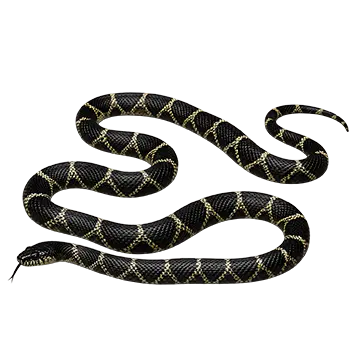

The legal framework governing the Eastern Kingsnake in the United States is a layered system of federal, state, and local regulations that reflects the nation's decentralized approach to wildlife management. Unlike many tropical or exotic reptile species whose legal status is determined primarily by international trade agreements and federal import regulations, the Eastern Kingsnake is a native species whose management falls largely under the jurisdiction of individual state wildlife agencies. This creates a patchwork of rules that varies significantly from one state to the next, requiring keepers, breeders, and field herpetologists to familiarize themselves with the specific legal requirements of every jurisdiction in which they intend to collect, possess, transport, or sell the species.
At the broadest level, the legal status of the Eastern Kingsnake is shaped by the principle that wildlife is held in public trust by the state. This doctrine, rooted in English common law and affirmed by American courts over more than a century of jurisprudence, establishes that wild animals are not the property of any individual until they are lawfully taken into possession under the terms set by the governing authority. For the Eastern Kingsnake, this means that the act of removing an animal from the wild, keeping it in captivity, breeding it, or selling it and its offspring are all potentially subject to regulatory oversight, even though the species is not currently listed as threatened or endangered at the federal level.
The complexity of the regulatory landscape is compounded by the fact that laws governing reptile keeping and collection are not static. State legislatures, wildlife commissions, and local governing bodies regularly revise their regulations in response to new conservation data, shifts in public opinion, and changes in the commercial reptile trade. Provisions that were permissive a decade ago may have been tightened considerably, and rules that seem settled can be altered by administrative action or legislative amendment with relatively little advance notice to the regulated community. Anyone involved with Eastern Kingsnakes in any capacity has a responsibility to verify the current regulations applicable to their specific activities and locations.
The regulatory environment is further complicated by the distinction between wild-caught and captive-bred animals, which many jurisdictions treat differently. Some states apply their collection and possession rules only to animals taken from the wild, exempting captive-bred specimens from permit requirements or numerical limits. Others regulate all Eastern Kingsnakes equally regardless of origin. Understanding how a particular jurisdiction classifies and regulates wild-caught versus captive-bred animals is essential for compliance, and assumptions based on the rules of one state should never be applied to another without verification.