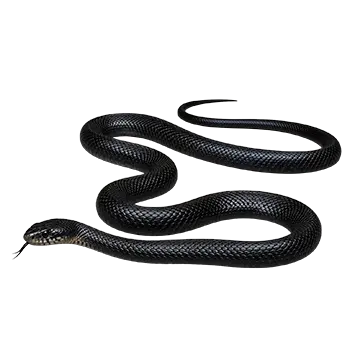

Encountering an Eastern Indigo Snake in its natural habitat ranks among the most memorable experiences available to wildlife enthusiasts visiting the southeastern United States. The species' impressive size, often exceeding six feet in length, its stunning iridescent blue-black coloration, and its habit of moving boldly through open terrain during daylight hours make it one of the most visually spectacular wild reptiles on the continent. Unlike many large snake species that are primarily nocturnal or crepuscular and rarely seen by casual observers, the Eastern Indigo Snake is an actively diurnal hunter that may be encountered crossing trails, basking at burrow entrances, or foraging through palmetto scrub and pine flatwoods during the warmer months of the year.
Finding an Eastern Indigo Snake in the wild requires patience, knowledge of the species' habits, and a willingness to spend extended periods in the field in appropriate habitat. The species occurs at naturally low densities across its range, and even in areas where populations are considered relatively healthy, individual sightings are unpredictable and cannot be guaranteed. Prospective observers should approach the experience with realistic expectations, understanding that a day spent searching for indigo snakes in quality habitat may or may not produce an encounter, and that the broader experience of exploring the remarkable longleaf pine ecosystem is rewarding in its own right regardless of whether a specific target species is found.
The Eastern Indigo Snake's close association with gopher tortoise burrow systems provides the most reliable strategy for locating the species in the field. During cooler months, indigo snakes rely on the stable temperatures within deep gopher tortoise burrows for thermoregulation, and they can frequently be observed at or near burrow entrances during warm afternoon hours when they emerge to bask. Learning to identify gopher tortoise burrows, which are characterized by their distinctive half-moon shaped openings and aprons of excavated sand, is an essential field skill for anyone seeking to observe indigo snakes. Areas with dense concentrations of active tortoise burrows in well-managed sandhill or scrub habitat represent the highest-probability locations for encounters.
It is essential for anyone seeking to observe Eastern Indigo Snakes in the wild to understand that the species is federally protected under the Endangered Species Act and that any interaction with the snake must comply with applicable laws. Observers should never attempt to capture, handle, restrain, or harass an indigo snake, and should maintain a respectful distance that allows the animal to continue its natural behavior without disturbance. Photography from a distance using telephoto lenses is the appropriate method for documenting encounters, and observers who discover indigo snakes on public lands should report their sightings to the managing agency, as observational data from citizen scientists contributes valuable information to ongoing monitoring and conservation efforts.