
Origins & Discovery

The Eastern Indigo Snake (Drymarchon couperi) is the longest native snake species in North America, with confirmed records of adults exceeding eight feet in total length. Its range historically encompassed much of the Coastal Plain of the southeastern United States, stretching from southern Mississippi across the Gulf states through the entirety of Florida and northward into southern Georgia, with scattered historical records from Alabama and South Carolina. The species is intimately associated with the longleaf pine ecosystem, one of the most biodiverse and historically extensive terrestrial habitats on the continent, and its fortunes have been closely linked to the fate of that landscape for millennia.

The formal scientific description of the Eastern Indigo Snake came in 1842, when the American herpetologist John Edwards Holbrook described the species from specimens collected in Georgia. Holbrook, widely regarded as the father of North American herpetology, placed the snake in a taxonomic framework that would undergo considerable revision in subsequent decades. The species epithet couperi honors James Hamilton Couper, a prominent Georgia planter and amateur naturalist who provided Holbrook with specimens and field observations from the coastal lowlands of the state. Couper's contributions to the natural history of the Georgia coast were substantial, and his association with the Eastern Indigo Snake through its scientific name reflects the role that educated landowners played in early American biological survey work.

Long before Western science cataloged it, the Eastern Indigo Snake was a familiar presence in the ecosystems of the Southeast. The species occupied a top predatory niche among the reptile fauna of the region, feeding on a remarkably broad diet that included other snakes, lizards, frogs, small mammals, birds, and turtle eggs. Its willingness to prey upon venomous species such as rattlesnakes and cottonmouths earned it particular notice among rural communities, who observed firsthand the indigo snake's apparent immunity to or tolerance of pit viper venom and its bold, assertive hunting behavior.

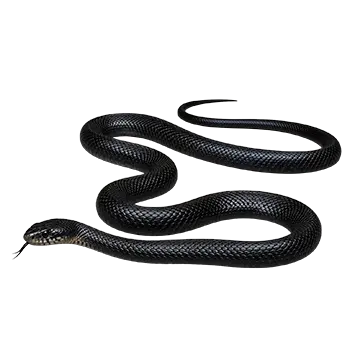
The Eastern Indigo Snake's most striking physical characteristic is its coloration. Adults display a uniform glossy blue-black dorsal surface with an iridescent sheen that shifts through shades of deep indigo and violet in sunlight, a quality that inspired its common name. The chin and throat may show patches of reddish-orange or cream coloration, and the smooth, polished appearance of the scales gives the animal a distinctive visual presence unlike any other North American serpent. This combination of impressive size, striking appearance, and relatively calm demeanor when encountered by humans has shaped the species' cultural profile from the earliest periods of human habitation in the region.

Indigenous Knowledge & Historical Roles

The indigenous peoples of the southeastern United States, including the Muscogee (Creek), Seminole, Cherokee, and Choctaw nations, inhabited the same longleaf pine savannas and hardwood hammocks where the Eastern Indigo Snake thrived. These communities possessed detailed ecological knowledge of the reptile fauna of the region, accumulated over thousands of years of coexistence. While direct documentary evidence of specific indigenous beliefs about the Eastern Indigo Snake is limited by the predominantly oral nature of these traditions and the disruptions of colonization, the broader context of southeastern indigenous relationships with snakes provides important insight into how the species was likely perceived and understood.

Snakes held a complex and often dualistic symbolic position in the cosmologies of southeastern indigenous peoples. Many Muscogee and Cherokee traditions associated serpents with water, the underworld, and the powerful spiritual forces that governed the boundary between the earthly and supernatural realms. Large, conspicuous snake species would have been particularly significant within these frameworks, and the Eastern Indigo Snake's imposing size, dramatic coloration, and habit of moving openly through the landscape during daylight hours would have distinguished it from the more secretive serpent species of the region. The snake's tendency to frequent gopher tortoise burrows, which served as critical sheltering habitat for dozens of other species, may also have contributed to indigenous understanding of it as a keystone presence in the environment.

For European settlers arriving in the Southeast from the seventeenth century onward, the Eastern Indigo Snake's habit of preying on venomous snakes became a defining feature of its identity. Rural communities across Georgia and Florida developed a strong cultural appreciation for the species based on the practical observation that areas with resident indigo snakes tended to have fewer rattlesnakes. This belief, grounded in genuine ecological dynamics, led to a widespread informal tradition of protecting indigo snakes encountered on farmland, in sharp contrast to the indiscriminate persecution that many other large snake species experienced in the same region.

The Eastern Indigo Snake's docile temperament when encountered by humans further reinforced its positive reputation among rural southeastern communities. Unlike many large snake species that respond to human approach with defensive striking or rapid flight, indigo snakes typically remain calm and may even allow themselves to be handled briefly without displaying significant aggression. This behavioral characteristic, combined with the species' perceived utility as a predator of dangerous snakes, established the Eastern Indigo Snake as one of the few large serpents in North America to enjoy broadly favorable cultural regard among the human populations that shared its habitat.

Cultural Symbolism & Folklore

The Eastern Indigo Snake's remarkable appearance and behavior have generated a body of folk knowledge and cultural symbolism that extends well beyond its practical role as a predator of venomous snakes. Across the rural Southeast, the species has been known by a variety of common names that reflect different aspects of its character and the impressions it made on the communities that encountered it. The name blue indigo snake, blue gopher snake, and blue bull snake all appear in regional usage, each emphasizing different physical or behavioral characteristics. The name blue bull snake, in particular, reflects the animal's robust build and the perceived power of a snake that could overpower and consume rattlesnakes.

In the folk ecology of the southeastern United States, the Eastern Indigo Snake occupied a role analogous to that of the king snake in other regions, serving as a natural check on venomous snake populations and thus earning a protective cultural status that was rarely extended to other serpent species. Stories about indigo snakes entering rattlesnake dens to hunt and consume the occupants became a staple of rural oral tradition, passed between generations as practical natural history knowledge embedded in narrative form. These accounts, while sometimes embellished in the telling, were rooted in observable predatory behavior that has been confirmed by modern field research.

The species also figured in the folk traditions of African American communities in the rural Southeast, particularly in the Gullah Geechee cultural region of the coastal Carolinas and Georgia. Within these communities, which preserved significant elements of West African cultural heritage through centuries of enslavement and its aftermath, large snakes carried symbolic associations that blended African cosmological traditions with the specific ecological context of the southeastern Coastal Plain. The Eastern Indigo Snake's iridescent blue-black coloration and its association with underground burrow systems resonated with symbolic themes of depth, hidden knowledge, and the spiritual significance of the color blue in Gullah Geechee tradition.

The admiration that the Eastern Indigo Snake inspired among rural communities did not, unfortunately, always translate into effective protection for the species. Even as individual snakes were sometimes spared or actively protected by landowners who valued their presence, broader patterns of habitat destruction, rattlesnake roundups, and collection for the pet trade steadily eroded the species' populations throughout the twentieth century. The cultural goodwill toward the Eastern Indigo Snake ultimately proved insufficient to prevent its decline in the absence of formal legal protections and systematic habitat conservation.

Scientific Study & Taxonomic History

The scientific understanding of the Eastern Indigo Snake has evolved considerably since Holbrook's original 1842 description. For much of its taxonomic history, the species was classified within the genus Drymarchon alongside several other large colubrid snakes found across the Americas. The genus Drymarchon, whose name derives from Greek roots meaning lord of the forest, encompasses a group of large, active, diurnal snakes distributed from the southeastern United States through Central America and into South America. The Eastern Indigo Snake represents the northernmost member of this lineage, and its geographic isolation from its nearest relatives has been a subject of biogeographic interest for over a century.

Taxonomic revisions during the twentieth century clarified the relationships among the Drymarchon species and established the Eastern Indigo Snake as a distinct species rather than a subspecies of the more widely distributed Middle American indigo snake complex. Genetic analyses conducted in the early twenty-first century confirmed the reproductive isolation and evolutionary distinctness of the Eastern Indigo Snake population, supporting its treatment as a full species. These molecular studies also shed light on the historical biogeography of the genus, suggesting that the Eastern Indigo Snake's ancestor colonized the southeastern United States during a period of warmer climate and more extensive tropical and subtropical habitat connectivity between North and Central America.

Field research on the Eastern Indigo Snake intensified during the 1970s and 1980s as concern about the species' declining populations prompted both academic scientists and wildlife agency biologists to undertake detailed ecological studies. Radio telemetry studies in Georgia and Florida revealed the remarkable spatial requirements of the species, with individual snakes maintaining home ranges that could encompass hundreds or even thousands of acres of suitable habitat. These studies demonstrated the critical importance of gopher tortoise burrows as thermal refugia during cold winter months and documented the seasonal movement patterns that connected upland pine habitats with bottomland wetlands and other landscape features.

The accumulation of ecological data on the Eastern Indigo Snake during the latter decades of the twentieth century transformed scientific understanding of the species from a poorly known regional curiosity into one of the best-studied large snake species in North America. Research programs at institutions including the University of Georgia, the University of Florida, and the Orianne Society produced detailed information on the species' population genetics, disease ecology, reproductive biology, and habitat requirements. This scientific foundation proved essential in informing the conservation strategies and legal protections that would become increasingly important as the species' range continued to contract.

The Herpetoculture Movement

The Eastern Indigo Snake's striking appearance and generally tractable disposition made it a highly sought-after species in the American reptile-keeping hobby during the mid-twentieth century, a demand that contributed significantly to the species' population decline before the implementation of legal protections. During the 1950s and 1960s, indigo snakes were commonly collected from the wild in Florida and Georgia and sold through pet shops, reptile dealers, and at reptile exhibitions. The species' impressive size, beautiful coloration, and willingness to feed readily in captivity made it a prestigious addition to any private collection, and prices for healthy adult specimens reflected this desirability.

The unregulated collection of Eastern Indigo Snakes for the pet trade during this period removed significant numbers of reproductively mature adults from wild populations, compounding the effects of habitat loss and other threats. Collection was often concentrated at gopher tortoise colonies during the winter months, when indigo snakes aggregate in burrows for thermal refuge, making them particularly vulnerable to targeted harvesting. The practice of gassing gopher tortoise burrows with gasoline fumes to flush out rattlesnakes during organized rattlesnake roundups also killed untold numbers of indigo snakes as incidental casualties, further accelerating population declines.

The listing of the Eastern Indigo Snake as Threatened under the Endangered Species Act in 1978 fundamentally altered its status within herpetoculture. The federal listing made it illegal to collect, possess, sell, or transport the species without specific permits, effectively ending the legal wild collection that had been a primary source of animals for the pet trade. This regulatory intervention was initially met with resistance from some segments of the reptile-keeping community, but over time it catalyzed a shift toward captive breeding as the sole legitimate source of Eastern Indigo Snakes for private keeping.

A small number of permitted captive breeding programs have maintained the Eastern Indigo Snake in herpetoculture under strictly regulated conditions since the species' listing. These programs operate under federal and state permits that impose detailed record-keeping requirements, facility standards, and restrictions on the sale and transfer of animals. The captive-bred indigo snakes produced by these programs command substantial prices, reflecting both the costs of regulatory compliance and the species' enduring appeal among serious reptile enthusiasts. The existence of a legal, regulated captive breeding community has also created a constituency of private keepers with direct expertise in the species' husbandry needs, some of whom have contributed observations and data that complement academic research programs.

The Species Today

The Eastern Indigo Snake occupies a position of considerable symbolic importance in contemporary conservation discourse in the southeastern United States. As a species whose survival depends on the health of the longleaf pine ecosystem, one of the most endangered habitat types on the continent, the indigo snake has become a flagship species for landscape-scale conservation efforts that benefit dozens of other declining species. Conservation organizations including the Orianne Society, the Central Florida Zoo's Orianne Center for Indigo Conservation, and various state and federal wildlife agencies have invested heavily in research, habitat restoration, and captive breeding programs aimed at stabilizing and expanding the species' remaining populations.

Reintroduction programs represent one of the most ambitious and closely watched components of current Eastern Indigo Snake conservation efforts. Beginning in the early 2010s, captive-bred indigo snakes have been released into restored longleaf pine habitat in Alabama, where the species had been extirpated for decades. These reintroduction efforts require years of advance preparation, including habitat assessment, prescribed fire management to maintain suitable vegetation structure, and coordination among federal, state, and private landowners. The early results of these programs have been cautiously encouraging, with released snakes demonstrating survival, growth, and in some cases reproduction in the wild, though the long-term success of the reintroductions remains to be determined.

Public awareness of the Eastern Indigo Snake has grown substantially in recent decades, driven by conservation advocacy, nature tourism, and the species' frequent appearance in educational programming and media. The snake's impressive appearance and charismatic behavior make it an effective ambassador species for communicating broader conservation messages about habitat loss, prescribed fire management, and the ecological interconnectedness of the longleaf pine community. Nature centers and zoos across the Southeast maintain educational indigo snake programs that allow visitors to observe the species and learn about the conservation challenges it faces.

Despite these positive developments, the Eastern Indigo Snake continues to face significant threats throughout its remaining range. Habitat fragmentation, road mortality, illegal collection, and the ongoing decline of the gopher tortoise populations upon which the indigo snake depends for winter shelter all contribute to continued population stress. Climate change introduces additional uncertainty, as shifts in temperature and precipitation patterns may alter the distribution of suitable habitat and affect the timing of critical life history events. The Eastern Indigo Snake's future will depend on sustained commitment to the landscape-scale conservation strategies that protect not only the snake itself but the entire ecological community of which it is the most visible member.

The cultural trajectory of the Eastern Indigo Snake reflects a broader pattern in the American relationship with wildlife, in which species that were once taken for granted as common features of the landscape have become rare enough to require active intervention for their survival. The species' journey from familiar inhabitant of the southern pine woods to federally protected conservation priority encapsulates the ecological transformations that have reshaped the southeastern United States over the past century and a half. For the communities, scientists, and conservationists who continue to work on behalf of the Eastern Indigo Snake, the species represents both a tangible conservation objective and a symbol of the broader effort to sustain the biological richness of one of North America's most distinctive and imperiled ecosystems.

Always consult a qualified professional before making any health-related decisions. This content is provided for informational reference only and should not replace professional guidance specific to your animal.