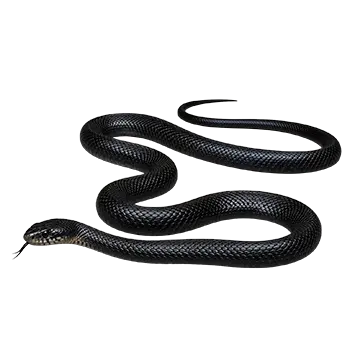

The Eastern Indigo Snake (Drymarchon couperi) received federal protection on January 31, 1978, when the United States Fish and Wildlife Service listed the species as Threatened under the Endangered Species Act of 1973. This listing was prompted by documented population declines across the species' historical range in the southeastern United States, driven by habitat loss, collection for the pet trade, and incidental mortality from rattlesnake roundup practices that involved gassing gopher tortoise burrows with gasoline fumes. The Threatened designation, one step below Endangered on the federal classification scale, reflected the assessment that the species faced a serious risk of becoming endangered throughout a significant portion of its range if existing pressures continued unchecked.
Under the Endangered Species Act, the Threatened listing extends a suite of legal protections to the Eastern Indigo Snake that fundamentally govern how individuals, organizations, and government agencies may interact with the species. Section 9 of the Act prohibits the take of listed species, with take defined broadly to include harassing, harming, pursuing, hunting, shooting, wounding, killing, trapping, capturing, or collecting individual animals, as well as attempting any of these actions. The regulatory definition of harm has been further interpreted to include significant habitat modification or degradation that actually kills or injures wildlife by significantly impairing essential behavioral patterns such as breeding, feeding, or sheltering.
Section 7 of the Endangered Species Act imposes obligations on federal agencies to consult with the Fish and Wildlife Service before authorizing, funding, or carrying out any action that may affect the Eastern Indigo Snake or its habitat. This consultation requirement has had substantial practical consequences in the southeastern United States, where federal agencies are involved in highway construction, military base management, forestry activities on national forests, and the permitting of private development projects that receive federal funding or require federal authorization. The consultation process has generated a large body of biological opinions and habitat conservation plans that shape land use decisions across the species' range.
The Fish and Wildlife Service developed a set of special rules under Section 4(d) of the Endangered Species Act that tailor the protections for the Eastern Indigo Snake to its specific conservation needs. These 4(d) rules allow certain activities that would otherwise be prohibited, subject to specific conditions designed to minimize impacts on the species. For example, the rules establish protocols for land clearing and construction activities within the species' range that include pre-construction surveys, seasonal restrictions on ground-disturbing activities, and requirements for relocating individual snakes discovered during construction. These provisions represent a regulatory effort to balance conservation imperatives with the practical needs of economic development in the fast-growing southeastern states.
Despite its Threatened status, the Eastern Indigo Snake has not received the additional protection of designated Critical Habitat under the Endangered Species Act. Critical Habitat designation, which identifies specific geographic areas essential to the conservation of a listed species and imposes additional regulatory requirements on federal actions affecting those areas, was considered but ultimately not finalized for the Eastern Indigo Snake. The absence of Critical Habitat designation has been a point of concern among conservation advocates, who argue that formal habitat protection would strengthen the regulatory framework for the species and provide clearer guidance for land use planning in areas where indigo snakes occur or could potentially be reintroduced.