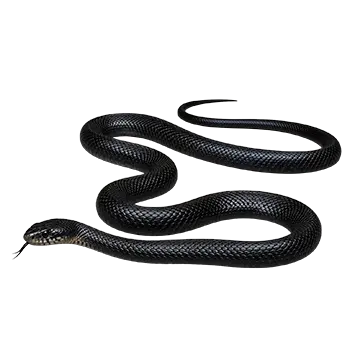

Early Print & Photographic Representation

The Eastern Indigo Snake first entered the broader public consciousness through the natural history literature of the nineteenth and early twentieth centuries. John Edwards Holbrook's North American Herpetology, published in multiple editions between 1836 and 1842, included some of the earliest formal descriptions and illustrations of the species that reached audiences beyond the scientific community. Holbrook's meticulous hand-colored lithographs depicted the snake's distinctive blue-black coloration and robust proportions with considerable accuracy, establishing a visual template that would influence representations of the species for decades to come. These early scientific plates circulated among educated readers and natural history enthusiasts, introducing the Eastern Indigo Snake to audiences who might never encounter the animal in the wild.

As photographic technology advanced during the late nineteenth and early twentieth centuries, the Eastern Indigo Snake became a subject of interest for the growing community of nature photographers working in the American Southeast. The species' large size, striking coloration, and relatively calm behavior when encountered made it a cooperative subject compared to many other wild snake species. Early photographs of indigo snakes appeared in regional natural history publications, field guides, and popular magazines that covered wildlife and outdoor recreation in the southern states. These images helped establish the Eastern Indigo Snake's visual identity in the public mind, associating the species with the pine forests and sandy landscapes of its native habitat.

The mid-twentieth century saw the Eastern Indigo Snake featured in a growing number of popular natural history books aimed at general audiences. Authors such as Archie Carr, whose work on Florida's natural history reached wide readership, discussed the indigo snake as a notable member of the state's reptile fauna. These popular treatments typically emphasized the species' impressive size, its predatory relationship with venomous snakes, and its docile temperament, reinforcing the culturally positive image that the Eastern Indigo Snake had long enjoyed among rural communities in its range. The portrayal of the indigo snake as a beneficial and admirable species in accessible popular literature contributed to a baseline of public goodwill that would prove important when conservation concerns eventually brought the species to wider attention.

The tradition of natural history illustration also contributed to the Eastern Indigo Snake's media presence. Wildlife artists working in the southeastern United States frequently included the species in paintings and drawings depicting the longleaf pine ecosystem, recognizing its visual drama and ecological importance. These artistic representations, which appeared in field guides, conservation publications, and gallery exhibitions, captured the iridescent quality of the snake's scales in ways that photography sometimes struggled to reproduce, and they helped communicate the aesthetic appeal of a species that many viewers might otherwise regard with instinctive unease.

Documentary & Television Features

Television brought the Eastern Indigo Snake to national and international audiences beginning in the latter decades of the twentieth century. Wildlife documentary programs produced for public broadcasting and cable nature channels included segments on the species, typically within broader features on the reptile fauna of the American Southeast or the ecology of the longleaf pine ecosystem. These productions benefited from the Eastern Indigo Snake's visual appeal on screen, as its glossy blue-black scales produced striking footage, particularly when filmed in natural sunlight where the iridescent quality of its coloration became fully apparent.

Among the most significant documentary treatments of the Eastern Indigo Snake have been productions focused specifically on the species' conservation story. As awareness of the indigo snake's threatened status grew during the 1980s and 1990s, documentary filmmakers recognized the potential of the species as a narrative vehicle for exploring broader themes of habitat loss, species protection, and the challenges of conservation in a rapidly developing landscape. The Eastern Indigo Snake's dependence on gopher tortoise burrows, its vulnerability to habitat fragmentation, and the dramatic scope of the longleaf pine ecosystem's decline all provided compelling story elements that translated well to the documentary format.

Reintroduction programs in Alabama and other states have attracted considerable media attention in recent years, generating documentary segments, news features, and short-form video content that has reached audiences across multiple platforms. The visual drama of releasing a large, gleaming indigo snake into restored longleaf pine habitat provides powerful footage that communicates conservation achievement in immediate, emotional terms. Several productions have followed the full arc of the reintroduction process, from captive breeding and rearing at facilities such as the Central Florida Zoo's Orianne Center for Indigo Conservation through release and post-release monitoring, creating narrative arcs that engage viewers in the long-term trajectory of species recovery efforts.

The Eastern Indigo Snake has also appeared in educational television programming aimed at younger audiences. Children's nature shows have featured the species in episodes about snakes, endangered species, and southeastern ecosystems, using the indigo snake's visually striking appearance and non-threatening behavior to challenge negative stereotypes about snakes among young viewers. These educational appearances, though individually modest in their reach, contribute to a cumulative shift in public attitudes toward snakes and toward conservation priorities that benefit the Eastern Indigo Snake and the broader ecological community it represents.

Digital Media & Online Presence

The rise of digital media and social networking platforms has dramatically expanded the Eastern Indigo Snake's cultural visibility since the early 2010s. The species has become one of the most widely shared and discussed North American snakes on platforms including Instagram, YouTube, TikTok, and Facebook, where its spectacular coloration and impressive size generate strong engagement from both herpetology enthusiasts and general audiences. Short-form video content showing indigo snakes in the wild, in educational settings, or during conservation fieldwork routinely attracts viewership numbers that far exceed the reach of traditional documentary programming.

YouTube has been a particularly important platform for Eastern Indigo Snake content. Channels operated by wildlife educators, field biologists, and nature enthusiasts have produced detailed videos covering the species' natural history, conservation status, and ecological relationships, often incorporating field footage of wild encounters that brings viewers into direct visual contact with the animal in its native habitat. Some of these creators have built substantial audiences around southeastern herpetology content, with Eastern Indigo Snake videos consistently ranking among their most popular uploads. The long-form format available on YouTube allows for more nuanced and detailed treatment of the species than the brief clips typical of other social media platforms.

Conservation organizations working on behalf of the Eastern Indigo Snake have embraced digital media as a critical tool for public outreach and fundraising. The Orianne Society, the Central Florida Zoo, and various state wildlife agencies maintain active social media presences that feature regular updates on indigo snake research, reintroduction efforts, and habitat management projects. These institutional accounts complement the work of individual content creators, providing authoritative scientific context alongside the more informal and personal perspectives that characterize much user-generated wildlife content. The ability to share real-time updates from field research and reintroduction events has created a sense of public participation in the species' conservation that was not possible through traditional media channels.

The Eastern Indigo Snake's prominence on digital platforms has not been without complications. The species' popularity has occasionally fueled demand for captive indigo snakes among viewers who may not fully understand the legal restrictions on possession and the specialized care requirements involved. Wildlife agencies and conservation educators have worked to ensure that digital content about the species includes clear messaging about its protected status and the importance of supporting conservation through legitimate channels rather than through private acquisition.

Educational Programming & Outreach

The Eastern Indigo Snake has played a central role in live animal education programs across the southeastern United States for decades. Zoos, nature centers, wildlife rehabilitation facilities, and environmental education organizations throughout Georgia, Florida, and Alabama maintain captive indigo snakes specifically for use in public education presentations. The species' large size, calm temperament, and visually arresting appearance make it an exceptionally effective ambassador animal, capable of holding audience attention and challenging preconceptions about snakes in ways that smaller or less visually distinctive species cannot match.

The Central Florida Zoo and Botanical Gardens has been particularly influential in shaping the Eastern Indigo Snake's role in educational media and public outreach. The zoo's Orianne Center for Indigo Conservation, established in partnership with the Orianne Society, combines active captive breeding for reintroduction with a robust educational mission that includes school programs, public presentations, and the production of educational materials about the species. The center's work has generated significant media coverage and has served as a model for how captive breeding facilities can integrate conservation action with public education to build broader support for species recovery efforts.

University extension programs and state wildlife agencies in the southeastern United States have also incorporated the Eastern Indigo Snake into educational curricula and public outreach campaigns. Materials produced by the Florida Fish and Wildlife Conservation Commission, the Georgia Department of Natural Resources, and the Alabama Department of Conservation and Natural Resources include informational pamphlets, web-based resources, and classroom activities focused on the indigo snake and its ecological role. These agency-produced materials emphasize the species' protected status, the threats it faces, and the practical steps that landowners and community members can take to support indigo snake conservation on private lands.

The Eastern Indigo Snake's utility as an educational subject extends beyond herpetology into broader ecological and environmental topics. Educators use the species as an entry point for discussions of ecosystem connectivity, prescribed fire management, the role of keystone species in community ecology, and the practical mechanisms of endangered species protection. The indigo snake's dependence on gopher tortoise burrows illustrates interspecific relationships and the concept of commensalism in concrete, accessible terms, while its sensitivity to habitat fragmentation provides a tangible example of how landscape-level changes affect individual species. These educational applications ensure that the Eastern Indigo Snake reaches audiences far beyond the community of dedicated reptile enthusiasts.

Representation in Art & Literature

The Eastern Indigo Snake has inspired a notable body of artistic work that spans scientific illustration, fine art, and literary treatment. The species' visual qualities, particularly the deep iridescent blue-black of its scales and the graceful proportions of its elongated body, present both opportunities and challenges for artists working in various media. Capturing the metallic sheen of an indigo snake's scales, which shifts through shades of violet, cobalt, and black depending on the angle and quality of light, has been a recurring focus for wildlife painters and illustrators seeking to convey the animal's distinctive beauty on canvas or paper.

Contemporary wildlife artists working in the southeastern United States have produced significant bodies of work featuring the Eastern Indigo Snake, often placing it within carefully rendered depictions of the longleaf pine ecosystem. These paintings and prints serve both artistic and conservation purposes, appearing in gallery exhibitions, conservation organization publications, and fundraising materials. The artistic tradition of depicting the indigo snake within its ecological context reinforces the conservation message that the species cannot be understood or protected in isolation from the broader landscape that sustains it. Several prominent wildlife art competitions and exhibitions in the Southeast have featured award-winning works centered on the Eastern Indigo Snake, reflecting its status as a subject of enduring interest to artists and collectors alike.

In literary contexts, the Eastern Indigo Snake appears most frequently in nature writing and environmental nonfiction, genres with strong traditions in the southeastern United States. Writers including Janisse Ray, whose explorations of the longleaf pine ecosystem have reached wide audiences, have discussed the indigo snake as a defining presence in the landscape whose decline serves as a measure of ecological loss. These literary treatments tend to emphasize the experiential dimension of encountering such a large and visually striking snake in the wild, using the moment of encounter as a lens through which to examine broader themes of wildness, habitat loss, and the human relationship with the natural world.

The Eastern Indigo Snake has also appeared in regional fiction and poetry, though less prominently than in nonfiction nature writing. Southern writers have incorporated the species into narratives set in the pine flatwoods and sandhill habitats of the Coastal Plain, using its presence or absence as a marker of ecological condition and as a symbol of the wild character of a landscape under increasing pressure from development and land use change. The snake's cultural associations with protection from venomous species, its striking beauty, and its vulnerable conservation status all provide rich thematic material for literary treatment, and its appearances in regional literature contribute to a broader cultural narrative about the southeastern landscape and its transformation over time.

Broader Cultural Impact

The Eastern Indigo Snake's cumulative presence across media, education, and the arts has contributed to a measurable shift in public attitudes toward snakes and toward conservation in the southeastern United States. Survey research conducted by wildlife agencies and conservation organizations has consistently identified the Eastern Indigo Snake as one of the most positively regarded snake species among members of the public who are able to identify it, a finding that reflects decades of favorable media representation and educational outreach. This positive regard stands in notable contrast to the broadly negative attitudes that many people hold toward snakes as a group, suggesting that species-specific media exposure can meaningfully influence public perceptions of even widely feared animal categories.

The species' role as a flagship for longleaf pine ecosystem conservation has amplified its cultural impact beyond the sphere of herpetology. The Eastern Indigo Snake's story, in which a charismatic species declines due to habitat loss and is subsequently the focus of intensive recovery efforts, mirrors broader conservation narratives that resonate with public audiences concerned about environmental issues. By serving as a tangible, visually compelling representative of an abstract ecological crisis, the indigo snake has helped translate complex conservation science into terms that engage public interest and support. Fundraising campaigns, membership drives, and public advocacy efforts for longleaf pine conservation have frequently featured the Eastern Indigo Snake as their central image, leveraging the species' charisma to build financial and political support for habitat protection.

The Eastern Indigo Snake has also become a symbol of regional identity for conservation-minded communities in the southeastern United States. Local festivals, community events, and ecotourism initiatives in parts of Georgia, Florida, and Alabama have adopted the species as a mascot or featured attraction, celebrating its presence as a source of local pride and a marker of ecological distinction. This localized cultural identification with the species creates grassroots constituencies for conservation that complement the work of professional organizations and government agencies, embedding indigo snake protection within the broader cultural fabric of the communities that share its range.

The trajectory of the Eastern Indigo Snake in media and popular culture illustrates a broader pattern in which conservation-focused storytelling can reshape public attitudes toward wildlife species and the ecosystems they inhabit. The species' journey from regional curiosity to nationally recognized conservation icon has been facilitated at every stage by media representations that emphasized its beauty, ecological importance, and vulnerability. As new media platforms continue to expand the potential audience for wildlife content, the Eastern Indigo Snake's cultural profile is likely to continue growing, providing ongoing opportunities to connect public interest in a charismatic species with the substantive conservation work needed to ensure its survival.

Looking ahead, the ongoing digital transformation of media consumption presents both opportunities and challenges for the Eastern Indigo Snake's cultural presence. The democratization of content creation has enabled a wider range of voices to contribute to the public narrative around the species, from professional filmmakers and scientists to amateur naturalists and citizen scientists documenting encounters in their own communities. This diversity of perspective enriches the cultural conversation around the Eastern Indigo Snake, though it also requires ongoing attention to accuracy, responsible messaging, and the potential for well-intentioned but misleading content to spread through social networks. The conservation community's ability to maintain a credible, scientifically grounded presence in the evolving digital media landscape will be an important factor in sustaining the public engagement that the Eastern Indigo Snake's recovery demands.

Always consult a qualified professional before making any health-related decisions. This content is provided for informational reference only and should not replace professional guidance specific to your animal.