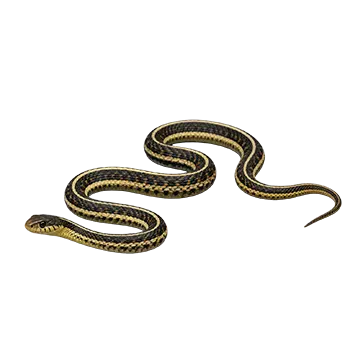

The Eastern Garter Snake's broad distribution across eastern North America means that opportunities to observe the species in the wild are available to anyone with access to even modestly natural outdoor spaces, from large national and state parks to municipal nature preserves, community gardens, and suburban greenways. Unlike many reptile species that require specialized habitat or remote wilderness settings for reliable field observation, the Eastern Garter Snake can frequently be encountered within minutes of a paved parking area, making it one of the most accessible targets for wildlife watchers, nature photographers, and aspiring field herpetologists at any experience level.
State and provincial parks throughout the Eastern Garter Snake's range offer some of the most consistent observation opportunities. Parks that encompass a mosaic of habitat types, including meadows, forest edges, wetland margins, and rocky outcrops, tend to support the highest garter snake densities because they provide the full spectrum of microhabitats that the species uses for thermoregulation, foraging, shelter, and hibernation. In many parks, maintained trails that pass through transitional zones between forest and open habitat are particularly productive observation routes, as garter snakes frequently bask along trail edges where sunlight penetrates the canopy and where the compacted trail surface retains warmth.
Wetland preserves and riparian corridors represent another category of high-value observation sites for the Eastern Garter Snake. The species shows a strong affinity for areas near permanent or seasonal water sources, driven largely by the abundance of amphibian prey, particularly frogs, toads, and salamanders, that these habitats support. Boardwalk trails through marshes, observation platforms overlooking ponds or stream confluences, and paths along canal towpaths or river levees can all provide excellent vantage points for observing garter snakes as they forage along water edges or bask on emergent logs and vegetation.
The celebrated garter snake hibernation sites of central Manitoba, particularly the Narcisse Snake Dens located north of Winnipeg, represent the most spectacular destination for anyone seeking to witness massed garter snake behavior. While the snakes at Narcisse are primarily Red-sided Garter Snakes rather than the Eastern subspecies, the experience of observing tens of thousands of snakes emerging from subterranean limestone cavities during the spring breeding season is unmatched anywhere in the world. The Manitoba government maintains public viewing areas and interpretive trails at Narcisse, and the site attracts visitors from across North America and internationally during the peak emergence period, typically in late April and early May depending on weather conditions.
For observers seeking Eastern Garter Snake populations specifically, the northeastern and mid-Atlantic states offer abundant opportunities in both public and private landscapes. The species is common in the rural and suburban areas of New England, New York, Pennsylvania, and the upper Midwest, and many nature centers and herpetological societies in these regions maintain lists of recommended observation sites and organize guided field outings during the active season.