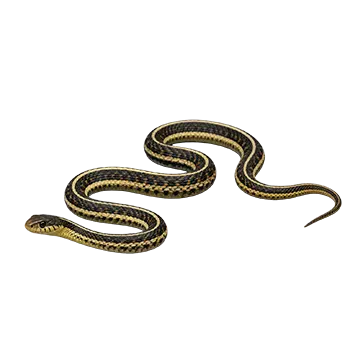

The legal framework governing the Eastern Garter Snake in North America is a complex mosaic of federal, state, provincial, and municipal regulations that varies dramatically depending on jurisdiction, intended activity, and the specific context in which a person encounters or wishes to possess the animal. Unlike large constrictors or venomous species, which are subject to relatively uniform restrictive regulation across most of the continent, the Eastern Garter Snake falls into a regulatory gray area where its status as a common, non-dangerous native species intersects with broad wildlife protection statutes that were often drafted with other species in mind but apply to garter snakes by default.
At the most fundamental level, the Eastern Garter Snake is classified as a native wildlife species throughout its range in the United States and Canada. This classification carries legal implications that many people do not anticipate, because wildlife law in most North American jurisdictions operates from the principle that all native wild animals are held in public trust by the state and cannot be taken, possessed, or commercialized without appropriate authorization. The fact that garter snakes are abundant and commonly encountered does not exempt them from these provisions, and well-meaning individuals who pick up a garter snake in their yard and place it in a terrarium may technically be in violation of state wildlife regulations without realizing it.
The practical enforcement of wildlife laws as they apply to Eastern Garter Snakes is generally lenient compared to enforcement actions targeting illegal trade in endangered species or restricted venomous reptiles. Wildlife officers and conservation agencies typically prioritize their limited enforcement resources toward cases involving threatened or endangered species, large-scale commercial trafficking, or public safety concerns related to dangerous animals. Nevertheless, the theoretical legal exposure that accompanies unauthorized possession of even a common garter snake is real, and ignorance of applicable regulations is not recognized as a defense in wildlife law proceedings in any North American jurisdiction.
For prospective garter snake keepers, breeders, educators, and researchers, understanding the specific regulations that apply in their jurisdiction is not merely a matter of legal compliance but also an expression of the responsible stewardship ethic that underpins legitimate herpetoculture. The regulatory requirements that govern garter snake collection and possession, while sometimes burdensome, exist to ensure that wild populations are not depleted by uncontrolled harvesting and that captive animals are maintained in conditions that meet minimum welfare standards. Engaging with these requirements constructively, rather than ignoring or circumventing them, strengthens the credibility of the herpetoculture community and supports the conservation objectives that wildlife law is designed to serve.