
Origins & Discovery

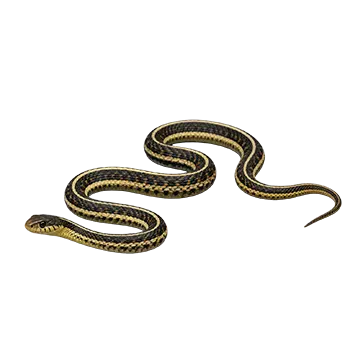
The Eastern Garter Snake (Thamnophis sirtalis sirtalis) is a slender, keeled-scale colubrid native to a vast swath of eastern North America, ranging from southern Canada through the eastern United States and into portions of the Gulf Coast region. It occupies an extraordinary diversity of habitats, from dense hardwood forests and meadow edges to suburban gardens, wetland margins, and rocky hillsides. This ecological versatility has made it the most frequently encountered snake species across much of its range, and its familiarity to generations of North Americans has given it a cultural prominence that few other reptile species can match.

The species was among the earliest North American snakes to receive formal taxonomic description under the Linnaean system. Carl Linnaeus himself described the parent species Thamnophis sirtalis in 1758, working from specimens and accounts that had reached European naturalists through colonial-era collecting expeditions. The subspecific designation sirtalis sirtalis for the Eastern form was established as herpetological taxonomy matured during the nineteenth century, distinguishing it from the numerous other garter snake subspecies that collectively span the continent from coast to coast and from the subarctic to the subtropics.

Long before European science assigned it a Latin binomial, the Eastern Garter Snake was intimately known to the Indigenous peoples of eastern North America. Archaeological evidence and ethnographic records indicate that the snake figured in the daily experience and cultural narratives of peoples from the Haudenosaunee Confederacy and the Anishinaabe nations of the Great Lakes region to the Cherokee and Creek peoples of the Southeast. Its abundance, its harmlessness to humans, and its conspicuous daytime activity patterns ensured that it was one of the most readily observed and frequently discussed animals in the landscapes these communities inhabited.

The common name garter snake is itself a piece of cultural history, deriving from the resemblance of the snake's longitudinal dorsal and lateral stripes to the ribbon garters that were used to hold up stockings in European and early American dress. This etymological connection to everyday clothing speaks to the snake's deep integration into the ordinary experience of people living in eastern North America, an animal so commonplace that its name was drawn not from myth or menace but from a simple visual analogy to a household accessory.

Indigenous Knowledge & Historical Roles

Indigenous peoples across eastern North America developed sophisticated and varied understandings of the Eastern Garter Snake that encompassed practical ecological knowledge, spiritual significance, and medicinal application. These knowledge systems, accumulated over thousands of years of coexistence with the species, represent a depth of observation and interpretation that Western science has only recently begun to appreciate and, in some cases, corroborate through formal research.

Among the Anishinaabe and related Algonquian-speaking peoples of the Great Lakes and upper Midwest, snakes occupied a recognized place within the cosmological framework that organized the natural world into categories of sky beings, earth beings, and underwater beings. Garter snakes, as ground-dwelling creatures that also frequented wetland margins and were occasionally observed swimming, occupied an interstitial position in this schema that lent them particular symbolic interest. Their spring emergence from communal hibernation dens, often in dramatic numbers, served as a reliable seasonal indicator that was incorporated into the ecological calendars by which communities organized planting, gathering, and ceremonial activities.

The Cherokee and other Southeastern peoples maintained detailed practical knowledge of the Eastern Garter Snake's behavior, diet, and habitat preferences. Ethnobotanical and ethnozoological records document the use of garter snakes and their shed skins in certain medicinal preparations, though the specific applications varied between communities and were often closely guarded knowledge transmitted within particular lineages or ceremonial societies. The snake's frequent presence near gardens and cultivated fields was generally viewed with tolerance or mild approval, as the animals were understood to consume insects, earthworms, and small amphibians that could affect crops or attract larger predators.

The Haudenosaunee nations of the Northeast incorporated serpent imagery into their rich traditions of storytelling and moral instruction. While the most prominent serpent figures in Haudenosaunee oral tradition tend to be mythic beings of great size and supernatural power, the everyday garter snake served as a tangible, accessible representative of serpent-kind in practical teaching contexts. Children learning to identify and understand the animals of their environment would typically encounter garter snakes among their earliest experiences with reptiles, and the handling of these small, non-threatening snakes was sometimes part of broader instruction in the careful observation and respectful treatment of the natural world.

Cultural Symbolism & Folklore

The Eastern Garter Snake's deep familiarity to the peoples of its range has generated a surprisingly rich body of folklore, folk belief, and symbolic association, much of it reflecting the ambivalent position that snakes occupy in the cultural imagination of both Indigenous and European-descended North American communities. Unlike larger or more dangerous snake species, the garter snake has rarely inspired intense fear, but it has nonetheless carried a weight of meaning that extends well beyond its modest physical stature.

In European-American folk traditions, the garter snake has long been associated with the arrival of spring. Its emergence from communal hibernacula, sometimes involving hundreds or even thousands of individuals congregating in spectacular mating aggregations, was one of the most visible and dramatic natural events of the early spring landscape in many parts of the eastern United States and southern Canada. Rural communities treated these emergences as informal harbingers of the growing season, and the first garter snake sighting of the year was noted with the same casual attention given to the first robin or the first crocus bloom.

Folk beliefs surrounding garter snakes reflect the broader matrix of snake mythology in European and Euro-American culture. Persistent but entirely unfounded beliefs that garter snakes are venomous, that they can sting with their tails, or that they are juvenile forms of larger dangerous species have circulated in rural communities for generations. These misconceptions, while factually incorrect, reveal the deep-seated unease that many people of European cultural background feel toward snakes in general, an attitude rooted in biblical serpent symbolism and reinforced by centuries of folk tradition that cast snakes as inherently deceptive or dangerous creatures regardless of the actual threat they posed.

Conversely, more sympathetic folk traditions have recognized the garter snake as a gardener's ally and a harmless, even beneficial presence around human habitations. The term garden snake, a common informal name used interchangeably with garter snake across much of the eastern United States, reflects this positive association with cultivated spaces and the perception that the snake's presence indicates a healthy garden ecosystem. In some rural communities, deliberately killing a garter snake was considered bad luck or a sign of poor character, reflecting an implicit understanding of the animal's ecological value even in the absence of formal scientific education.

The garter snake's role as many children's first encounter with a wild reptile has given it a particular place in the informal natural history education of successive generations of North Americans. Catching garter snakes in backyards, meadows, and along stream banks has been a nearly universal childhood experience across the species' range, and for many people, this early interaction shaped lifelong attitudes toward snakes and wildlife more broadly. Herpetologists and conservation educators frequently cite childhood garter snake encounters as formative experiences that sparked their professional interest in reptiles.

Early Scientific Classification & Study

The Eastern Garter Snake holds a distinctive place in the history of North American herpetology, both as one of the first New World snake species to be formally described and as a subject of continuous scientific investigation spanning more than two and a half centuries. Linnaeus's 1758 description of Coluber sirtalis, based on specimens from what is now eastern Canada, established the species within the framework of systematic zoology at the very inception of the binomial nomenclature system. Subsequent revisions transferred the species to the genus Thamnophis, erected by Leopold Fitzinger in 1843 to accommodate the natricine snakes that would come to be known collectively as garter snakes and ribbon snakes.

The taxonomic history of the Eastern Garter Snake reflects the broader challenges that nineteenth-century herpetologists faced in making sense of a genus characterized by extensive geographic variation in color, pattern, and scalation. Early researchers, working primarily from preserved museum specimens with limited locality data, described numerous putative species and varieties that were later synonymized as the true scope of individual and regional variation within Thamnophis sirtalis became apparent. The process of resolving this taxonomic complexity continued well into the twentieth century and contributed significantly to the development of concepts such as the subspecies and the cline in evolutionary biology.

By the mid-twentieth century, the Eastern Garter Snake had become one of the most intensively studied reptile species in North America. Its abundance, its tolerance of human-modified landscapes, and its relative ease of maintenance in captivity made it an ideal model organism for research in fields ranging from reproductive physiology and thermal ecology to behavioral ecology and population genetics. Landmark studies on garter snake chemoreception, prey preference, and antipredator behavior, many of them conducted on Eastern Garter Snake populations, produced findings that reshaped scientific understanding of sensory biology and behavioral evolution in reptiles.

The species also played a notable role in the development of conservation biology as an applied discipline. Because Eastern Garter Snake populations could be monitored relatively easily using mark-recapture techniques and because the species occupied a wide range of habitat types, it became a valuable indicator species for assessing the ecological health of landscapes undergoing development, agricultural intensification, or environmental remediation. Data gathered from long-term garter snake population studies informed broader discussions about habitat fragmentation, road mortality, and the effects of pesticide use on non-target wildlife species.

The Herpetoculture Movement

The Eastern Garter Snake's relationship with the herpetoculture hobby is unusual in that the species has been kept in informal captivity for far longer than the modern reptile-keeping movement has existed. For generations before commercial reptile breeding became a recognized industry, children and amateur naturalists across eastern North America kept garter snakes in improvised enclosures, terrariums, and even simple boxes, making it one of the most widely kept reptile species in the history of human-animal interaction on the continent. This tradition of casual, often short-term captive keeping predates the organized herpetoculture community by well over a century.

As the modern reptile-keeping hobby coalesced during the 1960s and 1970s, the Eastern Garter Snake initially occupied a paradoxical position. On one hand, it was the snake with which the largest number of hobbyists had their first experience. On the other, its very commonness and its modest appearance compared to the colorful boas, pythons, and kingsnakes that were becoming available through the growing commercial trade led many advancing hobbyists to view it as a beginner's animal unworthy of serious attention. This perception began to shift as dedicated garter snake enthusiasts demonstrated that the genus Thamnophis offered surprising diversity in color, pattern, and behavior, and as captive breeding programs began producing morphs and locality-specific variants that showcased the species' aesthetic potential.

The rise of online communities in the late 1990s and early 2000s proved transformative for garter snake herpetoculture. Dedicated forums and social media groups connected garter snake enthusiasts across North America and Europe, facilitating the exchange of husbandry information, captive breeding records, and observations on the behavioral complexity that garter snakes display in well-designed captive environments. These communities helped establish garter snakes as legitimate subjects of serious herpetoculture interest, challenging the dismissive attitudes that had prevailed in some segments of the hobby.

Today the Eastern Garter Snake occupies a respected niche within the herpetoculture world. Captive-bred specimens representing a growing range of selectively bred color and pattern variations are available from specialized breeders, and the species is widely recommended by herpetological societies and reptile educators as an excellent first snake for responsible keepers. Its modest size, its tolerance of a range of captive conditions, and its willingness to feed on commercially available prey items make it genuinely well-suited to captive life in a way that many more glamorous but more demanding species are not.

The Species Today

The Eastern Garter Snake today remains one of the most abundant and widespread reptile species in North America, a status that reflects both its ecological adaptability and its capacity to persist in landscapes that have been profoundly altered by human activity. Unlike many reptile species that have declined sharply in the face of habitat loss, urbanization, and environmental contamination, the Eastern Garter Snake has demonstrated a remarkable ability to maintain viable populations in suburban neighborhoods, agricultural margins, urban parks, and other human-dominated environments. This resilience has made it one of the few snake species that most North Americans can expect to encounter in the course of ordinary daily life.

Despite its overall abundance, the Eastern Garter Snake is not immune to the pressures that threaten reptile populations more broadly. Road mortality represents a significant source of adult mortality in many populations, particularly where roads bisect migration routes between summer foraging habitat and winter hibernation sites. Pesticide use, particularly the application of broad-spectrum insecticides that reduce invertebrate prey populations and herbicides that degrade the dense vegetative cover that garter snakes depend on for thermoregulation and predator avoidance, can suppress local populations even in otherwise suitable habitat. The draining and filling of wetlands, which eliminates the amphibian prey base that constitutes a major component of the Eastern Garter Snake's diet in many regions, represents another ongoing concern.

The species has become an increasingly prominent subject in citizen science initiatives and community-based conservation programs. Projects that invite members of the public to report garter snake sightings, photograph individuals for pattern-based identification, and monitor known hibernation sites have generated valuable population data while simultaneously fostering public engagement with reptile conservation. These programs leverage the Eastern Garter Snake's visibility and approachability to build broader support for the conservation of less charismatic and less familiar reptile species that face more acute threats.

In the broader cultural landscape, the Eastern Garter Snake continues to serve as the primary point of contact between most North Americans and the world of serpents. Its role as an ambassador species, capable of challenging negative attitudes toward snakes through direct personal experience, gives it a conservation value that extends well beyond its own population status. Educators, naturalists, and herpetological society volunteers routinely use live Eastern Garter Snakes in outreach programs designed to build public understanding of snake ecology and dispel the myths and misconceptions that contribute to the persecution of snake species across the continent. In this capacity, the modest garter snake arguably contributes more to reptile conservation than many rarer and more spectacular species simply by being present, visible, and approachable in the everyday landscapes where most people live.

Always consult a qualified professional before making any health-related decisions. This content is provided for informational reference only and should not replace professional guidance specific to your animal.