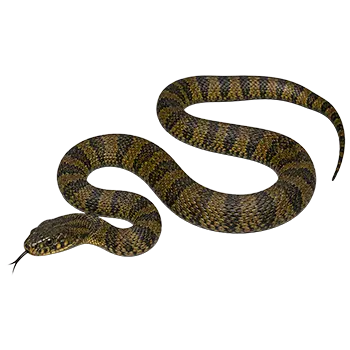

Prime Viewing Destinations

The Diamond-Backed Water Snake inhabits a broad swath of the central and southern United States, but certain regions and specific sites stand out as exceptional destinations for observing the species in the wild. The lower Mississippi River valley, from southern Illinois through Arkansas, Mississippi, and Louisiana, represents the geographic and ecological heart of the species' range and supports some of the densest populations found anywhere. The vast floodplain wetlands, oxbow lakes, cypress-tupelo swamps, and meandering bayous of this region provide ideal habitat, and the Diamond-Backed Water Snake is among the most conspicuous reptilian inhabitants of these landscapes during the warm months of the year.

The Atchafalaya Basin in south-central Louisiana is widely regarded as one of the premier locations in North America for observing the Diamond-Backed Water Snake in a spectacular natural setting. This enormous floodplain swamp, the largest in the United States, supports extraordinary densities of aquatic wildlife, and Diamond-Backed Water Snakes can be found basking on virtually every available log, stump, and overhanging branch along the basin's labyrinthine waterways. Visitors accessing the basin by kayak, canoe, or guided swamp boat tour frequently encounter dozens of individuals in a single outing, providing unmatched opportunities for observation and photography.

Beyond the Mississippi Valley, several other regions within the species' range offer excellent viewing opportunities. The river systems of eastern Texas, including the Trinity, Neches, and Sabine rivers and their associated bottomland habitats, support robust populations that are readily accessible from urban centers such as Houston, Dallas, and Beaumont. The oxbow lakes and sloughs of the Arkansas River valley in eastern Oklahoma and western Arkansas provide similarly productive observation sites, as do the backwater habitats and reservoir margins found throughout the species' range in Missouri, Tennessee, and western Kentucky.

National wildlife refuges and state wildlife management areas within the Diamond-Backed Water Snake's range often provide the best combination of accessible habitat, maintained trails and boat launches, and interpretive resources for visitors seeking to observe the species. The Cache River National Wildlife Refuge in northeastern Arkansas, the Yazoo National Wildlife Refuge in western Mississippi, and the Lacassine National Wildlife Refuge in southwestern Louisiana are among the many protected areas where the species can be observed reliably in well-managed habitats that also support diverse communities of birds, fish, amphibians, and other wildlife.

Seasonal Timing & Field Observation

Successful observation of the Diamond-Backed Water Snake in the field depends heavily on understanding the species' seasonal activity patterns and daily behavioral rhythms. Like all temperate-zone reptiles, the Diamond-Backed Water Snake's activity is governed by temperature, and its visibility to observers varies dramatically across the calendar year. Planning field excursions around the species' peak activity periods significantly increases the likelihood of productive encounters and allows observers to witness the full range of behaviors that make the species such an engaging subject for study and photography.

The optimal window for observing Diamond-Backed Water Snakes extends from late March or early April through October across most of the species' range, with the precise timing varying by latitude and local climate conditions. In the southern portions of the range, including Louisiana, southern Mississippi, and eastern Texas, warm temperatures arrive earlier and persist longer, expanding the active season accordingly. In the northern reaches of the range, in states such as Illinois, Indiana, and Missouri, the active season is compressed, with emergence from overwintering sites typically occurring in April and retreat to hibernacula beginning in late September or October.

Within the active season, the species' basking behavior provides the most reliable opportunities for observation. Diamond-Backed Water Snakes are strongly heliotropic, meaning they actively seek out sun-exposed positions to elevate their body temperature, and they are most likely to be found basking during the morning hours of warm days when ambient temperatures are rising but have not yet reached the high levels that drive the snakes to seek shade or enter the water to cool down. On overcast days with moderate temperatures, basking activity may extend through much of the day, as the snakes work harder to achieve and maintain their preferred body temperature under reduced solar radiation.

Field observers should be aware that the Diamond-Backed Water Snake is a wary animal that will typically flee into the water at the first sign of disturbance. Approaching basking sites quietly and slowly, using available vegetation and terrain features for concealment, and minimizing sudden movements and noise will dramatically increase the duration and quality of observation opportunities. Binoculars and telephoto camera lenses are essential tools for observing the species from distances that allow natural behavior to continue undisturbed, and observers who are willing to sit quietly near productive basking sites for extended periods are often rewarded with close observations of feeding, social interactions, and other behaviors that cannot be witnessed during brief passing encounters.

The spring mating season and the late summer birthing period represent two particularly rewarding windows for observation. During the spring mating period, typically spanning April through May, male Diamond-Backed Water Snakes actively search for receptive females, and mating aggregations involving multiple individuals can occasionally be observed at favored basking sites. In late summer, gravid females may be observed basking with conspicuously distended bodies, and the appearance of neonates along the water's edge in August and September provides opportunities to observe the smallest and most vividly patterned individuals of the species.

Safety & Ethical Encounter Guidelines

Encounters with Diamond-Backed Water Snakes in the field are generally safe for observers who exercise reasonable caution and respect the animal's space. The species is non-venomous and poses no significant health risk to humans, though it will bite vigorously if handled or cornered, and its saliva contains mild anticoagulant compounds that can cause minor wounds to bleed freely. The primary safety consideration during field encounters with the Diamond-Backed Water Snake is not the snake itself but the aquatic habitats it inhabits, which may also support venomous Cottonmouths, present drowning risks, and harbor other hazards such as alligators, biting insects, and waterborne pathogens.

The most important safety practice for anyone spending time in habitats shared by Diamond-Backed Water Snakes and Cottonmouths is the ability to distinguish between the two species reliably. While detailed identification guidance is beyond the scope of this travel guide, several key differences are worth emphasizing for field observers. Nerodia species, including the Diamond-Backed Water Snake, have round pupils, lack the heat-sensing facial pits that characterize pit vipers, display a more slender and tapered head profile than Cottonmouths, and have divided subcaudal scales. Cottonmouths have vertically elliptical pupils, prominent facial pits between the eye and nostril, a distinctly blocky and triangular head, and undivided subcaudal scales. When in doubt about the identity of any water snake, the safest course of action is to observe from a distance and avoid handling the animal.

Ethical field observation of the Diamond-Backed Water Snake follows the same principles that govern responsible wildlife watching in any context. Observers should minimize their impact on the animals and habitats they visit by staying on established trails and waterways, avoiding the destruction or disturbance of cover objects and basking sites, and refraining from pursuing, harassing, or attempting to capture wild snakes. The temptation to flip logs, lift bark, or overturn debris in search of hidden snakes should be resisted, as these activities can damage critical microhabitats and disturb not only the target species but also the many other organisms that share these refugia.

Photographers working with Diamond-Backed Water Snakes should prioritize the welfare of their subjects over the quality of their images. The use of flash photography at close range can stress basking snakes and provoke defensive responses, and the pursuit of fleeing animals into the water or through dense vegetation causes unnecessary disturbance. Long-lens photography from a respectful distance consistently produces better results in terms of both image quality and the naturalness of the behavior captured, and it eliminates the ethical concerns associated with close approach and harassment.

Visitors to Diamond-Backed Water Snake habitat should also be prepared for the practical challenges of working in the warm, humid, insect-rich environments where the species is found. Adequate hydration, sun protection, insect repellent, and appropriate footwear for wet and uneven terrain are essential. Awareness of the risk of heat-related illness during the hot summer months when water snake activity peaks is important, particularly for visitors from cooler climates who may not be acclimated to the sustained high temperatures and humidity that characterize the American South during the warm season.

Transport & Relocation Considerations

The transport of live Diamond-Backed Water Snakes, whether for relocation, veterinary care, educational programming, or transfer between keepers, requires careful attention to the physical needs of the animal and compliance with all applicable legal requirements. As a semi-aquatic species with specific environmental tolerances, the Diamond-Backed Water Snake presents transport challenges that differ in several important respects from those encountered with terrestrial snake species, and protocols must be adapted accordingly to ensure the safety and welfare of the animal during transit.

The selection of an appropriate transport container is the first critical decision in any Diamond-Backed Water Snake transport scenario. Secure, well-ventilated plastic containers with locking lids are the standard choice for short-duration transport, and the container should be large enough to allow the snake to adopt a natural resting posture without being so spacious that the animal slides and tumbles during vehicle movement. A layer of damp paper towels or moistened sphagnum moss on the floor of the container provides traction and maintains the humidity levels that the species requires, while absorbing waste products that may be produced during the stress of transport.

Temperature management during transport is a critical concern for the Diamond-Backed Water Snake, as the species is sensitive to both thermal extremes and rapid temperature fluctuations. Transport containers should never be left in direct sunlight or in unventilated vehicles, as temperatures inside a closed container can reach lethal levels within minutes during warm weather. In cold weather, insulated shipping boxes or heat packs designed for reptile transport may be necessary to prevent the container temperature from dropping below the species' tolerance threshold. A reliable thermometer placed inside or adjacent to the transport container allows the transporter to monitor conditions and make adjustments as needed throughout the journey.

For longer transits, such as overnight shipping or multi-day relocations, additional precautions are warranted. The Diamond-Backed Water Snake can tolerate periods of twenty-four to forty-eight hours without access to water if humidity within the transport container is maintained at adequate levels, but longer periods of deprivation should be avoided. The provision of a shallow water dish is generally impractical during vehicle transport due to the risk of spillage, but brief stops to offer water in a secure, escape-proof environment can help maintain hydration on longer journeys. Animals being shipped via commercial carriers should be packaged according to the carrier's live animal shipping policies and all applicable federal and state transport regulations.

Individuals who encounter Diamond-Backed Water Snakes in unwanted locations, such as residential properties, swimming pools, or agricultural facilities, should be aware that relocation of the animal is often the most appropriate and humane response. However, relocation should ideally be performed by trained wildlife professionals or experienced herpetologists who can identify the species with confidence, handle the animal safely, and release it in suitable habitat within its home range. Amateur relocation efforts, while well-intentioned, carry risks of misidentification, injury to the handler, and release of the animal in unsuitable habitat where its survival prospects may be diminished.

Ecotourism & Guided Experiences

Ecotourism centered on the freshwater ecosystems of the American South provides increasingly accessible opportunities for travelers to encounter the Diamond-Backed Water Snake in its natural habitat under the guidance of knowledgeable professionals. The growth of nature-based tourism across the Gulf Coastal Plain and the Mississippi Valley has created a network of outfitters, guides, and tour operators who offer excursions into the swamps, bayous, rivers, and wetlands where the species is most abundant. While most of these operations are not specifically marketed as snake-watching tours, the Diamond-Backed Water Snake is a frequent and often highlight-worthy component of the wildlife encountered during guided outings in appropriate habitat.

Swamp boat tours in Louisiana represent perhaps the most accessible entry point for travelers seeking to observe Diamond-Backed Water Snakes in a guided setting. Operators based in communities surrounding the Atchafalaya Basin, the Honey Island Swamp, and the Manchac Swamp offer excursions ranging from one-hour introductory trips to full-day deep-swamp adventures that penetrate far into the interior of these vast wetland systems. Experienced guides on these tours can typically identify Diamond-Backed Water Snakes on sight and provide accurate natural history information that enhances the encounter for participants. The best operators emphasize ecological interpretation over sensationalism, presenting water snakes as integral components of the swamp ecosystem rather than as frightening curiosities.

Kayaking and canoeing offer a more intimate and self-directed alternative to motorized swamp boat tours for travelers with paddling skills and a willingness to navigate independently. Numerous outfitters within the Diamond-Backed Water Snake's range rent kayaks and canoes and provide maps and guidance for routes that pass through productive water snake habitat. The quiet approach afforded by a paddle-powered vessel is a significant advantage for wildlife observation, as it allows paddlers to approach basking snakes much more closely than is typically possible from a motorized boat. Several outfitters in Arkansas, Louisiana, and eastern Texas offer guided paddling trips that include interpretation of the reptile and amphibian communities encountered along the route.

For travelers with a more specialized interest in herpetology, dedicated herping tours and field courses provide structured opportunities to observe and learn about the Diamond-Backed Water Snake and its ecological associates. Several herpetological societies, university extension programs, and private guide services offer multi-day field excursions in regions of high reptile and amphibian diversity within the species' range. These programs typically combine field observation with classroom instruction on identification, ecology, and conservation, providing participants with a depth of engagement that casual tourism cannot match.

The economic dimension of wildlife-based ecotourism provides an important, if indirect, incentive for the conservation of the Diamond-Backed Water Snake and its habitats. Communities that derive economic benefits from nature tourism have a tangible financial interest in maintaining the ecological health of the wetlands, rivers, and swamps that attract visitors. This economic incentive complements the ethical and scientific arguments for conservation, creating a practical alignment between local economic development and the protection of aquatic ecosystems and the wildlife they support.

Planning a Water Snake Expedition

Planning a successful field expedition focused on the Diamond-Backed Water Snake requires attention to logistical details that extend well beyond the choice of destination and timing. The remote and often challenging environments where the species is most abundant demand a level of preparation that casual day-hikers and fair-weather tourists may not anticipate, and thoughtful advance planning can make the difference between a productive and memorable outing and a frustrating or even dangerous one.

Accommodations near prime Diamond-Backed Water Snake habitat range from basic campgrounds and rustic cabins to comfortable lodges and bed-and-breakfast establishments in nearby towns. National wildlife refuges and state parks within the species' range frequently offer on-site camping facilities that place visitors within walking or short paddling distance of productive observation sites, and the early-morning access that on-site camping provides is a significant advantage for observers hoping to reach basking areas during the peak activity window. For travelers who prefer more comfortable quarters, the small towns and regional centers scattered throughout the Mississippi Valley and the Gulf Coast offer a range of lodging options within reasonable driving distance of field sites.

Equipment selection for a Diamond-Backed Water Snake field expedition should prioritize functionality in warm, wet, and insect-rich environments. Waterproof footwear rated for wading in shallow water is essential, as the best observation opportunities often require the observer to approach waterways on foot across muddy or flooded terrain. Lightweight, moisture-wicking clothing in neutral colors reduces heat stress while minimizing visual disturbance to the animals being observed. A quality pair of binoculars in the eight-by-forty-two or ten-by-forty-two range provides the magnification needed to observe basking snakes from respectful distances, and a field guide covering the reptiles of the region is invaluable for confirming identifications and learning to distinguish the Diamond-Backed Water Snake from the several other Nerodia species and the venomous Cottonmouth that share its habitat.

Photographers planning to document Diamond-Backed Water Snakes in the field should consider the specific technical challenges that the species and its habitat present. A telephoto lens in the two-hundred to four-hundred millimeter range is the minimum practical focal length for obtaining frame-filling images of basking snakes from non-disruptive distances, and a lens with effective image stabilization is highly valuable for shooting from unstable platforms such as kayaks and canoes. Fast autofocus performance is important for capturing the species' rapid escape responses, and weather-sealed camera bodies and lenses provide protection against the humidity, rain, and splashing water that are inevitable companions in the field.

Advance research into the specific regulations, access requirements, and seasonal conditions of the intended field site is an essential component of expedition planning. Many national wildlife refuges and state wildlife management areas impose seasonal access restrictions, require entry permits or user fees, and restrict certain activities such as off-trail hiking or overnight camping. Water levels in river floodplain habitats can fluctuate dramatically in response to rainfall and upstream dam operations, potentially rendering planned access routes impassable or transforming productive observation sites into deep open water that is less hospitable to basking snakes. Checking with refuge managers, park rangers, and local outfitters in the days before a planned visit can help travelers adjust their plans in response to current conditions and avoid unexpected closures or hazards.

Always consult a qualified professional before making any health-related decisions. This content is provided for informational reference only and should not replace professional guidance specific to your animal.