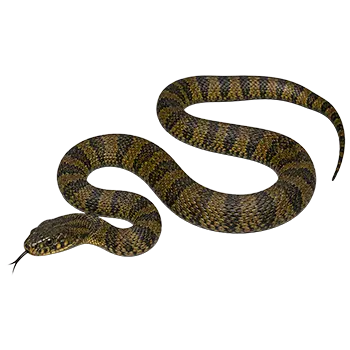

The Diamond-Backed Water Snake (Nerodia rhombifer) is not listed under the United States Endangered Species Act, reflecting its status as a widespread and generally abundant species across its range in the central and southern United States. This absence from the federal threatened and endangered species list means that the species does not receive the habitat protections, take prohibitions, or recovery plan mandates that accompany ESA listing. However, the lack of ESA protection does not place the Diamond-Backed Water Snake entirely outside the scope of federal wildlife law, as several broadly applicable federal statutes affect the species in specific contexts.
The Lacey Act, originally enacted in 1900 and amended multiple times since, provides the primary federal legal mechanism relevant to the Diamond-Backed Water Snake. The Lacey Act prohibits the interstate transport and sale of wildlife taken in violation of state, tribal, or foreign law, effectively federalizing state-level collection and possession regulations. For the Diamond-Backed Water Snake, this means that an individual who collects specimens in a state where collection is prohibited or who exceeds that state's bag limits commits a federal offense when transporting those animals across state lines, even if the destination state imposes no restrictions of its own on the species.
Additional federal regulatory relevance arises through the Clean Water Act, the National Environmental Policy Act, and other environmental statutes that govern activities affecting the freshwater habitats on which the Diamond-Backed Water Snake depends. While these laws do not name the species specifically, their provisions for wetland protection, water quality standards, and environmental impact assessment create a regulatory framework that indirectly safeguards the habitats essential to the species' survival. Federal permitting requirements for activities such as dredging, filling wetlands, and constructing dams or levees along rivers and streams within the species' range must account for impacts on aquatic and riparian wildlife, including water snakes.
The Convention on International Trade in Endangered Species of Wild Fauna and Flora, while primarily relevant to species involved in significant international commercial trade, provides a broader legal context for understanding the regulatory environment surrounding native reptile species. The Diamond-Backed Water Snake is not listed on any CITES appendix, and international trade in the species is minimal. However, the CITES framework and its implementing legislation in the United States inform the regulatory philosophy that guides domestic wildlife trade regulation, and proposals to list additional reptile species under CITES or under domestic equivalents are monitored by the herpetoculture community and wildlife management agencies alike.