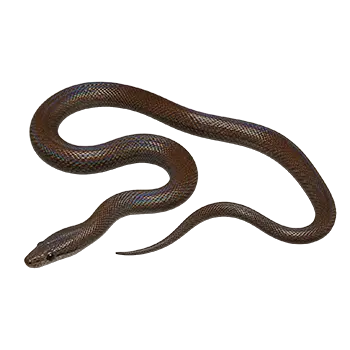

The international trade in Colombian Rainbow Boas is governed primarily by the Convention on International Trade in Endangered Species of Wild Fauna and Flora, commonly known as CITES, a multilateral treaty that regulates the cross-border movement of wildlife and wildlife products to prevent overexploitation. The genus Epicrates, which includes the Colombian Rainbow Boa alongside its Caribbean and South American relatives, is listed under CITES Appendix II. This listing indicates that while the species is not currently considered threatened with extinction, international trade must be monitored and controlled to ensure that commercial exploitation does not reach levels that could jeopardize the survival of wild populations.
Under CITES Appendix II, the export of Colombian Rainbow Boas from their countries of origin requires the issuance of an export permit by the relevant national wildlife authority. This permit may only be granted when the exporting country's scientific authority has determined that the export will not be detrimental to the survival of the species in the wild, a finding known as a non-detriment finding. Importing countries that are CITES signatories must verify that valid export documentation accompanies any shipment of Epicrates maurus entering their borders. The practical effect of these requirements is that legal international trade in Colombian Rainbow Boas is limited to captive-bred specimens or to wild-caught animals accompanied by the appropriate permits.
The implementation and enforcement of CITES regulations vary significantly among the range states from which Colombian Rainbow Boas originate. Colombia, Venezuela, Guyana, Suriname, and Trinidad and Tobago each maintain their own national wildlife agencies responsible for administering CITES permits, conducting non-detriment assessments, and monitoring compliance with the treaty's provisions. Differences in institutional capacity, enforcement resources, and political priorities across these countries produce an uneven regulatory landscape in which the protection afforded to wild rainbow boa populations depends heavily on the effectiveness of individual national authorities.
For prospective keepers and breeders outside the species' native range, understanding CITES requirements is essential when acquiring Colombian Rainbow Boas, particularly when purchasing animals from international sources. Captive-bred specimens produced within the buyer's country of residence are generally exempt from the permit requirements that apply to international shipments, but documentation establishing the captive-bred status of an animal may still be required for interstate or interprovincial transport, depending on the jurisdiction. Keepers are advised to maintain thorough records of acquisition, including receipts, breeder information, and any applicable CITES documentation, to demonstrate legal provenance in the event of inspection or inquiry.