
Origins & Discovery

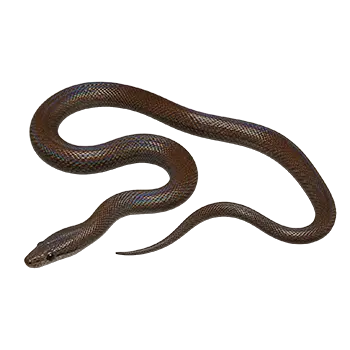
The Colombian Rainbow Boa (Epicrates maurus) is a medium-sized, non-venomous constrictor native to the tropical and subtropical lowlands of northern South America and portions of Central America. Its range extends across Colombia, Venezuela, Guyana, Suriname, French Guiana, Trinidad and Tobago, and parts of Costa Rica and Panama, encompassing an impressive diversity of habitats from humid tropical forests and river floodplains to drier savanna margins and agricultural landscapes. The species owes its common name both to its geographic stronghold in Colombia and to the distinctive iridescent sheen that plays across its scales when light strikes them at certain angles, producing subtle rainbow-like reflections that have captivated human observers for centuries.

The taxonomic history of the Colombian Rainbow Boa reflects the broader challenges that herpetologists have faced in sorting out the relationships within the genus Epicrates. For much of the twentieth century, the Colombian form was classified as a subspecies of the Brazilian Rainbow Boa under the name Epicrates cenchria maurus. This treatment grouped a wide array of geographically and morphologically distinct rainbow boa populations under a single polytypic species. Advances in molecular phylogenetics during the late twentieth and early twenty-first centuries revealed that the Colombian populations were genetically distinct enough to warrant recognition as a separate species, and Epicrates maurus is now widely accepted as the valid binomial for this animal.

The species was originally described from specimens collected in the coastal regions of northern South America, areas that had been explored by European naturalists since the sixteenth and seventeenth centuries. Dutch, Spanish, and Portuguese colonial naturalists encountered rainbow boas in the forests and plantations of the Guianas and the Venezuelan coast, and fragmentary descriptions of iridescent snakes appear in several early natural history compilations from the region. However, the formal taxonomic description lagged behind these initial encounters, as the bewildering diversity of New World boid snakes presented a formidable classification challenge to European science.

The Colombian Rainbow Boa's relatively modest size compared to larger boids such as the Green Anaconda or the Boa Constrictor meant that it attracted somewhat less attention from early explorers and naturalists, who tended to focus on the most dramatically large or dangerous species. Nevertheless, the animal's distinctive iridescence and attractive patterning ensured that it was noted and collected whenever encountered, and museum specimens from the eighteenth and nineteenth centuries provided the foundation for the taxonomic work that would eventually clarify its species status.

Indigenous Knowledge & Historical Roles

Indigenous peoples across northern South America developed extensive practical and spiritual knowledge of the Colombian Rainbow Boa over thousands of years of shared habitation. Communities in the Orinoco Basin, the Caribbean coastal lowlands of Colombia and Venezuela, and the forests of the Guiana Shield encountered rainbow boas regularly in and around their settlements, as the snakes' preference for areas near water and their tolerance of disturbed habitats brought them into frequent proximity with human activity. This familiarity produced a nuanced understanding of the animal's behavior, ecology, and seasonal patterns that was embedded in oral traditions, practical land management, and spiritual belief systems.

Among the Wayuu people of the Guajira Peninsula in northern Colombia and northwestern Venezuela, snakes in general occupy a significant place in cosmological narratives, and the rainbow boa's iridescent qualities gave it a particular association with meteorological phenomena and the interplay of light and water. The visual connection between the snake's shimmering scales and the rainbow itself was not lost on indigenous observers, and in some traditions the animal served as a living link between terrestrial and celestial realms. These associations were reinforced by the snake's semiaquatic habits, which placed it at the boundary between land and water, a liminal position that carried deep symbolic weight in many South American cosmologies.

The practical value of the Colombian Rainbow Boa as a controller of rodent populations was widely recognized by agricultural and horticultural communities throughout its range. Indigenous groups practicing shifting cultivation in forest clearings understood that boas and other constrictors helped suppress populations of small mammals that could damage crops such as manioc, maize, and plantains. This ecological service fostered a degree of tolerance and even protection for the snakes in many communities, contrasting with the more adversarial relationship that sometimes developed between humans and venomous snake species in the same regions.

In the Amazonian and Orinocan cultural sphere, the broader category of boid snakes, including rainbow boas, frequently appeared in the mythology and ritual practice of groups such as the Yanomami, the Warao, and the Piaroa. While the enormous anaconda typically dominated serpent mythology in these traditions, smaller boas including the rainbow boa played supporting roles in narratives about the creation of waterways, the origins of specific animal species, and the spiritual journeys of shamans. The iridescent quality of the rainbow boa's skin was sometimes interpreted as evidence of supernatural power or spiritual potency, reinforcing the animal's place in the symbolic landscape of these cultures.

Cultural Symbolism & Folklore

The Colombian Rainbow Boa's most culturally resonant feature, its iridescent skin, has generated a rich body of symbolic interpretation across the diverse cultures of northern South America and the Caribbean. The phenomenon of structural iridescence, produced by microscopic ridges on the snake's scales that refract light into spectral colors, creates an ever-shifting play of color that has invited comparison to rainbows, oil on water, and precious gemstones. For cultures attuned to the symbolic significance of color and light, this quality transformed the rainbow boa from a mere animal into a living emblem of transformation, beauty, and the hidden dimensions of the natural world.

In the Afro-Colombian and Afro-Venezuelan communities of the Caribbean coast, the cultural memory of West African serpent reverence merged with indigenous South American snake symbolism to produce syncretic traditions in which boas, including the rainbow boa, carried layered spiritual meanings. Within the complex of religious practices that developed among enslaved Africans and their descendants in the New World, serpent imagery drew on both the Vodun traditions of Dahomey and the animistic beliefs of indigenous Caribbean peoples, creating a symbolic vocabulary in which the rainbow boa could represent ancestral wisdom, the continuity of African cultural identity, and the regenerative power of nature.

The rainbow boa's association with water extends into the folklore of rural Colombia, where stories about large snakes inhabiting rivers, lagoons, and flooded forests are a staple of regional oral traditions. In the llanos, the vast tropical grasslands of eastern Colombia and western Venezuela, tales of serpents with shimmering skins emerging from rivers during the rainy season have been recorded by folklorists since the nineteenth century. These narratives often attribute protective or guardian qualities to the snakes, casting them as custodians of water sources and the ecological balance of riparian habitats.

The Colombian Rainbow Boa also figures in the broader artistic and literary traditions of Colombia and Venezuela. Contemporary South American visual artists have drawn on the rainbow boa's iridescence as a metaphor for the region's ecological richness and cultural complexity, and the animal appears in paintings, textile designs, and decorative arts that seek to celebrate the biodiversity of the tropical lowlands. In literature, the rainbow boa has served as a symbol of the untamed natural world that persists alongside and sometimes in tension with the rapid urbanization and development transforming northern South America.

Colonial Encounters & Scientific Classification

European colonization of northern South America beginning in the sixteenth century brought the Colombian Rainbow Boa into the awareness of Western natural history, though the process of scientific recognition was gradual and complicated by the taxonomic difficulties inherent in describing the diverse boid fauna of the neotropics. Spanish colonists in what is now Colombia and Venezuela encountered rainbow boas in agricultural settings, forest clearings, and the vicinities of rivers and streams, but their accounts tended to group all non-venomous constrictors together without careful distinction between species. The earliest European references to iridescent snakes in the region are embedded in broader descriptions of tropical fauna that prioritized spectacle over systematic observation.

Dutch and French naturalists working in the Guianas during the seventeenth and eighteenth centuries produced more detailed observations of rainbow boas, as the species was particularly common in the coastal lowland forests of Suriname and French Guiana. These colonial naturalists collected specimens that were shipped to European museums and private cabinets of curiosity, where they joined a growing body of material from the New World tropics. The descriptions that accompanied these specimens often noted the remarkable play of color on the snakes' scales, a feature that distinguished them from other boid species in the collectors' experience and that would eventually contribute to the common name by which the species became known.

The formal taxonomic treatment of the Colombian Rainbow Boa unfolded over more than two centuries of scientific revision. Early descriptions placed the various rainbow boa populations of Central and South America within a single, broadly defined species, a classification that persisted through much of the twentieth century as herpetologists debated the significance of geographic variation within the group. The eventual recognition of Epicrates maurus as a distinct species reflected advances in genetic analysis that allowed researchers to move beyond the morphological characters that had traditionally formed the basis of snake taxonomy, revealing evolutionary divergences that external appearance alone could not reliably distinguish.

The colonial period also left its mark on the cultural landscape of the Colombian Rainbow Boa's range in ways that affected human-snake relationships. The introduction of European agricultural practices, the conversion of forested land to plantations and pasture, and the establishment of urban centers altered the habitats in which rainbow boas had coexisted with indigenous communities for millennia. These landscape transformations simultaneously brought the snakes into closer contact with colonial settlers, who generally lacked the cultural frameworks for tolerating or valuing large constrictors, and disrupted the indigenous ecological knowledge systems that had historically moderated human-snake interactions.

The Herpetoculture Movement

The Colombian Rainbow Boa entered the international reptile-keeping hobby during the latter decades of the twentieth century, following a trajectory that closely paralleled the broader expansion of herpetoculture as a recreational and educational pursuit. During the 1980s and 1990s, as the captive reptile trade diversified beyond a handful of commonly kept species, rainbow boas attracted attention from hobbyists drawn to their manageable size, attractive coloration, and distinctive iridescent sheen. The Colombian form, with its generally calmer disposition compared to some other rainbow boa species and its somewhat more subdued but still beautiful coloration, became a popular entry point for keepers interested in boid snakes but wary of the challenges posed by larger species.

The development of captive breeding programs for the Colombian Rainbow Boa represented a significant step in the maturation of the herpetoculture community's approach to the species. Early availability had relied heavily on wild-caught imports, a practice that raised both conservation and animal welfare concerns. As breeders gained experience with the species' reproductive biology, including its ovoviviparous mode of reproduction in which females give birth to live young, captive-bred animals became increasingly available in the hobby. This shift reduced pressure on wild populations and produced animals that were generally healthier, better acclimated to captive conditions, and more amenable to handling than their wild-caught counterparts.

The herpetoculture community's engagement with the Colombian Rainbow Boa generated a substantial body of practical knowledge about the species' care requirements and natural history. Keepers and breeders documented optimal temperature and humidity ranges, dietary preferences, common health issues, and behavioral patterns in detail, sharing their findings through specialty publications, online forums, and reptile expos. This grassroots naturalism complemented the work of academic herpetologists, filling gaps in knowledge about the species' biology that formal research had not yet addressed and creating a community of practice that valued careful observation and responsible stewardship.

In recent years, the Colombian Rainbow Boa has maintained a steady presence in the reptile hobby, though it has not achieved the explosive popularity of species like the Ball Python or the Corn Snake. Its appeal lies in a combination of aesthetic beauty, manageable size, and a temperament that, while occasionally nippy in juveniles, generally mellows with consistent handling. The species serves as a valuable ambassador for South American biodiversity within the herpetoculture community, and well-maintained captive populations provide a hedge against the uncertainties facing wild rainbow boa populations in an era of rapid environmental change.

The Species Today

Today the Colombian Rainbow Boa occupies a position of moderate but stable prominence in both the herpetological world and the broader cultural landscape of the regions it inhabits. In its native range across northern South America and into Central America, the species remains relatively common in suitable habitat, though it faces the cumulative pressures of deforestation, agricultural expansion, and urbanization that affect wildlife across the neotropics. Unlike some of its larger boid relatives, the Colombian Rainbow Boa's modest size and adaptable habits have allowed it to persist in fragmented landscapes and secondary-growth forests, demonstrating a degree of ecological resilience that offers cautious grounds for optimism about its long-term survival.

Conservation efforts directed specifically at the Colombian Rainbow Boa remain limited compared to those targeting more charismatic or critically endangered species, but the animal benefits indirectly from broader habitat protection initiatives across its range. National parks, forest reserves, and indigenous territories in Colombia, Venezuela, and the Guianas provide refugia where rainbow boa populations can persist without the direct persecution or habitat destruction that threatens them elsewhere. The species' inclusion in CITES Appendix II reflects international recognition that trade in wild-caught specimens must be monitored and regulated to prevent overexploitation, though enforcement of these protections varies significantly across the animal's multinational range.

Culturally, the Colombian Rainbow Boa continues to serve as a point of connection between the diverse human communities that share its geographic range and the rich biodiversity of the northern neotropical lowlands. Indigenous communities maintain traditional knowledge and cultural relationships with the species, even as the broader social and economic transformations of the twenty-first century reshape the landscapes and lifestyles of these communities. In urban and suburban settings, the species' presence in the pet trade and in educational programming at zoos and nature centers introduces new generations of people to the ecological and aesthetic values embodied by this quietly spectacular animal.

The ongoing scientific study of the Colombian Rainbow Boa continues to refine understanding of its evolutionary history, population genetics, and ecological role within the communities of species it inhabits. Researchers are investigating the mechanisms underlying the species' structural iridescence, exploring its potential applications in materials science and optical engineering while simultaneously deepening appreciation for the natural processes that produce such remarkable visual effects. As the twenty-first century unfolds, the Colombian Rainbow Boa stands as a testament to the intricate connections between human cultures and the natural world, a reminder that even relatively modest and unassuming animals can carry profound historical, ecological, and aesthetic significance.

Always consult a qualified professional before making any health-related decisions. This content is provided for informational reference only and should not replace professional guidance specific to your animal.