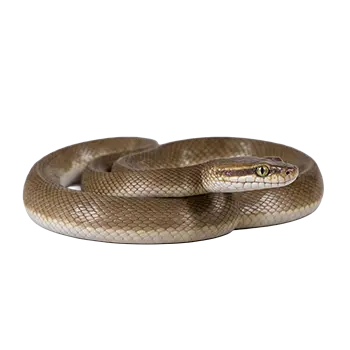

Early Print & Natural History Literature

The Brown House Snake's first appearances in published media were confined to the technical literature of herpetology and natural history, where it featured as one of many African colubrid species cataloged during the nineteenth and early twentieth centuries. Early published descriptions, including the foundational work of Dumeril and Bibron and subsequent treatments by herpetologists working at southern African museums, were written for specialist audiences and appeared in scientific journals and monographs with limited circulation. These accounts, while essential for establishing the species' place in taxonomic literature, did little to bring the Brown House Snake to the attention of a general readership.

The species began to appear in more accessible natural history publications during the mid-twentieth century, as field guides to the reptiles of southern Africa became available to a wider audience. Works such as those produced by Vivian FitzSimons and later by Johan Marais provided descriptions and illustrations of the Brown House Snake alongside more prominent species, introducing it to amateur naturalists, farmers, and anyone with a practical interest in identifying the snakes they encountered on the southern African landscape. These field guides played a crucial role in shaping public understanding of the Brown House Snake as a harmless and beneficial species, countering the generalized fear of all snakes that colonial attitudes had often encouraged.

Popular science writing about African wildlife in the mid to late twentieth century occasionally mentioned the Brown House Snake in passing, typically in the context of broader discussions about the diversity of African reptiles or the ecological roles of non-venomous snakes. However, the species rarely received extended treatment in mainstream natural history books, which tended to focus on the continent's more dramatic or dangerous species. The Brown House Snake's unassuming size, muted coloration, and lack of medical significance made it an unlikely candidate for the kind of feature-length treatment that publishers and readers favored during an era when African wildlife writing was dominated by accounts of large mammals, venomous snakes, and spectacular reptiles like the Nile crocodile.

The publication of comprehensive reptile husbandry manuals from the 1990s onward marked a significant shift in the Brown House Snake's presence in print media. As the herpetoculture hobby expanded and publishers recognized a market for detailed care guides, the Brown House Snake began to receive dedicated chapters and even standalone booklets describing its captive requirements, breeding biology, and behavioral characteristics. These publications brought the species to the attention of an international audience of reptile enthusiasts and contributed to the growing perception of the Brown House Snake as a species worth knowing and keeping.

Television & Documentary Coverage

The Brown House Snake's appearances in television and documentary programming have been modest compared to the extensive screen time afforded to Africa's more visually striking or behaviourally dramatic reptile species. Major wildlife documentary franchises have historically concentrated their reptile coverage on species that offer immediate visual impact or narrative tension, such as the black mamba's speed, the puff adder's camouflage-based ambush strategy, or the Nile crocodile's spectacular predatory lunges. The Brown House Snake, with its quiet nocturnal habits and non-confrontational temperament, does not lend itself to the kind of high-adrenaline footage that television producers have traditionally prioritized.

Despite this relative invisibility in mainstream programming, the Brown House Snake has appeared in a number of regional wildlife documentaries produced in southern Africa, where its familiarity and ecological accessibility make it a practical and informative subject. South African nature programs and educational series have featured the species in segments exploring urban wildlife, the biodiversity of the Cape region, and the ecological roles of commensal animals that share human-modified landscapes. These regional productions, while reaching smaller audiences than international blockbuster documentaries, have provided valuable exposure for the species within its home range and contributed to local conservation messaging.

The growth of online video platforms has substantially expanded the Brown House Snake's presence in video media. Independent content creators specializing in herpetology and reptile keeping have produced numerous videos featuring the species, covering topics from field identification and natural history to captive husbandry, breeding projects, and handling demonstrations. These creator-driven videos often reach highly engaged audiences of reptile enthusiasts who are actively seeking information about specific species, and the format allows for a depth of coverage and a sustained focus on a single subject that traditional television programming rarely permits.

Several well-known herpetological educators and reptile-focused content creators have specifically highlighted the Brown House Snake as an underappreciated species deserving of greater public attention. Their presentations typically emphasize the snake's gentle disposition, its suitability as a first reptile for new keepers, and its value as a representative of the many harmless and ecologically beneficial snake species that coexist with human communities across Africa. This advocacy through video media has played a measurable role in increasing international demand for captive-bred Brown House Snakes and in shifting public perception of the species from obscure African colubrid to recognized and sought-after companion animal.

Online Communities & Social Media

The digital age has transformed the Brown House Snake's cultural visibility more profoundly than any other media channel. Online reptile-keeping forums, which proliferated during the late 1990s and early 2000s, provided the first platforms where geographically dispersed enthusiasts could share husbandry information, breeding results, and photographs of their Brown House Snakes with a global community. Early discussion boards and mailing lists dedicated to African colubrids attracted a small but dedicated following of keepers who recognized the species' potential and advocated for its wider adoption within the hobby.

The migration of online reptile communities to social media platforms during the 2010s dramatically increased the Brown House Snake's exposure to general audiences. Platforms emphasizing visual content proved particularly effective at showcasing the species' understated beauty, its glossy smooth scales, the warm tones of its coloration, and the striking contrast of its pale facial stripes. High-quality photographs and short video clips of Brown House Snakes exploring their enclosures, feeding, or resting calmly in their keepers' hands reached audiences far beyond the dedicated herpetological community, introducing the species to people who might never have visited a specialized reptile forum.

The emergence of color morphs in captive-bred Brown House Snake populations provided fresh visual material that generated considerable excitement on social media. Images of albino, hypomelanistic, and high-contrast individuals circulated widely within the reptile-keeping community and occasionally crossed over into broader social media feeds, where their unusual appearance attracted attention and curiosity from viewers with no prior interest in snakes. The morph-driven aesthetics that have become central to reptile hobbyist culture on social media found fertile ground in the Brown House Snake, and the species' growing roster of selectively bred variants has ensured a steady stream of novel visual content.

Online communities have also served as important platforms for conservation messaging related to the Brown House Snake and its wild relatives. African herpetologists and field researchers have used social media to share observations of wild Brown House Snakes, to educate local communities about the species' ecological benefits, and to counter the fear-based attitudes that lead to the unnecessary killing of harmless snakes. This intersection of hobbyist enthusiasm, scientific communication, and conservation advocacy within digital spaces represents a distinctly twenty-first century phenomenon that has materially contributed to the Brown House Snake's rising cultural profile.

Photography & Visual Arts

The Brown House Snake presents both challenges and opportunities for wildlife and reptile photographers. Its relatively small size, nocturnal activity patterns, and tendency to seek concealment during daylight hours make field photography of wild individuals a more demanding proposition than photographing larger, more conspicuous species. However, the snake's cooperative temperament in captive settings and its photogenic physical attributes, particularly the distinctive paired stripes running from snout through eye and the warm luster of its smooth dorsal scales, have made it a popular subject among photographers specializing in captive reptile portraiture.

The visual documentation of Brown House Snake color morphs has become a specialized photographic genre within the herpetoculture community. Breeders invest considerable effort in producing high-quality images of their animals, both for commercial purposes and for the aesthetic satisfaction of capturing the subtle beauty of the species' various color and pattern variations. The technical challenges of photographing snakes, including managing reflections on glossy scales, achieving sharp focus on a sinuous and constantly moving subject, and rendering accurate color reproduction under artificial lighting, have driven innovation in reptile photography techniques that benefit the broader field.

Beyond the herpetoculture community, the Brown House Snake has appeared occasionally in the work of fine art photographers and visual artists exploring themes of African biodiversity, human-wildlife coexistence, and the aesthetics of form and texture in the natural world. The snake's clean lines, repetitive scale patterning, and the geometric precision of its facial markings offer compelling graphic qualities that translate effectively into both photographic and illustrative media. Several contemporary South African photographers have included Brown House Snake images in exhibition series documenting the often-overlooked small fauna that shares urban and peri-urban spaces with human residents.

Scientific illustration has also contributed to the Brown House Snake's visual legacy. From the detailed lithographs that accompanied nineteenth-century taxonomic descriptions to the color plates in modern field guides and the digital illustrations used in contemporary educational materials, scientific artists have produced a body of visual work that documents the species' morphology with a precision and clarity that photography alone cannot always achieve. These illustrations serve both scientific and educational purposes, helping researchers communicate subtle morphological distinctions between closely related species in the Boaedon complex and enabling field identification by audiences ranging from conservation professionals to interested members of the general public.

Educational Media & Outreach

The Brown House Snake has emerged as one of the most effective ambassador species in reptile education programs across southern Africa and increasingly in international contexts. Its combination of small size, docile temperament, and attractive appearance makes it ideally suited for hands-on educational encounters in which members of the public, including children and individuals with no prior experience of reptiles, can observe and even handle a live snake in a controlled and supportive setting. Education programs operated by zoos, nature reserves, schools, and community organizations across South Africa have made extensive use of Brown House Snakes in presentations designed to reduce snake phobia and promote informed coexistence with non-venomous species.

The species' effectiveness as an educational tool stems in part from its ability to challenge preconceived notions about what snakes are like. Many people who express fear or revulsion toward snakes in the abstract find that their response shifts significantly when they encounter a calm, gently moving Brown House Snake in the hands of a knowledgeable presenter. The contrast between the imagined threat and the actual experience of interacting with a harmless and behaviorally predictable animal creates a powerful teachable moment that educators have learned to use strategically, building bridges between initial apprehension and genuine curiosity about reptile biology and ecology.

Educational publications targeting young readers have increasingly included the Brown House Snake in materials designed to foster positive attitudes toward wildlife and promote ecological literacy. Children's books about African animals, classroom resource packs for science curricula, and interactive digital learning platforms have all featured the species in contexts that emphasize its role as a beneficial member of the ecosystems it inhabits. By presenting the Brown House Snake as a helpful neighbor rather than a threat, these materials work to establish positive attitudes toward snakes and other misunderstood animals at an age when lifelong perceptions are being formed.

The Brown House Snake's educational value extends into the realm of university-level instruction and professional training. Herpetology courses at southern African universities frequently use the species for practical exercises in snake identification, handling technique, and behavioral observation, taking advantage of its availability, its cooperative temperament, and its representativeness of the colubrid body plan. Veterinary and wildlife management programs also use the Brown House Snake as a training subject for developing safe snake-handling skills in contexts where students must learn to work with live reptiles as part of their professional preparation.

Public Perception & Cultural Trajectory

The Brown House Snake's trajectory in public perception over the past several decades illustrates the transformative effect that sustained educational effort, combined with the amplifying power of digital media, can have on attitudes toward a previously obscure wildlife species. As recently as the 1980s, the Brown House Snake was virtually unknown outside of southern Africa and the small international community of dedicated African reptile enthusiasts. Today, it is recognized by name across the global herpetoculture community, recommended in countless care guides and online forums as an ideal species for beginning snake keepers, and increasingly familiar to general audiences through its growing presence in video content and social media.

This shift in profile has not been entirely without complication. The Brown House Snake's rising popularity as a pet species has raised questions within the conservation community about the sustainability of wild collection in certain parts of its range, though the species' adaptability and the increasing availability of captive-bred stock have largely mitigated these concerns. More broadly, the commercialization of the Brown House Snake through the production and marketing of color morphs has prompted ongoing discussions within the herpetoculture community about the balance between aesthetic selection and the preservation of genetic diversity and natural form, debates that mirror similar conversations surrounding other heavily bred reptile species.

Within its native southern Africa, the Brown House Snake's public image has been significantly enhanced by the efforts of local herpetological societies, conservation organizations, and individual educators who have championed the species as a flagship for the broader message that non-venomous snakes are valuable and welcome components of healthy ecosystems. Media coverage of snake rescue and relocation services in South African cities frequently features the Brown House Snake, reinforcing the message that not all snakes encountered in domestic settings require alarm or lethal intervention. These recurring positive media appearances have contributed to a measurable improvement in public tolerance toward the species in urban and suburban communities.

Looking forward, the Brown House Snake appears well positioned to continue its ascent in cultural visibility and public regard. Its combination of accessibility, charisma, and ecological relevance makes it an effective vehicle for conservation messaging at a time when attitudes toward reptiles are evolving rapidly, driven by generational shifts in values, the democratization of nature content through digital platforms, and a growing scientific understanding of the ecological services that non-venomous snakes provide. The species' story offers an encouraging example of how a common, unassuming animal can capture public attention and affection when its advocates commit to telling its story with accuracy, enthusiasm, and respect.

Always consult a qualified professional before making any health-related decisions. This content is provided for informational reference only and should not replace professional guidance specific to your animal.