
Origins & Discovery

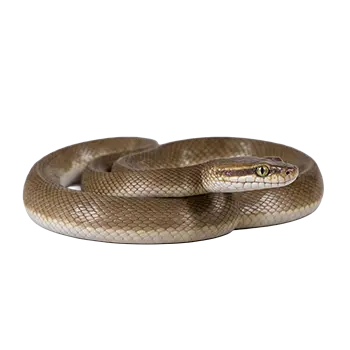
The Brown House Snake (Boaedon capensis) is a small, non-venomous colubrid native to sub-Saharan Africa, where it has occupied a remarkably broad range of habitats for millennia. From the scrublands and savannas of the Cape region through the grasslands of East Africa and into the woodlands and semi-arid zones of West Africa, this species has demonstrated an ecological versatility that few snakes of comparable size can match. Its willingness to inhabit human-altered landscapes, including agricultural buildings, storage sheds, and residential dwellings, has made it one of the most commonly encountered snakes across its native continent and has ensured a long, intertwined history with human communities.

The species was formally described by the French naturalist Andre Marie Constant Dumeril and his colleague Gabriel Bibron in 1854, working from specimens collected in the Cape region of southern Africa. The original taxonomic placement within the genus Lamprophis reflected the prevailing understanding of colubrid systematics at the time, and for well over a century the snake was known to science primarily as Lamprophis capensis. Subsequent molecular phylogenetic studies conducted in the early twenty-first century prompted a significant taxonomic revision, reassigning the species to the genus Boaedon and clarifying its relationships within a complex of closely related African house snake species that had long confounded taxonomists relying solely on morphological characters.

Long before European naturalists assigned the Brown House Snake a Linnaean binomial, the species was intimately familiar to indigenous African communities across its range. Its habit of entering human dwellings in pursuit of rodents made it a constant, if often unnoticed, presence in villages and homesteads. Archaeological evidence from settlement sites across southern and eastern Africa, while rarely preserving snake remains in identifiable condition, includes indirect indicators of commensal relationships between humans and small rodent-eating snakes stretching back thousands of years, consistent with the ecological niche that the Brown House Snake continues to fill today.

The Brown House Snake's understated appearance, characterized by smooth, glossy scales in shades of brown ranging from pale tan to deep chocolate, and a pair of distinctive pale dorsolateral stripes running from the snout through the eyes, contributed to its relatively low profile in early European natural history collections compared to the continent's more visually spectacular species. Collectors and museum curators tended to prioritize the large pythons, brightly colored mambas, and medically significant vipers of Africa, leaving the humble house snake to accumulate in specimen jars with comparatively little fanfare or focused scientific attention until the latter half of the twentieth century.

Indigenous Knowledge & Historical Roles

Across its vast native range, the Brown House Snake has been recognized by indigenous communities as a beneficial presence in and around human habitations. Unlike the large constrictors and venomous species that inspired complex spiritual and mythological traditions, the Brown House Snake occupied a more prosaic but no less important ecological niche in the daily lives of African peoples. Its primary cultural role was that of a natural pest controller, and many traditional communities understood and appreciated the snake's appetite for the mice, rats, and geckos that damaged stored grain and infested living spaces.

In many southern African cultures, the Brown House Snake was explicitly distinguished from dangerous species and afforded a degree of tolerance or even protection within the homestead. Zulu, Xhosa, and Sotho communities, among others, developed practical taxonomies that categorized snakes according to their behavior, habitat, and perceived threat level. The Brown House Snake consistently fell into categories associated with harmlessness and domestic utility, and oral traditions in several of these cultures include admonitions against killing house-dwelling snakes that posed no danger to people or livestock. This pragmatic tolerance represented a sophisticated form of biological pest management that predated Western integrated pest management concepts by centuries.

The snake's nocturnal habits and secretive nature meant that many of its commensal activities occurred unseen by the human occupants of the dwellings it inhabited. This invisibility contributed to a perception of the Brown House Snake as a quiet guardian rather than an intruder, a creature that performed its rodent-control services without demanding attention or causing disruption. In some communities, the unexpected appearance of a house snake during daylight hours was interpreted as a sign or omen, though the specific meaning varied considerably between cultural groups and regions.

Traditional ecological knowledge regarding the Brown House Snake extended beyond simple recognition of its dietary habits. Communities across southern and eastern Africa understood aspects of the snake's seasonal behavior patterns, its preference for warm, sheltered microhabitats within structures, and its reproductive cycle. Women responsible for managing grain stores and food preparation areas were often particularly knowledgeable about the habits of house snakes, as these were the spaces where encounters were most frequent. This body of practical knowledge, transmitted orally across generations, represents a valuable complement to the formal scientific understanding of the species that began to develop only in the nineteenth century.

Cultural Symbolism & Folklore

The Brown House Snake's cultural symbolism across Africa is rooted less in the dramatic mythological roles assigned to larger or more dangerous species and more in the everyday realities of shared domestic space. In the folklore traditions of many southern African peoples, the house snake appears as a figure of quiet competence and reliability rather than awe or fear. Stories featuring the snake typically emphasize its industriousness, its patience as a hunter, and its willingness to coexist peacefully with humans, qualities that many communities held up as virtues worth emulating.

Among certain Nguni-speaking peoples of southern Africa, snakes found within the homestead were sometimes associated with ancestral spirits, a belief system in which the presence of a snake could signify the visitation or protection of deceased family members. While this belief was most commonly associated with larger or more conspicuous species such as the mole snake or certain python species, the Brown House Snake was occasionally included in this framework, particularly when an individual snake was observed returning repeatedly to the same dwelling over an extended period. The specific interpretation of such visits varied between families and communities, but the underlying concept reflected a worldview in which the boundaries between the human domestic sphere and the natural world were permeable and spiritually significant.

The Brown House Snake also appears in the proverbial traditions of several African language groups, where its characteristics are used metaphorically to convey lessons about human behavior. Its ability to move silently and accomplish its goals without attracting notice provided material for sayings about the value of quiet diligence over noisy self-promotion. Its habit of consuming prey whole, without waste, served as a metaphor for efficiency and resourcefulness. These proverbial usages, while not elevating the snake to the status of a major cultural symbol, ensured that it maintained a recognizable presence in the oral literary traditions of the communities it lived among.

In the broader context of African cultural attitudes toward snakes, the Brown House Snake occupies an instructive middle ground. It is neither the fearsome predator that inspires elaborate protective rituals nor the sacred being that commands temples and formal veneration. Instead, it represents the more common reality of human-snake interaction across the continent: a relationship characterized by proximity, practical accommodation, and a degree of mutual tolerance that has allowed both species to thrive in shared landscapes for generations.

Colonial Encounters & Scientific Classification

The Brown House Snake's encounter with European colonial science unfolded gradually and without the sensationalism that attended the documentation of Africa's more imposing reptile species. Colonial naturalists working in southern Africa during the eighteenth and early nineteenth centuries were certainly aware of the small brown snakes that inhabited settler homesteads and farm buildings, but these unassuming creatures initially attracted far less scientific interest than the cobras, mambas, and pythons that posed more dramatic challenges or yielded more impressive museum specimens. The Brown House Snake's formal description in 1854 by Dumeril and Bibron came several decades after the most prominent African snake species had already been cataloged, reflecting its lower priority in the colonial scientific agenda.

The taxonomic history of the Brown House Snake and its relatives within the Boaedon complex illustrates many of the challenges that confronted nineteenth and early twentieth century herpetologists working with African reptile diversity. The group's conservative morphology, with multiple species sharing similar body plans, scalation patterns, and coloration, led to persistent confusion about species boundaries. Specimens collected from different parts of the continent were variously described as new species, reassigned to existing ones, and shuffled between genera as successive researchers applied different morphological criteria and species concepts. The resulting nomenclatural tangle was not substantially resolved until molecular phylogenetic methods became available in the late twentieth and early twenty-first centuries.

Colonial-era field naturalists did contribute useful observations about the Brown House Snake's ecology and behavior, even when these observations were embedded in accounts that reflected the cultural biases of the period. Reports from farmers, missionaries, and colonial administrators documented the snake's commensal relationship with human habitations, its dietary preferences, and its generally inoffensive temperament. Several colonial-era writers noted with apparent surprise that African communities tolerated or even welcomed the presence of house snakes, an observation that, while sometimes framed condescendingly, at least preserved a record of indigenous attitudes that might otherwise have been lost as traditional practices came under increasing pressure from colonial social disruption.

The establishment of natural history museums and university departments in southern Africa during the late nineteenth and early twentieth centuries created institutional foundations for more systematic study of the Brown House Snake and its relatives. Researchers at institutions such as the Transvaal Museum in Pretoria, the South African Museum in Cape Town, and the National Museum in Bloemfontein assembled specimen collections and published descriptive works that gradually improved scientific understanding of the Boaedon complex, even as the full resolution of species boundaries within the group remained elusive for decades to come.

The Herpetoculture Movement

The Brown House Snake's entry into the international herpetoculture community represents one of the more successful examples of a species transitioning from regional obscurity to widespread popularity within the reptile-keeping hobby. For much of the twentieth century, the species was kept primarily by hobbyists and researchers within southern Africa, where its availability, ease of maintenance, and docile temperament made it a natural choice for anyone interested in keeping a native snake species. International awareness of the Brown House Snake as a desirable captive animal grew slowly during the 1980s and 1990s, driven largely by word-of-mouth recommendations among experienced keepers and by occasional mentions in specialist herpetological literature.

The qualities that made the Brown House Snake appealing to its early keepers, its manageable adult size, its willingness to feed readily in captivity, its tolerance of a range of environmental conditions, and its generally calm disposition when handled, proved to be precisely the attributes that the broader herpetoculture market valued as the hobby expanded and diversified during the late twentieth century. As the reptile-keeping community matured and began to place greater emphasis on species that could be maintained responsibly by keepers of varying experience levels, the Brown House Snake found itself increasingly recommended as an ideal beginner species alongside more established starter snakes such as corn snakes and king snakes.

Captive breeding programs for the Brown House Snake expanded significantly during the early twenty-first century, with breeders in South Africa, Europe, and North America producing increasing numbers of captive-bred animals each year. The species' relatively straightforward reproductive biology, with females typically producing clutches of eight to sixteen eggs that incubate reliably at moderate temperatures, made it accessible to breeders who lacked the specialized facilities required for more demanding species. Selective breeding efforts also began to produce color and pattern variants, including hypomelanistic, albino, and striped morphs, which increased the species' commercial appeal and brought it to the attention of hobbyists who might not otherwise have considered a snake of such understated natural coloration.

The Brown House Snake's rise within herpetoculture has had broader implications for the species' conservation profile and public perception. As more keepers gained firsthand experience with the animal's gentle temperament and fascinating behaviors, the species acquired a growing corps of advocates within the reptile community. These advocates have contributed to public education efforts aimed at correcting misconceptions about African snakes, and the Brown House Snake's reputation as an excellent ambassador species has made it a frequent participant in educational programs, reptile expos, and outreach events where its calm demeanor and handleability allow members of the public to interact safely with a live snake, often for the first time.

The Species Today

The Brown House Snake today occupies a secure position both in its native habitats across sub-Saharan Africa and within the global herpetoculture community. In the wild, the species benefits from its remarkable ecological flexibility and its ability to thrive in human-modified landscapes. Unlike many reptile species that decline sharply in response to urbanization and agricultural intensification, the Brown House Snake has demonstrated a capacity to maintain viable populations in suburban gardens, farmland, and even the margins of densely developed urban areas, provided that basic habitat requirements of shelter and prey availability are met. This adaptability has insulated the species from the most severe conservation pressures facing more habitat-specialist reptiles.

Scientific research on the Brown House Snake has intensified considerably in recent decades, driven in part by the species' accessibility and in part by its utility as a model organism for studies of colubrid biology, ecology, and evolution. Molecular phylogenetic work has clarified the species' taxonomic position within the Boaedon complex, resolving long-standing questions about species boundaries and biogeographic patterns. Ecological studies have examined the snake's role in controlling rodent populations in agricultural settings, producing data that supports the traditional indigenous understanding of the species as a valuable commensal and provides a scientific basis for conservation messaging that emphasizes the practical benefits of tolerating non-venomous snakes in human-modified environments.

Within herpetoculture, the Brown House Snake has consolidated its reputation as one of the premier beginner-friendly species in the hobby. The availability of captive-bred animals in a growing range of color morphs, combined with comprehensive and readily accessible care information, has made the species a staple of the reptile trade in North America, Europe, and increasingly in Asia. Experienced keepers continue to value the species for its reliability, its longevity in captivity, and the satisfaction of working with an animal whose wild behaviors, including active nocturnal hunting and exploratory movement, remain fully expressed in a well-designed captive environment.

The Brown House Snake's trajectory from unassuming commensal of African homesteads to internationally recognized and widely kept reptile pet encapsulates broader themes in the evolving relationship between humans and snakes. Its story illustrates how improved scientific understanding, combined with the practical experience of dedicated keepers and the preservation of traditional ecological knowledge, can transform public perception of a species from indifference or casual disregard to genuine appreciation and active stewardship. As both the herpetoculture community and the conservation science community continue to recognize the importance of common, adaptable species alongside the more charismatic endangered animals that typically dominate public attention, the Brown House Snake stands as a quiet but compelling example of the value inherent in the ordinary creatures that share our everyday landscapes.

Always consult a qualified professional before making any health-related decisions. This content is provided for informational reference only and should not replace professional guidance specific to your animal.