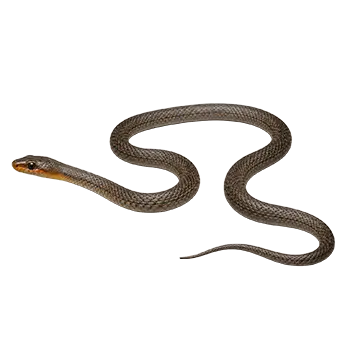

Baird's Rat Snake has maintained a consistent, if specialized, presence in herpetological literature since its original description by Henry Crecy Yarrow in 1880. For much of the first century following its discovery, references to the species appeared primarily in taxonomic revisions, faunal checklists, and regional survey reports focused on the reptiles of the Trans-Pecos and the greater Chihuahuan Desert region. These publications, while invaluable to professional herpetologists and advanced students, reached a relatively narrow audience and did little to bring the species to broader public awareness. The tone of early literature was clinical and descriptive, focused on scale counts, color pattern analysis, and distributional records rather than the kind of natural history narrative that might capture a general reader's imagination.
The mid-twentieth century saw the publication of several important field guides and regional herpetological monographs that introduced Baird's Rat Snake to a wider readership. Roger Conant's landmark field guide to reptiles and amphibians of eastern and central North America, first published in 1958 and revised multiple times thereafter, included the species and provided the kind of concise, accessible account that allowed interested naturalists and amateur herpetologists to recognize and appreciate it. The species also received attention in specialized works on Texas herpetology, including the comprehensive treatments produced by researchers affiliated with Texas universities and the Texas Parks and Wildlife Department.
The herpetoculture boom of the 1980s and 1990s generated a parallel body of literature focused on the captive husbandry of Baird's Rat Snake. Reptile specialty magazines such as Reptiles, The Vivarium, and various herpetological society newsletters published articles detailing breeding techniques, color morph genetics, and care sheets that combined practical husbandry advice with natural history background. These publications played a crucial role in disseminating knowledge about the species beyond the professional herpetological community and into the hands of hobbyists who might never have had the opportunity to encounter Baird's Rat Snake in its remote native habitat.
In the twenty-first century, peer-reviewed journals have continued to publish research on Baird's Rat Snake, with a shift in emphasis toward molecular phylogenetics, population genetics, and conservation biology. Papers addressing the species' placement within Pantherophis, its genetic diversity across fragmented canyon populations, and the potential effects of habitat change on its long-term viability have contributed to a more sophisticated understanding of the species while also generating citations and references that keep it visible in the scientific literature. The cumulative body of published work on Baird's Rat Snake, while modest compared to that available for more widespread species, provides a solid foundation for both scientific inquiry and informed public discourse.