
Origins & Discovery

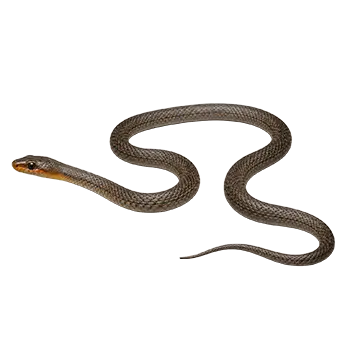
Baird's Rat Snake (Pantherophis bairdi) is a medium-sized, non-venomous colubrid native to a remarkably narrow geographic corridor spanning the Trans-Pecos region of western Texas and the adjacent mountain ranges of the Mexican states of Chihuahua and Coahuila. Its primary habitat consists of limestone canyons, rocky hillsides, and arid mountain woodlands within the greater Chihuahuan Desert ecosystem, where it occupies crevices and ledges in terrain that would be inhospitable to many other North American rat snake species. The species was unknown to Western science until the latter half of the nineteenth century, when military surveys and natural history expeditions began penetrating the remote and sparsely populated reaches of the Big Bend country.

The formal scientific description of Baird's Rat Snake was published by Henry Crecy Yarrow in 1880, based on specimens collected during surveys of the American Southwest. Yarrow chose the specific epithet bairdi to honor Spencer Fullerton Baird, the second Secretary of the Smithsonian Institution and one of the most influential naturalists in American scientific history. Baird himself never collected the snake that bears his name, but his decades of work organizing, funding, and directing biological surveys across the western territories created the institutional framework that made the discovery possible. The naming was a fitting tribute to a man whose tireless administrative efforts shaped the course of American natural history during a pivotal era.

The original specimens were collected in the vicinity of the Davis Mountains and the surrounding canyon systems of Presidio and Brewster counties in Texas. These early collections were sparse, reflecting the logistical difficulties of working in a region that remained among the most isolated and least accessible parts of the continental United States well into the twentieth century. Roads were primitive, water sources were unreliable, and the rugged terrain made systematic surveying an arduous undertaking even by the standards of an era accustomed to challenging fieldwork.

For decades after its initial description, Baird's Rat Snake remained one of the more obscure members of the North American rat snake assemblage. Its restricted range, low population density relative to more widespread congeners, and the remoteness of its habitat meant that relatively few specimens reached museum collections. The species received only intermittent attention in the herpetological literature through the early twentieth century, overshadowed by its more abundant and more widely distributed relatives such as the Texas Rat Snake and the Great Plains Rat Snake.

Taxonomic History & Classification

The taxonomic placement of Baird's Rat Snake has undergone substantial revision since Yarrow's original description, reflecting broader shifts in how herpetologists understand the relationships among North American rat snakes. Yarrow initially placed the species in the genus Coluber, which at the time served as a catch-all for a wide variety of slender, active, non-venomous snakes. Subsequent workers transferred it to Elaphe, the genus that housed most Old World and New World rat snakes through much of the twentieth century, and for decades the species was known in the literature as Elaphe bairdi.

The most significant reclassification came at the turn of the twenty-first century, when molecular phylogenetic analyses demonstrated that the North American rat snakes previously assigned to Elaphe were not closely related to the Eurasian species that formed the core of that genus. Utiger and colleagues published a landmark 2002 revision that erected the genus Pantherophis to accommodate the New World radiation, and Baird's Rat Snake became Pantherophis bairdi. This reclassification was initially controversial among some herpetologists and hobbyists who objected to the disruption of long-established nomenclature, but the molecular evidence supporting the change was robust, and the new taxonomy has gained wide acceptance in both academic and herpetoculture communities.

Within Pantherophis, the precise phylogenetic position of P. bairdi has been a subject of continued investigation. Genetic studies have generally placed it as a relatively early-diverging lineage within the genus, reflecting the geographic isolation that the Trans-Pecos region experienced during the climatic shifts of the Pleistocene and Holocene. The Chihuahuan Desert and the mountain ranges that fragment it acted as barriers to gene flow, allowing the ancestral population of Baird's Rat Snake to differentiate from the lineages that gave rise to species such as the Corn Snake, the Black Rat Snake, and the Texas Rat Snake.

No subspecies of Baird's Rat Snake are currently recognized. While some workers have noted morphological variation across the species' range, particularly in color pattern intensity and ground color saturation, these differences have not been considered sufficient to warrant formal subspecific designation. The relatively compact geographic range of the species, compared to the vast distributions of some of its congeners, may limit the opportunity for the kind of regional differentiation that leads to subspecies recognition in other snake taxa.

Early Collectors & Field Expeditions

The history of scientific collecting of Baird's Rat Snake is inseparable from the broader story of biological exploration in the Trans-Pecos region of Texas. The late nineteenth and early twentieth centuries saw a succession of naturalists, military surveyors, and self-funded collectors venture into the canyons and mountain ranges of the Big Bend country, driven by a combination of scientific curiosity, institutional mandate, and a romantic fascination with one of the last wild frontiers of the continental United States. These early expeditions added specimens of Baird's Rat Snake to museum collections in small numbers, each one representing a significant logistical achievement given the difficulty of accessing the species' rocky habitat.

Among the most important early contributors to knowledge of Baird's Rat Snake was John Van Denburgh, curator of herpetology at the California Academy of Sciences, who examined specimens from the Davis Mountains region in the early 1900s and helped clarify the species' distinguishing characteristics relative to other sympatric rat snakes. Karl Patterson Schmidt at the Field Museum of Natural History in Chicago also worked with Trans-Pecos material and contributed to stabilizing the species' taxonomic standing during the mid-twentieth century. These institutional herpetologists relied heavily on field collectors who operated in the region, often ranchers, schoolteachers, and other local residents who supplemented their incomes by supplying specimens to museums.

The post-World War II era brought a new generation of field herpetologists to the Trans-Pecos, equipped with better vehicles, improved roads, and a growing network of colleagues who could share locality data and collecting tips. The establishment of Big Bend National Park in 1944 provided both a protected area where the species could be studied without collection pressure and a base of operations for researchers exploring the surrounding region. Herpetologists such as William W. Milstead and James R. Dixon conducted systematic surveys of the region's reptile fauna during the 1950s and 1960s, producing distribution records and natural history observations that significantly expanded understanding of Baird's Rat Snake's ecology and habits.

The shift from collecting-oriented herpetology toward observational and photographic methods in the late twentieth century changed the nature of fieldwork with Baird's Rat Snake. Road cruising, the practice of driving slowly along paved roads at night to find snakes that emerge onto the warm asphalt, became the primary method by which both professional herpetologists and amateur enthusiasts encountered the species. The scenic highways that traverse the Trans-Pecos, particularly those running through limestone canyon country, became well-known circuits for reptile enthusiasts, and Baird's Rat Snake was among the most sought-after species on these nocturnal excursions.

Cultural Significance in the Trans-Pecos Region

Unlike the large constrictors and venomous species that dominate snake-related cultural narratives in many parts of the world, Baird's Rat Snake occupies a quieter but nonetheless meaningful place in the cultural landscape of the Trans-Pecos region. For the ranching families that have worked the dry, rocky land of Brewster, Presidio, and Jeff Davis counties for generations, the species is a familiar if infrequently seen neighbor, recognized as a harmless inhabitant of the same canyon systems and rock piles where cattle graze and children play. The snake's docile temperament and manageable size have generally spared it the fear and persecution directed at rattlesnakes and other venomous species in the region.

The broader cultural significance of Baird's Rat Snake is closely tied to the identity of the Big Bend region itself, an area that has long been celebrated in Texas and American culture as a place of dramatic landscapes, harsh beauty, and biological richness. The snake's status as a Trans-Pecos endemic, found nowhere else in the United States outside this narrow corridor of desert mountains and canyons, gives it a symbolic association with the uniqueness and irreplaceability of the Big Bend ecosystem. For conservation advocates and nature tourism promoters in the region, Baird's Rat Snake serves as one of several flagship species that illustrate the area's extraordinary biodiversity and the importance of protecting its fragile habitats.

In the communities that serve as gateways to Big Bend National Park and the surrounding public lands, awareness of the region's distinctive reptile fauna has grown steadily alongside the expansion of ecotourism. Interpretive programs at the park and at adjacent state natural areas frequently mention Baird's Rat Snake as part of presentations on local wildlife, and the species appears in field guides and identification charts displayed at visitor centers throughout the region. For many visitors, learning about species like Baird's Rat Snake transforms a landscape that might initially appear barren and lifeless into a place teeming with hidden biological complexity.

The species also holds significance within the Mexican communities on the southern side of its range. In the Sierra del Carmen and the surrounding uplands of Coahuila and Chihuahua, rural inhabitants have long been familiar with the snake, though it has not attracted the same degree of formal cultural attention that it has received from the American herpetoculture community. Conservation initiatives in the Mexican portion of the range, including the establishment of protected areas that complement Big Bend National Park across the international boundary, have increasingly recognized Baird's Rat Snake as a component of the transboundary biological heritage shared by the two nations.

The Herpetoculture Movement

Baird's Rat Snake entered the herpetoculture hobby relatively late compared to more widespread and easily collected rat snake species. Through the 1970s and into the 1980s, captive specimens were uncommon, and most animals in private collections were wild-caught individuals taken during road cruising excursions in the Trans-Pecos. The species' limited range and relatively low encounter rate meant that supply was always modest, and Baird's Rat Snakes commanded higher prices than the more abundant Corn Snakes and Texas Rat Snakes that formed the backbone of the American rat snake hobby.

The development of reliable captive breeding techniques for Baird's Rat Snake during the 1980s and 1990s represented a significant milestone for the species within herpetoculture. Dedicated breeders worked out the specific husbandry requirements that distinguished this species from its more adaptable relatives, including the preference for moderate temperatures, the importance of providing tight-fitting rock-like hides, and the need for a pronounced cooling period to stimulate reproductive cycling. These husbandry insights were shared through reptile specialty magazines, local herpetological society newsletters, and eventually through online forums and social media groups that connected breeders across the country.

As captive-bred animals became more consistently available, Baird's Rat Snake attracted attention for a trait that had not been fully appreciated from the relatively drab preserved specimens in museum jars: its remarkable adult coloration. Captive-raised individuals, maintained under controlled lighting and optimal nutrition, developed rich orange and salmon ground colors overlaid with subtle gray banding that made them among the most visually striking of all North American rat snakes. This aesthetic appeal, combined with the species' generally calm disposition in captivity and its manageable adult size, gradually elevated Baird's Rat Snake from an obscure specialist species to a moderately popular choice among colubrid enthusiasts.

Selective breeding projects have further diversified the palette of captive Baird's Rat Snakes. Breeders have isolated and propagated color and pattern morphs including hypomelanistic, anerythristic, and albino variants, creating a small but active market for designer specimens alongside the normal-patterned animals. These breeding programs, while commercially motivated, have also generated detailed records of inheritance patterns and reproductive biology that contribute to the broader understanding of genetics within Pantherophis. The herpetoculture community's engagement with Baird's Rat Snake has thus produced both economic activity and a form of distributed citizen science that complements institutional research.

The Species Today

Today Baird's Rat Snake occupies a position of quiet but growing recognition within both the herpetological community and the broader public interested in wildlife conservation and reptile keeping. The species is not currently listed as threatened or endangered under either United States federal law or the Texas state endangered species list, though its restricted range and specialized habitat requirements make it inherently more vulnerable to disturbance than widely distributed generalist species. Conservation biologists have noted that the Trans-Pecos region faces increasing pressures from energy development, changes in land management practices, and the effects of prolonged drought intensified by climate change, all of which have the potential to degrade the rocky canyon habitats on which Baird's Rat Snake depends.

Within the herpetoculture community, Baird's Rat Snake maintains a dedicated following among keepers who value the species for its beauty, its manageable temperament, and its connection to the distinctive landscapes of the Big Bend region. Captive-bred animals are regularly available at reptile expos and through online breeders, and the species is well established enough in captivity that wild collection is no longer necessary to sustain the hobbyist population. This shift from wild-caught to captive-bred stock represents a significant conservation benefit, reducing direct pressure on wild populations while allowing the species to serve as an ambassador for the biodiversity of its native range.

Scientific research on Baird's Rat Snake continues, though at a modest pace reflecting the species' limited geographic scope and the relatively small number of researchers focused on Trans-Pecos herpetology. Ongoing work addresses questions about population connectivity across the fragmented mountain ranges within the species' range, the effects of road mortality on local populations along the highways that traverse prime habitat, and the potential impacts of climate change on the arid montane ecosystems that support the species. Genetic studies have refined understanding of the species' evolutionary relationships within Pantherophis and have explored the degree of genetic diversity maintained within and among isolated canyon populations.

The story of Baird's Rat Snake, from its discovery amid the military surveys of the post-Civil War frontier to its current status as a valued member of the herpetoculture community and a symbol of Trans-Pecos biodiversity, encapsulates many of the broader themes that define the relationship between human societies and the reptile species with which they share landscapes. It is a story of scientific curiosity, institutional effort, changing cultural attitudes, and the gradual recognition that even modest and unassuming species hold ecological and aesthetic value worthy of attention and stewardship.

Always consult a qualified professional before making any health-related decisions. This content is provided for informational reference only and should not replace professional guidance specific to your animal.