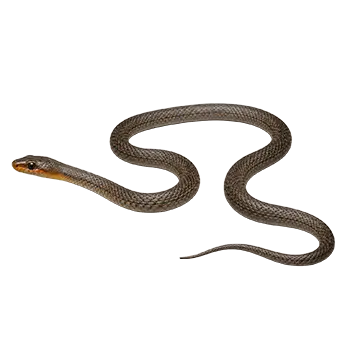

At the federal level in the United States, Baird's Rat Snake is not currently listed under the Endangered Species Act (ESA), which means it does not receive the specific protections afforded to threatened or endangered species under that statute. The ESA, administered jointly by the U.S. Fish and Wildlife Service and the National Marine Fisheries Service, provides the most powerful legal protections available for wildlife in the United States, but listing requires a formal determination that a species is in danger of extinction throughout all or a significant portion of its range. Baird's Rat Snake, while geographically restricted, has not been subject to a listing petition or a formal status review under the ESA, and current population assessments have not indicated the level of imperilment that would trigger such a process.
The Lacey Act, the oldest federal wildlife protection statute in the United States, provides another layer of legal relevance for Baird's Rat Snake. The Lacey Act prohibits the interstate transport of wildlife taken in violation of state, tribal, or foreign law, effectively federalizing state-level wildlife regulations for any transaction that crosses state lines. For keepers and breeders of Baird's Rat Snake, this means that compliance with the laws of the state where an animal was collected or bred is not merely a state-level obligation but also a federal one. Transporting a Baird's Rat Snake across state lines that was collected without proper permits in Texas, for example, would constitute both a state wildlife violation and a federal Lacey Act offense.
Federal regulations also apply to Baird's Rat Snakes maintained within the National Park System. Big Bend National Park, which encompasses a significant portion of the species' core habitat in the United States, is managed under federal law that prohibits the collection, disturbance, or harassment of wildlife within park boundaries. These protections apply regardless of the species' listing status under the ESA and are enforced by National Park Service rangers with federal law enforcement authority. Similar protections apply within other federal lands in the Trans-Pecos region, including Bureau of Land Management holdings and military installations.
The absence of ESA listing does not mean that federal agencies are entirely uninvolved in monitoring the species' status. The U.S. Fish and Wildlife Service maintains informal awareness of species that might warrant future review, and Baird's Rat Snake's restricted range and habitat specialization place it in the category of species that could be affected by large-scale environmental changes in the Trans-Pecos region. Any future federal actions that significantly alter habitat within the species' range, such as major energy development projects or infrastructure construction, could trigger review under the National Environmental Policy Act, which requires assessment of impacts on sensitive wildlife species even if they are not formally listed.