
Origins & Discovery

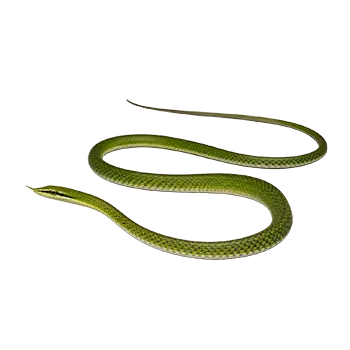
The Asian Vine Snake belongs to the genus Ahaetulla, a group of slender, highly arboreal, rear-fanged colubrid snakes distributed across South and Southeast Asia. The most widely recognized species within this group is Ahaetulla prasina, commonly known as the Oriental Whip Snake or Asian Vine Snake, though the genus contains several closely related species whose taxonomy has undergone significant revision in recent years. These snakes inhabit tropical and subtropical forests, plantations, and garden environments from the Indian subcontinent through mainland Southeast Asia and across the Indonesian and Philippine archipelagos, reflecting a geographic range that encompasses an extraordinary diversity of human cultures and ecological contexts.

Western science first formally described the Asian Vine Snake through the work of the Dutch naturalist Pieter Boddaert, who published the original description of Ahaetulla prasina in 1827 based on specimens collected in the Dutch East Indies, the colonial territory encompassing much of present-day Indonesia. However, the species had been known to the peoples of tropical Asia for many centuries before European taxonomists assigned it a Latin binomial. Indigenous naming traditions across the snake's range reflect long and intimate familiarity with the animal, with local names in Malay, Thai, Hindi, Tamil, Sinhala, and dozens of other languages typically referencing the snake's vine-like appearance, its vivid green coloration, or its distinctive pointed snout.

The genus name Ahaetulla itself derives from a Sinhalese word for a slender green snake, a linguistic connection that underscores the deep roots of human knowledge about these animals in the cultures of South Asia. The species epithet prasina comes from the Latin word for green, a straightforward reference to the bright emerald coloration that characterizes most populations, though individuals can also appear in yellow, grey, or brown color phases depending on geographic origin and individual variation.

Early European naturalists who encountered the Asian Vine Snake in the field were immediately struck by its extraordinary morphology. The pencil-thin body, the elongated and sharply pointed head, the horizontally oriented keyhole-shaped pupils, and the binocular vision afforded by grooves along the snout all represented remarkable adaptations to an arboreal hunting lifestyle that had no close parallel among the snakes of Europe. These distinctive features ensured that the species attracted sustained scientific attention from the earliest days of tropical herpetology.

Indigenous Knowledge & Historical Roles

Across the vast geographic range of the Asian Vine Snake, indigenous and traditional communities developed detailed and nuanced understandings of the species long before the arrival of European colonial science. In the forested regions of southern India and Sri Lanka, rural communities recognized the vine snake as a regular inhabitant of garden hedgerows, tea and spice plantations, and secondary forest edges. Local ecological knowledge accurately identified the snake as a predator of lizards, tree frogs, and small geckos, and its mild rear-fanged venom was generally understood to pose negligible risk to adult humans, a correct assessment that modern toxicological research has confirmed.

In the Malay Archipelago, traditional communities developed practical knowledge systems around the vine snake that integrated the animal into broader understandings of forest ecology. Farmers and plantation workers in rubber, palm, and fruit orchards recognized that the presence of vine snakes indicated a healthy population of the small arboreal prey animals they consumed, and this ecological indicator function gave the snake a modest but real utilitarian value in communities that depended on agroforestry systems. The snake's habit of remaining motionless among foliage for extended periods, relying on its remarkable camouflage to avoid detection, was well understood by forest-dwelling peoples who navigated the same arboreal environments daily.

In many parts of Southeast Asia, the Asian Vine Snake occupied a culturally neutral or mildly positive position relative to the fear and hostility that larger and more dangerous snake species often provoked. Its slender build, its reluctance to bite when encountered, and its obviously non-threatening size placed it in a different cultural category than cobras, kraits, or pit vipers. Rural communities in Thailand, Cambodia, Vietnam, and the Philippines generally regarded the vine snake with casual familiarity rather than alarm, a cultural attitude that contributed to relatively low rates of deliberate persecution compared to venomous species that posed genuine medical risks.

Traditional medicine systems across the vine snake's range occasionally incorporated the species in minor roles. In some Ayurvedic and folk medicine traditions of southern India, dried snake skin or shed skins from green arboreal snakes were sometimes used in preparations intended to treat skin conditions or joint inflammation, though the vine snake was never a primary medicinal species in the way that cobras and certain vipers were in established pharmacopeias. These uses reflected the broader South and Southeast Asian tradition of attributing medicinal properties to a wide range of reptile species, a practice that continues in modified form in some regions today.

Cultural Symbolism & Folklore

The Asian Vine Snake's remarkable appearance has given it a distinctive place in the symbolic and folkloric traditions of South and Southeast Asian cultures. Its extraordinary camouflage, its ability to remain perfectly still among vegetation while swaying gently to mimic a tendril or small branch, and its sudden explosive strikes at prey have provided fertile material for storytellers, artists, and spiritual traditions across the region. The snake's capacity to vanish in plain sight within a tangle of foliage struck a particular chord in cultures that valued subtlety, patience, and the ability to perceive hidden truths beneath surface appearances.

In Hindu mythology and the broader Naga serpent traditions of South Asia, all snakes carry layers of symbolic meaning connected to fertility, the underworld, water, and the cyclical processes of creation and destruction. While the vine snake does not occupy the central mythological position held by the King Cobra or the multi-headed Naga serpent of epic literature, its ethereal green beauty and arboreal lifestyle associated it with forest spirits and minor nature deities in regional folk traditions. In parts of Kerala, Karnataka, and Tamil Nadu, the vine snake was sometimes associated with sacred groves and temple forests, its presence interpreted as an indicator of the spiritual health and ecological integrity of these protected natural areas.

Across Southeast Asia, the vine snake's ability to blend seamlessly into its environment became a metaphorical touchstone in oral traditions. Thai and Cambodian folk stories occasionally feature slender green snakes as trickster figures or guardians of hidden knowledge, drawing on the real animal's behavior of concealing itself in plain sight to illustrate moral lessons about deception, vigilance, and the difference between appearance and reality. In Indonesian and Filipino folklore, small green arboreal snakes sometimes appear as forest messengers or boundary markers between the human and spirit worlds, roles that reflect the vine snake's liminal position between the canopy and the ground.

The aesthetic appeal of the Asian Vine Snake has also resonated strongly in the visual arts and decorative traditions of tropical Asia. The snake's vivid green coloration, its graceful proportions, and its elegant posture when draped across branches have made it a subject of artistic representation in media ranging from traditional textile patterns and carved ornaments to contemporary photography and illustration. Its striking visual presence has made it one of the most frequently depicted snake species in the nature photography traditions of South and Southeast Asia, where its photogenic qualities have earned it recognition well beyond the specialist herpetological community.

Colonial-Era Science & Taxonomic Development

The colonial period in South and Southeast Asia brought the Asian Vine Snake to the attention of European scientific institutions and initiated a process of formal taxonomic study that would continue for more than two centuries. Dutch, British, French, and Portuguese colonial naturalists operating across tropical Asia collected and preserved vine snake specimens, shipping them to museums in Leiden, London, Paris, and Lisbon where they were examined, described, and classified according to the Linnaean system. Boddaert's original 1827 description was followed by a succession of additional descriptions as naturalists working in different parts of the snake's range encountered what they believed to be distinct species, generating a complex tangle of synonyms and competing classifications that took generations to resolve.

The taxonomic history of the genus Ahaetulla reflects the broader challenges of nineteenth-century tropical herpetology, in which the sheer volume of undescribed species, the difficulty of preserving specimens in tropical climates, the limited communication between researchers working in different colonial territories, and the absence of genetic tools combined to produce significant taxonomic confusion. At various points, Asian Vine Snakes from different parts of the range were assigned to the genera Dryophis, Tragops, Passerita, and other now-synonymized groups, and the number of recognized species within the vine snake complex fluctuated considerably depending on which authority was consulted.

British colonial naturalists working in India and Ceylon made particularly important contributions to the early understanding of vine snake biology. Frank Wall, a military physician and prolific herpetologist active in British India during the early twentieth century, published detailed observations on the vine snake's habits, diet, reproduction, and defensive behaviors based on extensive fieldwork conducted during his postings across the subcontinent. Wall's work, along with that of other colonial-era naturalists such as Malcolm Smith in Siam and Nelly de Rooij in the Dutch East Indies, established the foundational natural history knowledge that subsequent researchers would build upon.

Modern molecular phylogenetic studies have dramatically reshaped the taxonomy of the genus Ahaetulla. Research published in the 2010s and 2020s revealed that the traditional species Ahaetulla prasina actually comprised a complex of multiple cryptic species, morphologically similar but genetically distinct, that had been lumped together under a single name for nearly two centuries. These studies elevated several populations to full species status and described entirely new species from regions including the Western Ghats of India and the islands of Southeast Asia, more than doubling the recognized species diversity within the genus and highlighting how much remains to be learned about these superficially familiar snakes.

The Herpetoculture Movement

The Asian Vine Snake entered the international reptile-keeping hobby during the latter decades of the twentieth century, as the expansion of the exotic pet trade and the growth of herpetoculture brought an increasingly diverse range of tropical snake species to the attention of hobbyists in North America, Europe, and Japan. The vine snake's striking appearance, its manageable size, and its fascinating feeding behavior made it an appealing prospect for keepers seeking an unusual and visually spectacular display animal. However, the species quickly earned a reputation as a challenging captive, and its requirements proved beyond the capabilities of many of the hobbyists who initially acquired them.

The primary difficulties associated with vine snake husbandry in captivity stem from the species' specialized dietary and environmental requirements. In the wild, Asian Vine Snakes feed predominantly on small lizards, particularly geckos and skinks, a dietary preference that creates logistical challenges for keepers accustomed to the convenience of feeding readily available feeder rodents. Many captive vine snakes refuse rodent prey entirely, requiring their keepers to maintain breeding colonies of small lizards or to source appropriate food animals through specialty suppliers, a constraint that significantly limits the species' accessibility as a pet.

Environmental requirements present additional challenges. As obligate arboreal snakes adapted to the humid tropical forest canopy, Asian Vine Snakes require tall, well-ventilated enclosures with abundant climbing structures, consistent humidity levels, and temperatures that replicate the warm, moist conditions of their native habitat. Stress-related health problems, particularly respiratory infections and failure to feed, have historically been common in captive vine snakes maintained in suboptimal conditions, and the species' relatively delicate constitution compared to hardier colubrid species demands attentive husbandry and prompt veterinary intervention when problems arise.

Despite these challenges, a small but dedicated community of vine snake enthusiasts has developed within the broader herpetoculture world. These keepers have made significant contributions to the understanding of vine snake biology through their observations of captive behavior, reproduction, and development. Successful captive breeding of several Ahaetulla species has been documented, though it remains uncommon, and the overwhelming majority of vine snakes entering the pet trade continue to be wild-caught animals, a reality that raises ongoing concerns about the sustainability and ethics of collection practices in source countries.

The herpetoculture community's experience with Asian Vine Snakes has also contributed to broader discussions within the hobby about the ethics of keeping species whose specialized requirements make them difficult to maintain in good health. Many experienced herpetoculturists now advocate strongly for the principle that the availability of a species in the pet trade does not in itself constitute a justification for keeping it, and that prospective keepers should carefully evaluate their ability to meet a species' specific needs before acquiring an animal. The vine snake has become something of a case study in this ongoing conversation about responsible herpetoculture.

The Species Today

Today the Asian Vine Snake occupies a position of growing scientific interest and modest but increasing conservation concern across its extensive range. The recent taxonomic revisions that have split the former Ahaetulla prasina complex into multiple distinct species have had important implications for conservation assessment, as populations that were previously assumed to share a single, wide-ranging species identity may in fact represent geographically restricted forms with much smaller effective population sizes and correspondingly greater vulnerability to habitat loss and other threats.

Habitat destruction remains the most significant challenge facing Asian Vine Snake populations throughout South and Southeast Asia. The conversion of tropical forests to agricultural land, particularly for palm oil plantations, rubber cultivation, and rice paddies, has eliminated vine snake habitat across vast areas of the species' former range. While the vine snake demonstrates some ability to persist in secondary habitats such as gardens, hedgerows, and plantation edges, it ultimately depends on the availability of arboreal microhabitats with sufficient structural complexity and prey density to support viable populations. The ongoing loss of primary and mature secondary forest across tropical Asia represents a serious long-term threat to the genus as a whole.

Conservation efforts targeting the Asian Vine Snake specifically are relatively limited, as the species does not currently appear on the IUCN Red List as threatened and does not benefit from the high-profile conservation attention directed at more charismatic or commercially valuable reptile species. However, the vine snake benefits indirectly from broader forest conservation initiatives and protected area management across its range. National parks, wildlife sanctuaries, and forest reserves throughout India, Sri Lanka, Thailand, Malaysia, and Indonesia harbor vine snake populations, and the maintenance and expansion of these protected areas represents the most important conservation strategy for the species at the landscape level.

The Asian Vine Snake also plays a growing role in ecotourism and nature education across tropical Asia. Its spectacular appearance and its willingness to remain visible and relatively approachable in appropriate habitat make it a favorite subject for wildlife photographers and nature tour operators, and encounters with vine snakes are frequently highlighted in promotional materials for jungle trekking, birdwatching, and herpetological tourism experiences. This visibility contributes to the species' value as an ambassador for tropical forest conservation, helping to build public appreciation for the complex ecological communities that these forests support and for the need to protect them against the accelerating pressures of development and land conversion.

Always consult a qualified professional before making any health-related decisions. This content is provided for informational reference only and should not replace professional guidance specific to your animal.