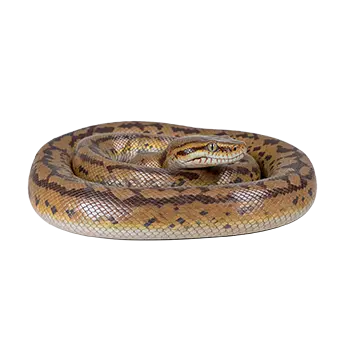

Origins & Discovery

The Argentine Rainbow Boa (Epicrates cenchria) is a non-venomous constrictor belonging to the family Boidae, native to the temperate and subtropical regions of South America. While the broader rainbow boa species complex spans much of the continent, the Argentine population occupies the southernmost extent of its range, inhabiting the grasslands, savannas, and semi-arid scrublands of northern and central Argentina. This geographic distinction gives the Argentine Rainbow Boa a set of adaptations and physical characteristics that differentiate it from its tropical relatives farther north.

The species was first formally described by Carl Linnaeus in 1758 under the name Boa cenchria, part of the sweeping taxonomic work that cataloged thousands of organisms during the European Enlightenment. Linnaeus worked primarily from preserved specimens shipped back by explorers and naturalists operating across the Americas. The holographic iridescence that gives rainbow boas their common name was noted even in these early preserved specimens, though the full brilliance of the effect can only be appreciated in living animals viewed under natural light.

European naturalists and collectors working in the Rio de la Plata region and the Argentine interior during the eighteenth and nineteenth centuries encountered the species with some regularity. Unlike the dense Amazonian rainforest habitat associated with other rainbow boa populations, the Argentine landscape offered more open terrain where the snakes could be found sheltering beneath rocks, in abandoned rodent burrows, and along the margins of wetland areas. These habitat preferences shaped early observations and contributed to an understanding of the species as more terrestrial and cold-tolerant than its tropical counterparts.

The taxonomic placement of the Argentine Rainbow Boa has undergone several revisions since Linnaeus's original description. For much of the twentieth century, the Argentine population was classified as a distinct subspecies, Epicrates cenchria alvarezi, named in honor of Argentine herpetologist Braulio Barrios Alvarez. More recent molecular phylogenetic analyses have complicated this neat subspecific division, suggesting that rainbow boa populations across South America represent a gradient of genetic variation rather than cleanly delineated subspecies. Regardless of ongoing taxonomic debates, the Argentine form remains recognized by keepers and researchers alike as a distinct and ecologically significant population.

Indigenous Knowledge & Historical Roles

Long before European naturalists assigned Latin binomials to the snakes of the Argentine pampas and Chaco, indigenous peoples of the region possessed detailed knowledge of the Argentine Rainbow Boa and its ecological role. The Guarani, Wichi, Toba, and other indigenous groups inhabiting northern Argentina and the Gran Chaco maintained oral traditions that encompassed the behaviors, seasonal patterns, and habitat preferences of local snake species, including the iridescent boas they encountered in grassland and forest-edge environments.

For many of these communities, snakes occupied a complex position in cultural understanding that blended practical ecological awareness with spiritual significance. The rainbow boa's shimmering scales, which produce prismatic colors when struck by sunlight, made it a particularly notable animal in a landscape populated by many less conspicuous serpent species. Some Guarani traditions associated iridescent or brightly colored snakes with water spirits and the life-giving properties of rivers and rainfall, themes that recur throughout indigenous cosmologies across South America.

Practical knowledge of the Argentine Rainbow Boa's behavior also informed daily life in indigenous communities. The snake's preference for rodent prey meant that its presence near settlements was often tolerated or even welcomed, as it contributed to controlling populations of grain-raiding animals. Indigenous hunters and gatherers recognized seasonal shifts in the snake's activity patterns, noting its increased visibility during warmer months and its tendency to seek underground shelter during the cooler Argentine winters.

This accumulated body of indigenous knowledge represents centuries of careful observation that predates and in many cases surpasses the ecological data gathered by Western science during its relatively brief period of study. Efforts to document and preserve indigenous herpetological knowledge have gained momentum in recent decades, as researchers recognize the value of these long-standing observational traditions for informing modern conservation and ecological research.

Cultural Symbolism & Folklore

Serpents hold a deeply rooted place in the mythology and folklore of South American cultures, and the Argentine Rainbow Boa contributes its own distinctive thread to this broader tapestry. Across the Gran Chaco and the Parana River basin, indigenous and mestizo folk traditions include stories of large snakes associated with waterways, storms, and the cyclical renewal of the natural world. While these narratives often reference serpents in general terms rather than singling out individual species, the rainbow boa's extraordinary iridescence has made it a subject of particular fascination and storytelling.

In Argentine rural folklore, the concept of the vibora de luz, or snake of light, appears in various regional traditions. While this figure is not exclusively identified with the rainbow boa, the species' prismatic sheen makes it a natural candidate for association with stories of luminous or otherworldly serpents. Gauchos and rural settlers in the Argentine interior historically regarded encounters with unusually colorful snakes as events worthy of note and retelling, and the rainbow boa's distinctive appearance ensured it a prominent place in these accounts.

Colonial-era attitudes toward Argentine snakes were shaped by a blend of European ophidiophobia and local knowledge. Spanish missionaries and settlers often portrayed snakes in uniformly negative terms consistent with Christian symbolic traditions, yet practical necessity demanded coexistence with the many serpent species inhabiting the Argentine landscape. Over time, a more nuanced folk relationship with snakes emerged in Argentine rural culture, one that acknowledged both the potential danger of venomous species and the harmless or even beneficial nature of constrictors like the rainbow boa.

In contemporary Argentina, cultural attitudes toward the rainbow boa have shifted further toward appreciation and conservation awareness. Environmental education programs in schools and nature reserves across northern Argentina now feature the species as an example of native biodiversity, helping to counteract lingering superstitions and encouraging a view of snakes as valuable components of healthy ecosystems rather than objects of fear.

The Herpetoculture Movement

The Argentine Rainbow Boa's entry into the international reptile-keeping hobby represents one of the more significant developments in modern herpetoculture. During the 1970s and 1980s, as interest in keeping exotic reptiles expanded beyond a small circle of specialists, rainbow boas began appearing in the collections of adventurous hobbyists in North America and Europe. Early specimens were predominantly wild-caught animals exported from South America, and their care requirements were poorly understood, leading to mixed results in captive maintenance.

The Argentine form of the rainbow boa quickly distinguished itself from its Brazilian and Colombian relatives in the eyes of experienced keepers. While Brazilian Rainbow Boas became the most widely kept members of the species complex, the Argentine population attracted attention for its slightly different coloration, its tolerance of cooler temperatures, and its reputation for a somewhat calmer disposition. These traits made it appealing to keepers interested in the rainbow boa lineage but looking for an animal adapted to conditions that were easier to replicate in temperate-climate homes.

By the 1990s, dedicated breeders in the United States and Europe had established reliable captive breeding programs for the Argentine Rainbow Boa. This marked an important transition away from dependence on wild-caught imports and allowed breeders to select for desirable traits such as enhanced iridescence, specific color tones, and docile temperament. The development of captive-bred lineages also improved the overall health and longevity of animals in the hobby, as captive-bred specimens arrived free of the parasites and stress-related conditions that frequently afflicted wild-caught imports.

The growth of internet-based reptile communities during the early twenty-first century further accelerated the Argentine Rainbow Boa's popularity. Online forums, social media groups, and dedicated breeder websites created platforms for sharing husbandry information, troubleshooting health issues, and connecting buyers with reputable breeders. Reptile expos across North America and Europe became important venues for showcasing Argentine Rainbow Boas and facilitating the exchange of breeding stock among serious hobbyists.

Scientific Study & Classification

The scientific study of the Argentine Rainbow Boa has unfolded within the larger context of efforts to understand the systematics and evolutionary biology of the genus Epicrates. This genus, which includes rainbow boas and the closely related West Indian boas, has been the subject of extensive taxonomic revision over the past several decades. The Argentine population has figured prominently in these discussions due to its geographic isolation at the southern edge of the rainbow boa's range and the morphological differences that distinguish it from more northerly populations.

Early taxonomic work on rainbow boas relied primarily on morphological characters such as scale counts, color patterns, and body proportions. Based on these features, herpetologists recognized several subspecies of Epicrates cenchria, with the Argentine form typically designated as E. c. alvarezi. However, the boundaries between these subspecies were often ambiguous, and individual variation within populations sometimes exceeded the differences used to distinguish one subspecies from another. This taxonomic uncertainty persisted for decades and complicated efforts to study the species complex as a whole.

Molecular phylogenetic studies beginning in the late 1990s and continuing into the twenty-first century brought new tools to bear on rainbow boa classification. DNA sequence analyses revealed patterns of genetic divergence among rainbow boa populations that did not always align neatly with traditional subspecific boundaries. Some researchers have advocated for elevating certain populations, including the Argentine form, to full species status, while others maintain that the available evidence supports a single, highly variable species with geographic races. This debate remains active in the herpetological literature and is likely to continue as additional genetic sampling and analytical methods become available.

Field research on the Argentine Rainbow Boa in its native habitat has contributed valuable data on the species' ecology, behavior, and population status. Studies conducted in the Argentine Chaco and in the Misiones province have documented the snake's habitat preferences, dietary composition, reproductive biology, and seasonal activity patterns. This ecological research provides an essential foundation for conservation planning and helps to contextualize the captive husbandry practices developed by the herpetoculture community.

The Species Today

The Argentine Rainbow Boa occupies a distinctive niche in the contemporary landscape of reptile keeping and conservation. In its native range, the species faces a complex set of challenges driven by habitat modification, agricultural expansion, and the ongoing transformation of the Argentine Chaco and pampas ecosystems. Large-scale soybean cultivation, cattle ranching, and infrastructure development have reduced and fragmented the natural habitats on which wild rainbow boa populations depend, raising concerns about long-term population viability in some areas.

Despite these pressures, the Argentine Rainbow Boa retains a broad distribution across much of its historical range, and its adaptability to edge habitats and disturbed environments provides a degree of resilience that more habitat-specialist species lack. Conservation assessments have generally classified the broader rainbow boa species complex as a species of least concern, though regional population trends in Argentina warrant continued monitoring as land-use patterns continue to evolve.

In captivity, the Argentine Rainbow Boa has achieved a well-established and enthusiastic following within the herpetoculture community. Breeders across North America, Europe, and increasingly in Asia maintain healthy captive populations and continue to refine breeding programs that emphasize genetic diversity, robust health, and the remarkable iridescence for which the species is celebrated. The availability of high-quality captive-bred animals has virtually eliminated the need for wild collection, representing a significant conservation success story within the reptile hobby.

The species also serves as an effective ambassador for reptile conservation education. Its manageable size, generally docile temperament, and visually stunning iridescence make it a compelling animal for use in educational programs at zoos, nature centers, and schools. Educators use the Argentine Rainbow Boa to introduce audiences to concepts of biodiversity, habitat conservation, and the ecological importance of predators in maintaining balanced ecosystems. Looking ahead, the species' future will depend on the continued intersection of responsible captive management, habitat conservation in South America, and public education efforts that foster appreciation for snakes and the vital roles they play in natural systems.

Always consult a qualified professional before making any health-related decisions. This content is provided for informational reference only and should not replace professional guidance specific to your animal.