
Origins & Discovery

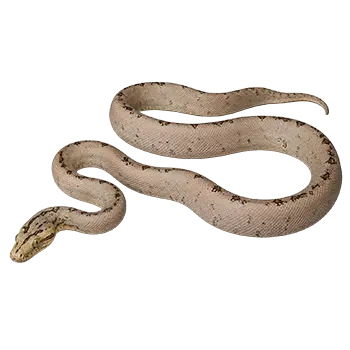
The Amazon Tree Boa (Corallus hortulana) is a non-venomous constrictor native to the tropical rainforests of South America. Its range extends across the Amazon Basin, spanning countries such as Brazil, Colombia, Venezuela, Peru, Ecuador, and the Guianas. The species was first formally described by Carl Linnaeus in 1758, making it one of the earlier New World snakes cataloged during the golden age of European natural history exploration.

Early European naturalists encountered the Amazon Tree Boa during botanical and zoological expeditions into the South American interior during the eighteenth and nineteenth centuries. Specimens were shipped back to European museums and menageries, where they attracted considerable attention due to their remarkable color variation. Unlike many snake species that present a relatively uniform appearance, individual Amazon Tree Boas can range from bright yellow and orange to deep brown and gray, with patterns that differ dramatically even among siblings from the same clutch.

The species occupies a wide variety of forested habitats, from lowland tropical rainforest to drier woodland edges. This ecological flexibility contributed to its widespread distribution and frequent encounters with both indigenous peoples and colonial-era explorers. Its arboreal lifestyle, spending the majority of its time coiled in branches above the forest floor, gave it a somewhat mysterious reputation among early observers who often spotted the snake only by chance.

Indigenous Knowledge & Historical Roles

Long before European contact, indigenous communities throughout the Amazon Basin were familiar with the Amazon Tree Boa and incorporated it into their understanding of the forest ecosystem. Many Amazonian peoples recognized the snake's role as a predator of rodents, bats, and small birds, and appreciated its contribution to controlling populations of animals that could damage stored food or spread disease.

In several indigenous traditions, tree-dwelling snakes held symbolic significance tied to the forest canopy, which was often regarded as a liminal space between the earthly and the spiritual. While specific mythological roles varied between cultural groups, the Amazon Tree Boa's ability to change color across its range contributed to associations with transformation and adaptability. Some communities regarded encounters with brightly colored individuals as notable events worthy of discussion and interpretation.

Indigenous knowledge systems also preserved practical information about the snake's behavior, including its nocturnal hunting habits and its tendency to strike defensively when disturbed. This accumulated ecological wisdom, passed down through oral tradition over centuries, represented a sophisticated understanding of the species long before Western science formally studied its biology and behavior.

Cultural Symbolism & Folklore

Snakes in general hold a powerful place in the cultural imagination of Amazonian and broader South American societies, and the Amazon Tree Boa contributes to this rich symbolic tradition. In many Amazonian cosmologies, serpents are associated with water, fertility, and the cyclical nature of life. The Amazon Tree Boa, as a conspicuous arboreal species, often figured into local folklore as a guardian of the forest canopy or a messenger between the terrestrial and aerial realms.

Colonial-era accounts from missionaries and explorers sometimes reflected European anxieties about tropical snakes, portraying them as dangerous and threatening regardless of whether the species in question was venomous. The Amazon Tree Boa, despite being harmless to humans beyond a defensive bite, was occasionally conflated with more dangerous species in sensationalized travel narratives. These accounts contributed to a lasting cultural association between tropical snakes and peril that persists in some popular perceptions today.

In modern South American culture, attitudes toward tree boas have shifted considerably. Conservation awareness and ecotourism have reframed many snake species as valuable components of biodiversity rather than threats. The Amazon Tree Boa's striking appearance has made it a frequent subject of wildlife photography and nature documentaries, helping to reshape its cultural image from feared forest dweller to admired symbol of tropical biodiversity.

The Herpetoculture Movement

The Amazon Tree Boa entered the international reptile-keeping hobby during the latter half of the twentieth century as interest in exotic reptiles expanded beyond traditional pet species. Early captive specimens were almost exclusively wild-caught animals imported from South America, and their reputation as defensive, bite-prone snakes initially limited their appeal to experienced keepers willing to work with a more challenging species.

During the 1980s and 1990s, the growth of herpetoculture as a serious pursuit brought renewed attention to the Amazon Tree Boa. Breeders began to appreciate the extraordinary range of color morphs that the species naturally produces, and selective breeding programs emerged to isolate and refine particularly striking color variants. The so-called "garden phase" yellows, vibrant oranges, and deep chocolate-brown individuals became sought-after animals within the hobby.

This period also saw the development of improved husbandry knowledge specific to arboreal boas. Keepers refined enclosure designs, temperature and humidity requirements, and feeding strategies that better replicated the species' natural habitat. As captive-bred animals became more widely available, the Amazon Tree Boa gradually transitioned from a niche species kept primarily by specialists to a more accessible option for intermediate and advanced reptile enthusiasts.

The herpetoculture community's work with Amazon Tree Boas also contributed to broader scientific understanding of the species. Captive breeding observations provided data on reproductive biology, growth rates, and color development that complemented field research conducted in the snake's native range.

Scientific Study & Classification

The taxonomic history of the Amazon Tree Boa reflects the broader challenges of classifying a species with exceptional morphological variation. Originally described as Boa hortulana by Linnaeus, the species was later moved to the genus Corallus along with other Neotropical tree boas. However, the remarkable diversity in color, pattern, and even body proportions across its range has prompted ongoing debate about whether Corallus hortulana represents a single species or a complex of closely related species.

Molecular phylogenetic studies conducted in the early twenty-first century have shed new light on the evolutionary relationships within the genus Corallus. These analyses suggest that the Amazon Tree Boa diverged from its closest relatives millions of years ago and that populations across its extensive range show significant genetic differentiation. Some researchers have proposed splitting the species into multiple taxa based on geographic and genetic evidence, though consensus on this question remains elusive.

Field studies have documented the Amazon Tree Boa's ecological role as a mesopredator in tropical forest ecosystems. Research on its diet, habitat use, and reproductive ecology has contributed to understanding how arboreal snakes partition resources in species-rich tropical environments. The species has also served as a model organism for studying the evolution of color polymorphism, since the dramatic color variation within populations appears to be maintained by complex genetic and ecological mechanisms that are not yet fully understood.

Conservation-focused research has examined the impact of habitat loss on Amazon Tree Boa populations across their range, providing data that informs broader efforts to protect Amazonian biodiversity.

The Species Today

Today the Amazon Tree Boa occupies a distinctive position in both the wild and in captivity. In its native range, the species remains relatively widespread, though localized population declines have been documented in areas experiencing rapid deforestation. The snake's adaptability to edge habitats and secondary forest provides some resilience, but ongoing habitat destruction across the Amazon Basin poses long-term concerns for the species' continued abundance.

In the reptile-keeping community, the Amazon Tree Boa has achieved a stable following among enthusiasts who value its beauty, its manageable adult size, and its interesting behavioral repertoire. Captive breeding programs continue to produce a wide array of color morphs, and dedicated breeders maintain detailed lineage records to preserve genetic diversity and refine desirable traits. Reptile expos and online communities provide active forums for keepers to share husbandry information and trade animals.

The species also plays a role in conservation education programs at zoos and nature centers, where its vivid coloration and arboreal habits make it an engaging ambassador for tropical forest conservation. Educators use the Amazon Tree Boa to introduce audiences to concepts such as biodiversity, habitat preservation, and the ecological roles of predators in forest ecosystems.

Looking forward, the Amazon Tree Boa's future will be shaped by the intersection of habitat conservation in South America, responsible practices within the pet trade, and continued scientific research into its biology and taxonomy. The species' long history of interaction with human cultures, from indigenous knowledge systems to modern herpetoculture, ensures that it will remain a subject of fascination and study for generations to come.

Always consult a qualified professional before making any health-related decisions. This content is provided for informational reference only and should not replace professional guidance specific to your animal.