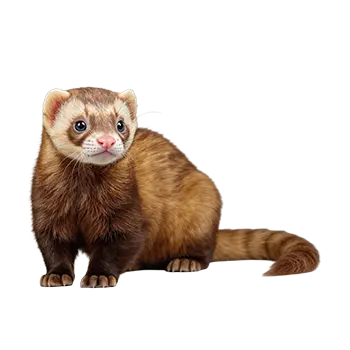

The legal status of ferret ownership in the United States is governed by a layered system of federal, state, and local regulations that creates a complex and sometimes confusing landscape for prospective and current owners. At the federal level, domestic ferrets are not classified as wildlife by the United States Department of Agriculture, and there is no overarching federal prohibition on their ownership. The Centers for Disease Control and Prevention does not restrict the importation or interstate transport of domestic ferrets in the way it restricts certain other animal species, though ferrets entering the United States from abroad are subject to general animal importation requirements including health certification. This federal baseline of permissiveness, however, is overlaid with a patchwork of state and municipal regulations that range from entirely unrestricted to completely prohibited.
The two most prominent jurisdictions with outright ferret bans are California and Hawaii. California's prohibition on ferret ownership dates to the 1930s and is administered by the California Department of Fish and Wildlife, which classifies domestic ferrets as restricted wildlife despite their thoroughly domesticated status. The stated rationale for the ban centers on concerns about the potential establishment of feral ferret populations if escaped or released animals were to breed in the wild, a scenario that wildlife officials argue could threaten native wildlife and agricultural interests. Critics of the ban point out that domestic ferrets have been kept in virtually every other state for decades without establishing viable feral populations, and that the species' dependence on human care for survival makes successful feral colonization extremely unlikely.
Hawaii's ferret ban is rooted in the state's broader policy of strict quarantine and importation controls designed to protect its uniquely vulnerable island ecosystems from invasive species. Hawaii prohibits a wide range of non-native animal species, and ferrets are included in this comprehensive framework regardless of their domestic status. The ecological rationale for Hawaii's restrictions is more compelling than California's, given the documented vulnerability of Hawaiian endemic species to predation and competition from introduced mammals. Nevertheless, ferret advocates argue that well-regulated ownership with appropriate safeguards could be permitted without significant ecological risk, particularly given the existence of established ferret populations in other island jurisdictions.
For the majority of the United States, ferret ownership is legal at the state level but may be subject to additional restrictions imposed by county or municipal governments. These local regulations can include permit requirements, mandatory rabies vaccination, limits on the number of ferrets per household, and restrictions on breeding. The variability of local regulations means that ferret owners who relocate within the same state may find themselves subject to significantly different legal requirements depending on their specific municipality, making it essential for owners to research local ordinances before acquiring a ferret or before moving with an existing animal.