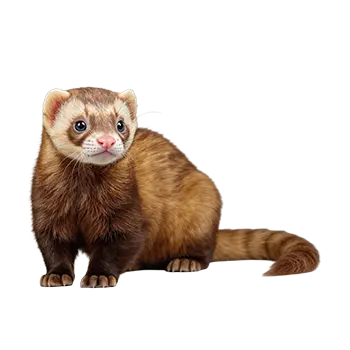

Ancient Origins & Early Domestication of the Ferret

The domestic ferret, Mustela putorius furo, is widely accepted to be the domesticated form of the European polecat, Mustela putorius, a small carnivorous mustelid native to western Eurasia and northern Africa. The precise date and location of ferret domestication remain subjects of scholarly debate, but the prevailing consensus places the event somewhere between two thousand and twenty-five hundred years ago in the Mediterranean basin or possibly in the broader region of southwestern Europe. This timeline positions ferret domestication well after the major livestock species but roughly contemporaneous with the domestication of the domestic cat in some regions, suggesting that ferrets filled a niche role in human societies that was distinct from the agricultural functions served by cattle, sheep, and goats.

The earliest unambiguous references to ferrets in historical texts appear in Greek and Roman sources. Aristophanes mentioned a small animal used to hunt rabbits in his comedies during the fifth century BCE, and while the exact identification of this animal has been debated, many historians believe it was a domesticated ferret or a closely related mustelid. More definitive references appear in Roman texts from the first century CE, including the works of Pliny the Elder and Strabo, who described the use of small, weasel-like animals to flush rabbits from their burrows in the Balearic Islands and across the Iberian Peninsula. These descriptions align closely with the practice of ferreting as it would be recognized for the next two millennia.

The primary impetus for ferret domestication was almost certainly their utility in rabbit hunting. Wild European polecats are natural predators of rabbits and other burrowing animals, and their slender, elongated bodies allow them to pursue prey into underground tunnel systems where dogs and human hunters cannot follow. By capturing and taming polecats, early human communities gained a living tool that could be sent into rabbit warrens to drive the inhabitants out into nets or into the open where they could be taken by dogs or by hand. This practice, known as ferreting, became deeply embedded in rural economies across Europe and persisted as a practical hunting method well into the twentieth century.

The transition from tamed wild polecat to truly domesticated ferret occurred gradually over centuries of selective breeding, during which humans favored animals that were tractable, tolerant of handling, and willing to work cooperatively with their human partners. Early domesticated ferrets likely retained much of the wild polecat's coloring and temperament, and the development of distinct coat color varieties — including the cinnamon pattern — would not occur until much later in the domestication timeline. Nevertheless, the foundational relationship between ferrets and humans was established during this ancient period, creating the genetic and behavioral groundwork upon which all modern ferret varieties, including the Cinnamon Ferret, ultimately depend.

Medieval Expansion & the Ferret's Role in European Society

Following the decline of the Roman Empire, the practice of keeping and breeding ferrets persisted across medieval Europe, sustained by the ongoing importance of rabbit hunting as both a food source and a means of pest control. Rabbits had been introduced to many parts of western and northern Europe by the Romans and by subsequent waves of human migration and trade, and their populations expanded rapidly in the absence of sufficient natural predators. Ferrets provided an efficient, low-cost method of managing rabbit populations and harvesting their meat and fur, making them valuable working animals in rural and manorial economies throughout the medieval period.

During the Middle Ages, ferret ownership was sometimes restricted by law or custom to the nobility and the landed gentry. In England, for example, statutes from the fourteenth century regulated the keeping of ferrets alongside other hunting animals such as hawks and hounds, reflecting their status as tools of the chase rather than mere household animals. These restrictions were not always strictly enforced, and ferrets were in practice kept by peasants and commoners as well, particularly in regions where rabbit populations were abundant and where ferreting was an important source of supplemental food. The tension between aristocratic privilege and practical necessity shaped the social context of ferret keeping for several centuries.

The Crusades and the expansion of trade routes during the late medieval and early Renaissance periods facilitated the movement of ferrets across broader geographic areas. Ferrets accompanied European colonists and traders to new territories, including islands in the Atlantic and Mediterranean where rabbits had become agricultural pests. The animals proved their worth in these new environments just as they had in their regions of origin, and their reputation as reliable working animals helped ensure their continued breeding and distribution. Throughout this period, the ferret population remained relatively undifferentiated in terms of coat color, with most animals displaying the wild-type sable pattern inherited from their polecat ancestors.

The cultural image of the ferret during the medieval and Renaissance periods was ambivalent. On one hand, ferrets were respected as useful working animals and occasionally appeared in artwork and heraldry as symbols of the hunt. On the other hand, their association with the polecat — an animal widely regarded as a pest and a thief of poultry — lent ferrets a somewhat disreputable image in popular culture. This duality persisted for centuries and continues to influence public perception of ferrets in the modern era, though the development of ferrets as companion animals and the emergence of distinctive color varieties like cinnamon have done much to reshape their cultural identity.

By the late Renaissance and early modern period, ferrets had become established across virtually all of western and central Europe, maintained primarily as working animals but increasingly appreciated for their intelligence, personality, and companionability. The stage was set for the eventual transformation of the ferret from a utilitarian hunting tool into a companion animal, though this transition would not gain significant momentum until the twentieth century.

Development of the Cinnamon Coat Color

The Cinnamon Ferret owes its name and visual identity to a distinctive coat color pattern characterized by warm reddish-brown guard hairs overlying a golden, wheaten, or cream-colored undercoat, with corresponding light-toned features including a pink or beige nose, burgundy or ruby-toned eyes, and a light-colored mask or an absence of the dark facial mask seen in sable ferrets. This color pattern is the result of specific genetic variations affecting melanin production and distribution in the hair shaft, producing phaeomelanin-dominant pigmentation rather than the eumelanin-dominant coloring of the wild-type sable ferret. The precise genetics of cinnamon coloration involve interactions between multiple loci that control pigment type, intensity, and distribution, and the full genetic architecture of ferret coat color continues to be refined through ongoing breeding observations and limited formal genetic research.

The emergence of cinnamon as a recognized ferret color variety is a product of the selective breeding programs that expanded dramatically during the latter half of the twentieth century, particularly in the United States. As ferrets transitioned from working animals to companion animals during the 1970s and 1980s, breeders began to pay increasing attention to coat color as a desirable trait. Early breeding efforts focused on establishing and stabilizing the albino and sable color patterns that had long existed in ferret populations, but as breeding programs matured and the gene pool diversified, additional color variants began to appear with greater frequency. Cinnamon ferrets were among these emergent varieties, and breeders who recognized the aesthetic appeal of the warm reddish-brown coloring worked to establish breeding lines that reliably produced cinnamon offspring.

The American Ferret Association and similar organizations in other countries played an important role in codifying ferret color standards during the 1980s and 1990s, creating formal classification systems that distinguished between recognized color varieties and established criteria for judging them in competitive shows. The cinnamon color was incorporated into these classification systems as breeders demonstrated that it could be reliably reproduced and that it represented a genuinely distinct phenotype rather than a variant of existing color categories such as champagne or chocolate. The formal recognition of cinnamon as a separate color variety gave breeders a framework for selective breeding and provided a shared vocabulary for discussing and evaluating coat color across the ferret community.

The development of cinnamon coloration illustrates a broader pattern in the history of domestic animal breeds, in which utilitarian selection pressures give way to aesthetic and novelty-driven selection as animals transition from working roles to companion roles. The European polecats from which all domestic ferrets descend display a relatively uniform dark brown to black coat with lighter underfur, a coloring pattern optimized for camouflage in temperate woodland environments. The cinnamon variant would likely be disadvantageous in the wild, where its lighter, warmer tones would reduce camouflage effectiveness and potentially increase predation risk. In the context of captive breeding for companionship, however, the same coloring becomes a valued distinguishing feature, selected for its visual appeal rather than its survival value.

The Modern Companion Ferret Movement

The transformation of the ferret from a working animal into a mainstream companion animal is primarily a phenomenon of the late twentieth century, driven by converging cultural, economic, and social factors that reshaped the landscape of pet ownership in the Western world. In the United States, the companion ferret movement gained momentum during the 1970s and 1980s as a growing cohort of pet owners sought alternatives to traditional companion animals such as dogs and cats. Ferrets appealed to this market because they combined the interactive, social qualities of dogs with a size and housing footprint more comparable to cats, while offering a distinctively different companionship experience rooted in their unique mustelid behaviors — the bounding war dance, the tendency to stash and hoard small objects, and the intense curiosity that drives them to investigate every accessible corner of their environment.

The growth of the companion ferret movement was supported by the emergence of dedicated ferret organizations, publications, and community networks. The American Ferret Association, founded in 1987, became a central institution for ferret advocacy, education, and breeding standards in the United States, providing resources for both new and experienced ferret owners and lobbying for legal recognition and protection of ferrets as companion animals. Similar organizations emerged in the United Kingdom, Australia, Canada, and across continental Europe, creating an international community of ferret enthusiasts connected by shared interests and a common commitment to advancing ferret welfare and public understanding.

Commercial ferret breeding operations expanded significantly during this period, with large-scale breeders such as Marshall Farms in the United States producing tens of thousands of ferrets annually for the pet trade. These operations made ferrets widely available through pet stores and established a reliable supply chain that supported the growth of the companion ferret market. However, the scale of commercial breeding also raised welfare concerns regarding early neutering and descenting practices, genetic diversity, and the socialization of animals raised in high-volume facilities. These concerns fueled a parallel movement of private hobby breeders who emphasized genetic health, temperament, and coat quality — including the development and refinement of color varieties like cinnamon.

The Cinnamon Ferret occupies a special place within the companion ferret movement as an emblem of the transition from utilitarian to aesthetic breeding priorities. While sable and albino ferrets had existed for centuries as functional byproducts of the domestication process, the cinnamon variety emerged specifically within the context of companion animal breeding, where visual appeal and individuality are valued traits. For many ferret enthusiasts, the choice of a cinnamon ferret reflects a deeper engagement with the hobby — an awareness of color genetics, a preference for less common varieties, and a connection to the community of breeders and fanciers who have worked to establish and maintain the color line.

The companion ferret movement has also driven significant advances in ferret veterinary medicine, nutrition, and husbandry, benefiting all ferret color varieties including cinnamon. As the number of pet ferrets grew, veterinary professionals developed specialized expertise in ferret health care, and research into common ferret diseases such as adrenal disease, insulinoma, and lymphoma expanded considerably. These developments have improved the quality and length of life available to companion ferrets and have reinforced the cultural shift from viewing ferrets as disposable working animals to regarding them as valued family members deserving of comprehensive medical care.

Cultural Legacy & Continuing Significance

The cultural legacy of the Cinnamon Ferret is inseparable from the broader cultural history of the domestic ferret, an animal whose relationship with humanity spans at least two millennia and encompasses roles as diverse as rabbit hunter, ship's ratter, laboratory subject, and beloved companion. Each of these roles has contributed layers of meaning to the ferret's cultural identity, and the Cinnamon Ferret inherits this accumulated significance while adding its own contemporary dimension as a product of deliberate aesthetic breeding and a symbol of the evolving human-animal bond in the twenty-first century.

Within ferret fancier communities, the cinnamon color variety carries associations of rarity, breeding expertise, and visual distinction. Because cinnamon ferrets are less common than sable or albino varieties, they are often regarded as specialty animals that reflect a breeder's commitment to maintaining diverse color lines and a keeper's willingness to seek out less readily available varieties. At ferret shows and exhibitions, cinnamon entries attract attention for their warm, unusual coloring and are judged according to standards that evaluate the depth and uniformity of the reddish-brown guard hairs, the clarity of the undercoat, and the overall health and condition of the animal. These competitive contexts reinforce the cinnamon variety's cultural status as a marker of breeding quality and fancier dedication.

The broader cultural significance of ferrets, including cinnamon varieties, extends into ongoing debates about the appropriate boundaries of pet ownership, the ethics of selective breeding for aesthetic traits, and the responsibilities that accompany the keeping of non-traditional companion animals. Ferret advocacy organizations continue to work toward legal recognition of ferrets as domestic animals in jurisdictions where they remain prohibited or heavily regulated, arguing that centuries of domestication have rendered ferrets fundamentally different from their wild polecat ancestors and that responsible ferret ownership poses no greater risk to public safety or ecological integrity than the keeping of dogs or cats.

The Cinnamon Ferret also serves as an accessible ambassador for the broader mustelid family, a diverse group of carnivorous mammals that includes weasels, mink, otters, badgers, and wolverines. Many people encounter mustelids for the first time through pet ferrets, and the experience of living with a ferret can foster appreciation for the intelligence, adaptability, and ecological importance of mustelids as a whole. In this sense, every Cinnamon Ferret living in a household serves a subtle educational function, introducing its human companions to the behavioral repertoire and evolutionary heritage of one of the most successful carnivore families on the planet.

Looking forward, the cultural trajectory of the Cinnamon Ferret will be shaped by the same forces that influence the companion animal landscape more broadly: advances in veterinary medicine and genetic testing, evolving regulatory frameworks governing pet ownership and breeding, the growth of online communities that connect ferret enthusiasts across geographic boundaries, and shifting public attitudes toward non-traditional companion species. The cinnamon variety's continued existence depends on the dedication of breeders who maintain the color line and the demand from keepers who value its distinctive appearance, ensuring that this particular thread in the long tapestry of ferret domestication remains vital and visible for future generations.

Always consult a qualified professional before making any health-related decisions. This content is provided for informational reference only and should not replace professional guidance specific to your animal.