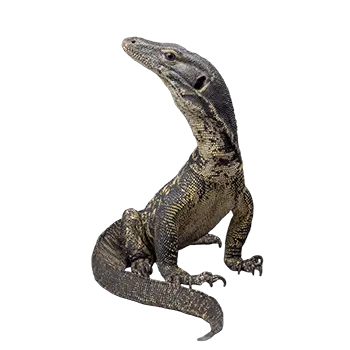

Transporting an Asian Water Monitor safely requires a carrier system that accounts for the animal's substantial size, physical strength, and capacity for explosive bursts of movement when startled or stressed. Unlike smaller reptiles that can be transported in modified plastic tubs or lightweight containers, an adult Asian Water Monitor demands a carrier constructed from materials strong enough to withstand the force of a large, powerful lizard attempting to push, scratch, or force its way out. For most adult animals, a heavy-duty plastic or fiberglass animal transport crate designed for medium to large dogs provides an appropriate starting point, though modifications are typically necessary to ensure adequate ventilation while preventing escape through gaps or ventilation openings that are sized for mammalian passengers rather than reptilian ones.
The interior of the carrier should be lined with material that provides secure footing without creating entanglement hazards. Unbleached newspaper layered several sheets thick serves this purpose well, as it provides traction, absorbs waste, and can be quickly replaced if soiled during transit. Towels or fleece liners can also be used but must be secured to prevent the animal from burrowing beneath them and potentially restricting its own airflow. The carrier should be dark or covered with an opaque cloth during transit, as reducing visual stimulation significantly decreases stress behavior in transported monitors. A stressed Asian Water Monitor in a clear or transparent container will devote considerable energy to attempting escape, potentially injuring its rostrum, claws, or tail in the process.
For juvenile or subadult animals, appropriately sized plastic storage containers with secure latching lids and drilled ventilation holes represent a practical and cost-effective transport solution. The ventilation holes must be small enough to prevent the animal from forcing digits or its snout through them, yet numerous enough to maintain adequate airflow throughout the duration of transit. The container should be sized to allow the animal to turn around and adopt a comfortable resting posture, but not so large that the animal is thrown about during vehicle movement. A container that is too spacious can be as dangerous as one that is too small, as an unbraced animal sliding across a smooth interior during braking or turns risks spinal and limb injuries.
Securing the carrier within the vehicle is a critical safety step that is sometimes overlooked. The carrier should be positioned on a flat surface and restrained with seat belts, ratchet straps, or cargo netting to prevent sliding or tipping during transit. Placing the carrier on the floor of the vehicle behind a front seat can provide both stability and protection from direct sunlight. The carrier should never be placed in the trunk of a sedan, where temperatures can rise to lethal levels within minutes, nor should it be left unattended in a parked vehicle under any circumstances. Even in mild ambient conditions, the interior of a parked car can reach temperatures that will kill a reptile in a matter of minutes.