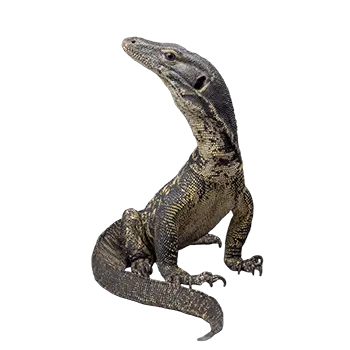

The Asian Water Monitor is listed under Appendix II of the Convention on International Trade in Endangered Species of Wild Fauna and Flora, commonly known as CITES. Appendix II listing does not prohibit international trade in the species, but it requires that all cross-border commercial transactions be authorized through a system of export permits issued by the CITES Management Authority of the country of origin. The listing was implemented in recognition of the enormous volume of trade in Asian Water Monitor skins, live animals, and body parts, and its purpose is to ensure that international commerce does not threaten the survival of wild populations. Any country that is a signatory to CITES — and the convention now includes the vast majority of the world's nations — is obligated to regulate the import and export of the species in accordance with these provisions.
The practical operation of the CITES permit system for Asian Water Monitors involves a determination by the Scientific Authority of the exporting country that the proposed export will not be detrimental to the survival of the species in the wild. This is known as a Non-Detriment Finding, and it is the scientific foundation upon which legal trade is authorized. For a species as heavily traded as the Asian Water Monitor, the rigor and reliability of Non-Detriment Findings have been subjects of considerable scrutiny. Conservation organizations have raised concerns that the sheer volume of permitted exports from countries such as Indonesia may exceed sustainable levels for some populations, particularly in areas where habitat loss compounds the impact of harvest pressure.
CITES also establishes the framework for tracking and documenting international shipments. Export permits must be presented at the point of import, and importing countries are required to verify the validity of the documentation before allowing entry. For live Asian Water Monitors entering the pet trade, this documentation trail is intended to ensure that each animal can be traced to a legal source, whether a licensed captive breeding facility or a regulated wild harvest program. In practice, enforcement varies significantly between countries, and the effectiveness of the permit system depends on the capacity and willingness of customs and wildlife authorities to inspect shipments and detect fraudulent documentation.
The distinction between wild-caught and captive-bred animals is particularly important within the CITES framework. Animals declared as captive-bred are subject to different permit requirements than wild-caught specimens, and captive breeding facilities must be registered with the CITES Management Authority of their country. Concerns have been raised about the practice of laundering wild-caught animals through nominally captive breeding operations, a form of fraud that undermines both the conservation intent of the treaty and the integrity of the legal market. CITES has responded to these concerns by establishing guidelines for the verification of captive breeding claims, but enforcement remains uneven across signatory nations.
Prospective keepers and breeders of Asian Water Monitors should be aware that CITES obligations do not replace or supersede domestic legislation. The treaty establishes a minimum standard for international trade regulation, but individual countries are free to impose stricter controls. Many do, and the interaction between CITES requirements and national or subnational wildlife laws creates a layered regulatory landscape that can be difficult to navigate without specialized knowledge.