
Nature Documentaries & Television

The African Bullfrog has been a recurring subject in nature documentary programming for decades, valued by filmmakers for its dramatic size, explosive breeding behavior, and visually striking parental care. The species gained significant television exposure through major natural history series produced by the BBC, National Geographic, and other international broadcasters. Footage of male African Bullfrogs engaging in violent territorial combat at rain-filled breeding pools — lunging, grappling, and biting with enough force to draw blood — has provided compelling material for programs exploring the themes of competition and reproductive strategy in the animal kingdom.

Among the most widely seen depictions of the African Bullfrog in documentary television are sequences showcasing the male's remarkable parental behavior. Unlike the vast majority of frog species, male African Bullfrogs actively guard their egg masses and tadpole aggregations, and they will physically excavate channels between drying pools to ensure their offspring have access to water. This behavior has been featured in multiple high-profile nature series, where it is often presented as an unexpected example of paternal investment in a group of animals not typically associated with parental care. The visual drama of a massive frog digging furrows through mud to save thousands of tadpoles translates powerfully to screen.

Regional wildlife programming in southern and eastern Africa has also featured the African Bullfrog extensively. South African broadcasters have produced segments and short documentaries examining the species' role in local ecosystems, its conservation status near urban centers, and its cultural significance in indigenous communities. These productions tend to offer a more localized perspective than international series, incorporating interviews with farmers, conservationists, and traditional knowledge holders who have firsthand experience with the species in its native habitat.

The species has also appeared in educational programming aimed at younger audiences. Children's nature shows in both English and Afrikaans have featured the African Bullfrog as a memorable example of amphibian diversity, leveraging the animal's impressive size and aggressive feeding behavior to capture the attention of viewers who might otherwise overlook frogs in favor of more conventionally charismatic animals. These appearances have contributed to the species' recognition among a generation of viewers who first encountered it through television rather than fieldwork or pet keeping.

Viral Content & Social Media

The African Bullfrog has achieved a level of online fame that far exceeds its profile in traditional media, driven primarily by feeding videos that showcase the species' voracious appetite and explosive strike. Videos depicting captive African Bullfrogs consuming large prey items — including mice, insects, and even other frogs — have accumulated tens of millions of views across platforms such as YouTube, TikTok, and Instagram. The appeal of these videos lies in the combination of the animal's imposing size, its deceptively fast feeding lunge, and the dramatic contrast between its sedentary resting posture and the sudden violence of its strike.

Content creators specializing in exotic pet keeping have played a central role in popularizing the African Bullfrog on social media. Channels dedicated to amphibian and reptile husbandry frequently feature the species in feeding demonstrations, enclosure tours, handling sessions, and growth update videos. Several of these channels have built substantial subscriber bases, with the African Bullfrog serving as a flagship animal whose content consistently outperforms other species in engagement metrics. The species' willingness to eat nearly anything placed in front of it, combined with its sometimes comically indignant expressions, makes it unusually well-suited to the short-form video format.

Beyond feeding content, viral moments involving African Bullfrogs have included videos of territorial aggression, defensive biting, and the species' distinctive distress call — a loud, sharp scream that surprises viewers unfamiliar with the animal's vocal capabilities. Compilation videos aggregating these moments have further expanded the species' online reach, introducing it to audiences with no prior interest in herpetology or amphibian keeping. Comment sections on these videos frequently express astonishment at the animal's size and behavior, reflecting a widespread lack of awareness about the diversity and complexity of amphibian life.

The social media presence of the African Bullfrog has had tangible effects on the pet trade. Breeders and retailers have reported increased demand for the species following the release of popular videos, and some breeders have noted that specific viral moments — such as a video of a bullfrog eating a scorpion or defending its territory against a snake — have led to measurable spikes in inquiries and sales. This dynamic illustrates the power of digital media to shape consumer demand in the exotic pet market, a phenomenon that carries both opportunities and responsibilities for the keeping community.

Literature & Scientific Publishing

The African Bullfrog has occupied a place in scientific literature since its formal description by Hinrich Lichtenstein in 1822, and it has since become one of the most thoroughly studied large frog species in the world. Research publications spanning herpetology, physiology, behavioral ecology, and conservation biology have examined nearly every aspect of the species' life history, from its estivation physiology and reproductive endocrinology to its immune function and skeletal morphology. This body of scientific work has established the African Bullfrog as a model organism for studying amphibian adaptation to arid and seasonal environments.

Popular science writing has drawn on this research to present the African Bullfrog to general audiences. The species appears regularly in books about amphibian biology, African wildlife, and the broader theme of animal adaptations to extreme environments. Authors have used the bullfrog's estivation strategy — burying itself underground and forming a protective cocoon of shed skin to survive months without water — as a compelling example of physiological resilience that challenges assumptions about the fragility of amphibians. These accounts have been instrumental in elevating the species' profile among readers who engage with natural history through books rather than television or social media.

Field guides covering the herpetofauna of southern and eastern Africa invariably feature the African Bullfrog as a prominent entry. The species' large size, distinctive appearance, and wide distribution make it one of the most recognizable amphibians in its range, and field guide accounts typically include detailed descriptions of its morphology, habitat preferences, breeding behavior, and vocalizations. Several regional field guides have used photographs of the African Bullfrog on their covers, reflecting the species' status as an iconic representative of African amphibian diversity.

In the pet-keeping literature, the African Bullfrog is the subject of multiple dedicated care manuals and husbandry guides. These publications, written by experienced keepers and breeders, cover topics ranging from enclosure design and temperature management to diet formulation and disease prevention. The quality and depth of these guides have improved markedly over the past two decades, reflecting the maturation of the keeping community and the accumulation of practical experience with the species in captivity. Several of these guides are considered essential references within the amphibian hobby and are frequently recommended to newcomers considering the species as a pet.

Art, Photography & Illustration

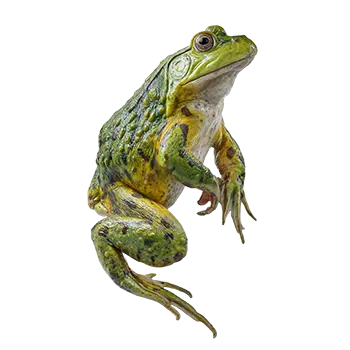
The African Bullfrog's striking physical appearance — its massive, rounded body, olive-green dorsum, bright yellow or orange throat, and ridged, textured skin — has made it a compelling subject for wildlife photographers and natural history illustrators. Professional photographers working in the species' native range have captured dramatic images of breeding aggregations, territorial combat, and parental care that have been published in magazines, books, and online galleries. The visual contrast between the bullfrog's bulky, seemingly sluggish body and the dynamic intensity of its breeding behavior provides particularly strong photographic material.

Natural history illustration has a long tradition of depicting the African Bullfrog, dating back to the hand-colored lithographs and engravings that accompanied nineteenth-century taxonomic descriptions. These early illustrations, produced by artists working from preserved specimens and field sketches, established the visual conventions for representing the species in scientific contexts. Modern illustrators continue to feature the African Bullfrog in works ranging from detailed anatomical plates in academic texts to stylized depictions in popular field guides and children's educational materials.

In the contemporary digital art community, the African Bullfrog has inspired a modest but devoted body of creative work. Digital artists and illustrators have produced renderings that range from photorealistic portraits to whimsical, anthropomorphized interpretations that play on the species' grumpy expression and rotund proportions. These works circulate primarily through online art platforms and social media, where they are shared among communities of amphibian enthusiasts and wildlife art collectors. The bullfrog's naturally expressive face — with its wide mouth, prominent brow ridges, and seemingly disapproving gaze — lends itself to creative interpretation in ways that more conventionally attractive animals sometimes do not.

Photographic competitions and exhibitions focused on wildlife and macro photography have also featured the African Bullfrog. Images capturing the species in its natural habitat during the breeding season — males partially submerged in muddy water, inflating their vocal sacs, or locked in combat — have earned recognition in international photography contests. These images serve a dual purpose, functioning both as artistic achievements and as tools for raising awareness about the species and the seasonal wetland habitats on which it depends.

Educational Outreach & Public Programs

The African Bullfrog has become a valued ambassador species in educational outreach programs operated by zoos, nature centers, museums, and conservation organizations across the globe. Its large size makes it immediately impressive to audiences of all ages, while its manageable temperament — relative to some other large amphibian species — allows trained educators to use live specimens in classroom presentations and public demonstrations. The species' dramatic life history, including its underground dormancy, explosive breeding events, and vigorous parental care, provides rich material for lessons about amphibian biology, adaptation, and ecosystem function.

In South Africa, where the species is native and where several populations face localized conservation threats, the African Bullfrog has been featured in environmental education campaigns aimed at raising awareness about wetland conservation and the ecological importance of seasonal rain pools. Organizations working in the greater Johannesburg and Pretoria metropolitan areas, where urban expansion has destroyed significant amounts of bullfrog breeding habitat, have used the species as a flagship to advocate for the protection of remaining natural areas. School programs in these regions often include visits to conservation sites where students can observe bullfrog habitat and learn about the challenges of conserving wildlife in rapidly urbanizing landscapes.

International educational institutions have also embraced the African Bullfrog as a teaching tool. University herpetology courses frequently reference the species when discussing topics such as estivation physiology, amphibian parental care strategies, and the conservation implications of the global amphibian decline. The species' well-documented biology and its status as a common captive animal make it an accessible case study that students can engage with both through literature review and hands-on observation in laboratory settings.

Public aquariums and natural history museums have incorporated the African Bullfrog into exhibits designed to challenge visitors' perceptions of amphibians. By presenting the species alongside information about its size, strength, and behavioral complexity, these institutions work to counter the widespread tendency to overlook frogs and other amphibians in favor of more conventionally appealing animal groups. Interactive exhibits that allow visitors to hear recordings of the male's breeding call or to observe live specimens feeding have proven particularly effective at engaging audiences and generating interest in amphibian conservation.

Cultural Impact on the Keeping Hobby

The African Bullfrog's media presence has had a measurable and ongoing impact on the amphibian-keeping hobby, influencing both the demographics of new keepers and the expectations they bring to the species. Prior to the era of viral content and widespread social media exposure, the African Bullfrog was known primarily among dedicated herpetologists and experienced amphibian keepers. Its transition from a niche species to one with broad public recognition has been driven almost entirely by digital media, and this shift has reshaped the market for captive-bred animals and the resources available to support their care.

The influx of interest generated by viral videos and documentary appearances has created both opportunities and challenges for the keeping community. On the positive side, increased demand has incentivized more breeders to produce captive-bred African Bullfrogs, reducing reliance on wild-caught imports and expanding the genetic diversity available within captive populations. The growth of the keeper base has also spurred the creation of more and better educational content, including detailed care guides, veterinary resources, and community forums where experienced keepers mentor newcomers.

On the other hand, the same media exposure that draws new enthusiasts to the species can also foster unrealistic expectations. Feeding videos that emphasize the bullfrog's dramatic prey capture may lead inexperienced keepers to overfeed their animals, a common husbandry error that can result in obesity and related health problems. Similarly, the perception of the African Bullfrog as a low-maintenance, easy-to-keep pet — an impression sometimes conveyed by casual social media content — can leave new owners unprepared for the species' space requirements, its potential lifespan of several decades, and its need for environmental conditions that replicate the seasonal rhythms of its native habitat.

The keeping community has responded to these challenges with increased emphasis on responsible ownership messaging. Breeders, content creators, and herpetological organizations have worked to balance the entertainment value of African Bullfrog media with accurate information about the species' care needs and the commitment involved in keeping one responsibly. This effort reflects a broader trend in the exotic pet hobby, where the same platforms that drive demand are also used to educate and set expectations, creating a dynamic tension between popularity and responsibility that continues to shape the culture of amphibian keeping.

The African Bullfrog's trajectory in media and pop culture illustrates a pattern increasingly common among exotic species: an animal's public profile is built primarily through digital content rather than traditional institutional channels, and the keeping community must adapt in real time to manage the consequences of sudden popularity. The species' future in the hobby will likely depend on the community's ability to sustain educational outreach and responsible breeding practices as media trends shift and new audiences continue to discover the animal through screens rather than field guides.

Always consult a qualified professional before making any health-related decisions. This content is provided for informational reference only and should not replace professional guidance specific to your animal.