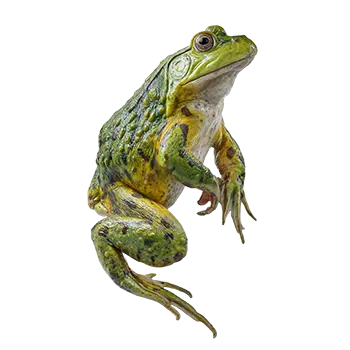

The international trade in African Bullfrogs is governed primarily by the framework established under the Convention on International Trade in Endangered Species of Wild Fauna and Flora, commonly known as CITES. While the African Bullfrog is not currently listed on any of the three CITES appendices, meaning that international trade in the species is not subject to the permit requirements and quotas that apply to appendix-listed species, this status does not render the trade entirely unregulated. Exporting countries retain the authority to impose their own restrictions on the collection and export of wildlife, and several nations within the species' range have enacted domestic legislation that governs or limits the commercial harvest and export of amphibians, including Pyxicephalus adspersus.
The absence of a CITES listing reflects the species' broad distribution and its currently stable global population assessment by the International Union for Conservation of Nature. However, conservation advocates and some herpetological organizations have periodically raised the question of whether an Appendix III listing — which would require the cooperation of one or more range states — might be appropriate as a precautionary measure. Such a listing would impose documentation requirements on international shipments, providing better data on trade volumes and helping to identify any unsustainable harvesting patterns before they reach critical levels.
For importers and exporters, the practical regulatory landscape is shaped by the intersection of the exporting country's wildlife laws, the importing country's customs and agricultural regulations, and any bilateral agreements that may apply. Shipments of live amphibians crossing international borders are typically subject to inspection by customs and wildlife enforcement officials, who verify that the animals are not prohibited species and that all required documentation is in order. In the absence of CITES paperwork, importers may still need to provide health certificates, phytosanitary documentation, and evidence that the animals were legally acquired in the country of origin.
The European Union, the United States, and other major importing regions have their own regulatory frameworks that apply to the importation of live amphibians regardless of CITES status. These frameworks may include requirements related to disease screening, particularly for chytrid fungus and ranavirus, which are of significant concern in the global amphibian trade. Compliance with these import regulations is the responsibility of the importer, and failure to meet requirements can result in seizure of animals, fines, and criminal prosecution.