
Origins & Natural History

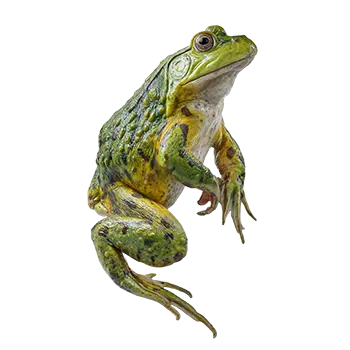
The African Bullfrog (Pyxicephalus adspersus) is the largest frog species found on the African continent, with mature males capable of reaching over nine inches in body length and weighing more than three pounds. The species is distributed across a broad swath of sub-Saharan Africa, with established populations documented in South Africa, Zambia, Zimbabwe, Malawi, Mozambique, Tanzania, Kenya, Nigeria, and several other nations within the tropical and subtropical savanna belts. Its range encompasses a remarkable diversity of habitats, from dry grasslands and open woodlands to the margins of seasonal wetlands and agricultural landscapes.

The evolutionary lineage of the African Bullfrog places it within the family Pyxicephalidae, a group of frogs endemic to sub-Saharan Africa. Fossil evidence and molecular phylogenetic studies suggest that the Pyxicephalidae diverged from other ranoid frogs during the late Cretaceous or early Paleogene periods, making the lineage ancient by amphibian standards. The genus Pyxicephalus itself is relatively small, containing only a handful of recognized species, with P. adspersus being the most widely distributed and the most thoroughly studied member.

One of the defining adaptations of the African Bullfrog is its capacity for estivation, a state of dormancy that allows the animal to survive extended dry seasons lasting six months or longer. During estivation, the frog burrows deep into the soil and secretes a cocoon-like layer of shed skin that encases its body, reducing water loss to a fraction of what it would be at the surface. This remarkable physiological strategy enables the species to persist in semi-arid environments where most other amphibians would perish, and it has shaped the species' entire life history around the dramatic wet-dry cycles of the African savanna.

The species was first formally described by the Dutch-German naturalist Hinrich Lichtenstein in 1822, based on specimens collected in the Cape region of South Africa. Early European naturalists were struck by the animal's imposing size, powerful build, and aggressive temperament, traits that distinguished it immediately from the smaller, more docile frogs familiar to European collectors. Throughout the nineteenth century, additional specimens were collected and described from across the species' range, gradually filling in the picture of its continental distribution and ecological role.

Historical Roles & Human Interaction

The African Bullfrog has coexisted with human populations across sub-Saharan Africa for millennia, and its interactions with people have been shaped by the animal's large size, conspicuous breeding behavior, and association with the arrival of seasonal rains. In many parts of southern and eastern Africa, the explosive breeding choruses of African Bullfrogs are among the most dramatic acoustic events of the rainy season. Males gather in large numbers at temporary rain pools and flooded grasslands, producing deep, resonant calls that can be heard over considerable distances. For rural communities whose livelihoods depend on rain-fed agriculture, the appearance and calling of these frogs has long served as a natural indicator that the planting season has begun.

In several southern African cultures, the African Bullfrog has historically been consumed as a food source. In parts of Namibia, Botswana, and Zimbabwe, large males are collected during the breeding season when they congregate at shallow pools and are easiest to capture. The practice of eating bullfrogs carries specific cultural protocols in some communities, including restrictions on which individuals may consume the animals and during which phases of the breeding cycle harvesting is considered appropriate. In certain traditions, consuming bullfrogs before the frogs have begun breeding or before certain rains have fallen is believed to invite misfortune or illness.

The species' burrowing habits have also brought it into contact with agricultural activities. Farmers plowing fields at the onset of the rainy season frequently unearth estivating bullfrogs, and such encounters have been documented in rural accounts across the species' range for generations. In some communities, the discovery of a large, dormant bullfrog during field preparation is considered a sign of fertile soil and a promising growing season. In others, the animals are simply relocated to the margins of cultivated land, reflecting a pragmatic coexistence between farmers and wildlife.

The twentieth century brought significant changes to the relationship between African Bullfrogs and human populations. Urbanization, agricultural intensification, and the draining of seasonal wetlands reduced available breeding habitat in many areas, particularly around rapidly growing cities in South Africa and East Africa. At the same time, the species began to attract attention from the international pet trade and from zoological institutions seeking to exhibit large, visually impressive amphibians. This dual pressure — habitat loss at home and commercial demand abroad — marked a turning point in the species' interaction with humans and set the stage for the conservation and regulatory discussions that continue today.

Cultural Symbolism

Across the diverse cultures of sub-Saharan Africa, frogs occupy a rich and varied symbolic landscape, and the African Bullfrog's exceptional size and dramatic life cycle have given it particular prominence in regional folklore and belief systems. In many southern African traditions, frogs are closely associated with rain, fertility, and the renewal of the land. The African Bullfrog's emergence from underground estivation at the onset of the rains reinforces this connection in a visceral way — an animal that appears to rise from the earth itself, summoned by water, embodies the cyclical relationship between dormancy and abundance that defines life in the savanna.

Among the Zulu and related Nguni-speaking peoples of southern Africa, frogs are generally regarded as creatures connected to water spirits and ancestral forces. While specific mythological narratives centered on the African Bullfrog as a named character are not widely documented in the ethnographic literature, the animal's imposing presence and its association with rain pools and seasonal floods place it within a broader symbolic framework linking amphibians to themes of transformation, patience, and hidden power. The bullfrog's capacity to survive underground for months and then emerge fully vital resonates with cultural narratives about endurance through hardship and the rewards of waiting.

In parts of West Africa, where the species' range overlaps with a different set of cultural traditions, frogs appear in oral literature and proverbs as symbols of adaptability and vocal authority. The deep, booming call of the male African Bullfrog — one of the loudest vocalizations produced by any African amphibian — has drawn comparisons to the voices of chiefs and orators in some folk traditions. The idea that a creature buried in the earth for half the year can emerge and command attention with its voice carries metaphorical weight in societies where eloquence and timing are valued leadership qualities.

In contemporary Western culture, the African Bullfrog has acquired its own set of symbolic associations, shaped largely by the pet-keeping community and popular science media. The species is frequently characterized as the embodiment of toughness and defiance among amphibians, a reputation reinforced by its willingness to bite when handled and its aggressive defense of egg clutches and tadpoles. This image of the fierce, protective bullfrog has made it a favorite subject for nature documentaries and online wildlife content, where it is often presented as a counterpoint to the perception of frogs as fragile or passive animals.

Keeper Communities & Husbandry Standards

The African Bullfrog entered the international pet trade in significant numbers during the 1980s and 1990s, initially through wild-caught exports from southern and eastern African countries. Early keepers in North America and Europe often had limited information about the species' specific requirements, and husbandry practices during this period were largely experimental, informed by general amphibian care principles and the occasional account published in herpetological society newsletters. Mortality rates among imported specimens were high, reflecting both the stress of capture and transport and the inadequacy of early captive environments.

As the keeping community grew and accumulated practical experience, a clearer picture of the African Bullfrog's captive needs emerged. Keepers discovered that the species required a thermal gradient with a warm basking area, a substrate deep enough to allow burrowing, and a seasonal variation in humidity and feeding that mimicked the wet-dry cycles of its native habitat. The recognition that African Bullfrogs benefit from a period of reduced activity and feeding during the cooler months — a captive analog of estivation — was a significant advancement in husbandry understanding and contributed to improved longevity and breeding success in captive populations.

Captive breeding of the African Bullfrog became more widespread in the early 2000s, driven by both conservation concerns about wild collection and the desire of hobbyists to produce healthy, captive-bred animals. Breeding the species in captivity presents unique challenges, including the need for a large, shallow water body to stimulate spawning behavior and the management of the male's aggressive territorial instincts during the breeding period. Successful breeders developed techniques involving rain chamber setups, controlled temperature drops, and careful pairing strategies that allowed for consistent reproduction outside of the animal's natural range.

Today, the African Bullfrog keeping community is well-established and supported by a network of online forums, social media groups, and dedicated breeders. Care guides produced by experienced keepers are widely available and generally consistent in their recommendations, reflecting a mature body of practical knowledge. Herpetological societies in the United States, the United Kingdom, and South Africa include the African Bullfrog within their educational and conservation mandates, and the species is a regular presence at reptile and amphibian expos where breeders showcase their animals and share expertise with newcomers to the hobby.

The Species Today

The African Bullfrog occupies a distinctive position in the contemporary world of amphibian keeping and conservation. It is one of the most recognizable and widely kept large frog species globally, with captive-bred specimens readily available from breeders across North America, Europe, and increasingly in parts of Asia. The species' combination of impressive size, relatively straightforward care requirements, and engaging behavior — including its willingness to feed vigorously and its reputation for individual personality — has secured its place as a staple of the amphibian hobby.

In the wild, the conservation status of the African Bullfrog varies significantly across its range. In South Africa, where urbanization and agricultural development have encroached on seasonal wetland habitats, certain populations have experienced notable declines. The species is classified as Near Threatened in some provincial conservation assessments within South Africa, and specific breeding sites near Johannesburg and Pretoria have been the focus of targeted conservation efforts, including habitat restoration and the creation of artificial breeding pools. Across much of the rest of its range in eastern and central Africa, the species remains relatively common, though comprehensive population data are lacking for many countries.

The International Union for Conservation of Nature currently lists the African Bullfrog as a species of Least Concern at the global level, reflecting its broad distribution and presumed large overall population. However, conservation biologists have noted that this global assessment may mask localized declines, particularly in regions experiencing rapid land-use change. The species' dependence on seasonal rain pools for breeding makes it vulnerable to alterations in hydrology caused by dam construction, water extraction, and the channelization of seasonal watercourses.

Within the scientific community, the African Bullfrog continues to serve as a subject of research in fields ranging from reproductive biology and endocrinology to behavioral ecology and conservation genetics. Studies of the species' estivation physiology have contributed to broader understanding of metabolic suppression and desiccation tolerance in vertebrates. Research into the male's parental care behavior — which includes guarding egg masses, excavating channels to connect drying pools, and aggressively defending tadpoles from predators — has provided valuable data on the evolution of parental investment in amphibians, a group in which such behavior is relatively uncommon.

Notable Individuals & Collections

While individual African Bullfrogs do not typically achieve public celebrity in the manner of charismatic mammals or companion animals, certain specimens have gained recognition within the herpetological and pet-keeping communities for their exceptional size, longevity, or role in advancing captive breeding knowledge. Breeders who have maintained long-lived individuals often document their animals' histories in detail, recording growth rates, feeding records, and reproductive output over decades. These records contribute to the collective understanding of the species' potential lifespan and the factors that influence health and vigor in captivity.

Several zoological institutions maintain notable African Bullfrog exhibits that have introduced the species to broad public audiences. The Pretoria Zoo in South Africa, situated within the species' native range, has long featured African Bullfrogs in its amphibian collection and has contributed to public education about the conservation challenges facing the species in urbanizing landscapes. In North America, institutions such as the Smithsonian's National Zoo and various accredited facilities within the Association of Zoos and Aquariums network have exhibited the species as part of broader efforts to highlight amphibian diversity and the global amphibian conservation crisis.

The rise of social media and video-sharing platforms has created a new category of notable African Bullfrogs — individual animals whose feeding videos, enclosure tours, and behavioral displays have attracted substantial online followings. Content creators specializing in amphibian and reptile keeping have featured African Bullfrogs prominently, capitalizing on the species' dramatic feeding response and imposing appearance to generate engaging content. While the educational value of such content varies, it has unquestionably raised the species' profile among audiences who might never encounter it through traditional herpetological channels.

Breeder communities have also recognized individuals who have made significant contributions to African Bullfrog husbandry and genetics. Keepers who pioneered techniques for consistent captive breeding, who developed strategies for managing the male's aggression during pairing, or who produced unusually colored or patterned specimens through selective breeding have earned reputations within the community. These contributions, while rarely documented in formal scientific literature, represent a practical knowledge base that has been instrumental in establishing the African Bullfrog as a viable and sustainable captive species.

Always consult a qualified professional before making any health-related decisions. This content is provided for informational reference only and should not replace professional guidance specific to your animal.