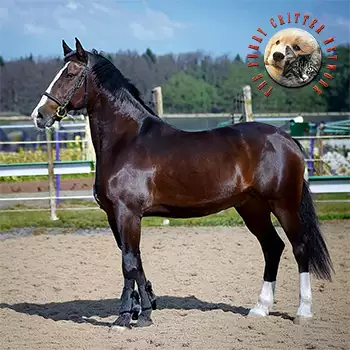

Origins & Development

The Swedish Warmblood traces its origins to the royal stud at Flyinge in the southern province of Skåne, where organized horse breeding began in the early seventeenth century under King Charles X Gustav. The Swedish crown recognized the strategic importance of producing quality cavalry horses, and Flyinge became the center of a state-sponsored breeding program that would endure for centuries. The stud's founding marked the beginning of a systematic approach to horse breeding that was remarkably advanced for its era.

Early breeding stock at Flyinge drew from a mix of native Scandinavian horses, imported Spanish and Friesian stallions, and later East Prussian, Hanoverian, and Thoroughbred blood. The Swedish military's demand for horses that combined endurance, courage, and trainability shaped selection priorities throughout the eighteenth and nineteenth centuries. Each generation was tested under saddle in demanding military exercises that ensured only the most capable animals contributed to the breeding pool.

The Swedish Warmblood Association (ASVH) was formally established in 1928, consolidating regional breeding efforts under a single national studbook. This unification brought standardized evaluation criteria and performance testing requirements that strengthened the breed's consistency and quality. Sweden's relatively small breeding population, compared to larger Continental warmblood programs, encouraged a quality-over-quantity approach that became a hallmark of the Swedish system.

Throughout the twentieth century, Swedish breeders continued to refine the breed by carefully introducing outside genetics while maintaining the core Swedish character. Thoroughbred influence added speed and scope, while select Hanoverian, Trakehner, and later Dutch Warmblood stallions contributed modern sport horse qualities. The result was a breed that retained its distinctive Scandinavian temperament while gaining the athletic ability needed to compete at the highest international levels.

Historical Roles

The Swedish Warmblood served primarily as a military horse for most of its history, carrying Swedish cavalry officers through training exercises, ceremonial duties, and occasional combat operations. The Swedish army maintained rigorous standards for its remount horses, and the breeding program at Flyinge was structured to meet these military requirements. Cavalry horses needed to be sound, brave, sensible under pressure, and capable of sustained physical effort over difficult terrain.

Sweden's neutrality during both World Wars meant that the country's horse population was spared the devastating losses experienced by most European nations. This preservation of bloodlines during the twentieth century's most destructive conflicts gave Swedish breeders a significant advantage, as they retained genetic material that was lost or severely diminished elsewhere on the continent. The continuity of the breeding program during this period contributed to the breed's genetic depth.

As mechanization replaced the horse in military operations during the mid-twentieth century, the Swedish Warmblood's role shifted decisively toward sport and recreation. The Swedish army disbanded its last mounted cavalry units in the 1950s, and the breeding program pivoted to produce horses suited for the growing civilian demand for competition and pleasure mounts. This transition was smoother in Sweden than in many countries because the military horse's qualities of courage, trainability, and sound temperament aligned naturally with the requirements of modern equestrian sport.

The breed also served historically as a versatile agricultural and transportation horse in rural Sweden. Before the era of motorized vehicles and farm machinery, Swedish Warmbloods and their predecessors pulled plows, hauled timber, and transported families across the country's varied landscape. While this working role is no longer part of the breed's identity, the durability and willingness developed through centuries of practical use remain embedded in the Swedish Warmblood's character.

Cultural Symbolism

In Swedish culture, the Swedish Warmblood represents a tradition of thoughtful, methodical excellence that aligns with broader national values. Sweden's approach to horse breeding mirrors its approach to engineering, design, and social policy: careful planning, evidence-based decision-making, and a commitment to quality over flash. The breed's understated elegance and reliable performance reflect a cultural aesthetic that prizes function, durability, and quiet competence.

Flyinge, the historic royal stud, holds a special place in Swedish cultural identity. The facility has been in continuous operation for over 350 years and serves as both a working breeding center and a cultural heritage site. Visitors from across Sweden and around the world tour the grounds, attend stallion presentations, and learn about the history of Swedish horse breeding. Flyinge's role as a living museum of equestrian heritage makes it a tangible connection between Sweden's past and its present.

Equestrian sport is enormously popular in Sweden relative to the country's population, and the Swedish Warmblood is at the heart of this sporting culture. Sweden consistently punches above its weight in international equestrian competition, and the success of Swedish-bred horses at Olympics, World Championships, and European Championships generates widespread national pride. Riding is the second-most popular sport among young Swedish women, and the Swedish Warmblood is the breed most closely associated with this participation.

The breed also symbolizes the longstanding Swedish commitment to animal welfare and ethical treatment. Sweden's animal welfare laws are among the strictest in the world, and the country's approach to horse breeding and management reflects these values. The emphasis on temperament, soundness, and longevity in Swedish Warmblood breeding is consistent with a cultural perspective that views animals as partners deserving of respect and responsible stewardship.

Breed Registries & Standards

The Swedish Warmblood Association (Avelsföreningen för Svenska Varmblodiga Hästen, or ASVH) is the official registry for the breed and one of the oldest warmblood studbooks in Europe. The ASVH maintains strict standards for stallion approval, mare evaluation, and young horse assessment that have been refined over nearly a century of organized breeding. The association's commitment to transparent, data-driven selection has made it a model for warmblood registries worldwide.

Stallion approval in the Swedish system is a demanding multi-stage process. Young stallions undergo initial evaluation for conformation, movement, and temperament, followed by performance testing that assesses their ability under saddle and, for jumping prospects, their technique over fences. Only stallions that meet high standards across all evaluation criteria are approved for breeding. The approval rate is deliberately low, ensuring intense selection pressure that drives continuous genetic improvement.

Mare evaluation follows a similarly structured approach, with mares assessed at regional inspections and awarded quality designations based on conformation, movement, and the performance records of their offspring. The Swedish system places particular emphasis on the mare side of the pedigree, recognizing that mare quality is at least as important as stallion quality in determining the breed's overall trajectory. Premium mares with strong performance records are identified and their bloodlines tracked carefully.

In North America, the Swedish Warmblood Association of North America (SWANA) represents the breed and conducts inspections and evaluations following ASVH guidelines. SWANA organizes annual inspection tours that bring Swedish-licensed judges to evaluate horses across the United States and Canada. This international inspection framework ensures that Swedish Warmbloods bred outside of Sweden are held to the same standards as those produced in the breed's homeland.

The Breed Today

The modern Swedish Warmblood is a versatile, high-quality sport horse that competes successfully in dressage, show jumping, and eventing at the international level. The breed regularly appears in the upper tiers of the World Breeding Federation for Sport Horses rankings, a remarkable achievement given Sweden's relatively small breeding population compared to warmblood powerhouses like Germany and the Netherlands.

Contemporary Swedish Warmblood breeding continues to emphasize the balance of athleticism, temperament, and soundness that has always defined the breed. The ASVH has embraced modern tools including genomic evaluation, comprehensive health databases, and international performance data to inform breeding decisions. This integration of traditional selection wisdom with cutting-edge science positions the breed well for continued success in an increasingly competitive global market.

The Swedish Warmblood's temperament remains one of its greatest assets. Riders and trainers consistently describe these horses as willing, intelligent, and mentally stable, with a cooperative attitude that makes them enjoyable to work with across all levels of experience. This rideability factor has made the breed popular not only with professional competitors but also with ambitious amateurs who need a talented horse that is also forgiving and trustworthy.

Internationally, the Swedish Warmblood enjoys strong demand, particularly in North America, where the breed has developed a loyal following among dressage and jumping enthusiasts. Swedish-bred horses are valued for their reliability, longevity, and the consistency of quality that the ASVH inspection system helps ensure. The breed's global community, connected through social media and international competitions, continues to grow and strengthen ties between Swedish breeders and horse owners worldwide.

Notable Individuals

Briar, a Swedish Warmblood gelding, became one of the most celebrated event horses in history under American rider Bruce Davidson. Competing through the 1970s and 1980s, Briar demonstrated the breed's versatility and courage by excelling across all three phases of eventing at the highest international level. His performances helped establish the Swedish Warmblood's reputation in North America and inspired a generation of event riders to seek out the breed.

Gagat, a Swedish Warmblood stallion, made a profound impact on the breed as both a competitor and a sire. His success in dressage competition and the consistently high quality of his offspring cemented his legacy as one of the most influential stallions in modern Swedish Warmblood history. The Gagat line continues to produce competitive sport horses, demonstrating the depth and durability of his genetic contribution.

Biggles, ridden by Swedish Olympian Rolf-Göran Bengtsson, represented the breed at the highest levels of international show jumping. His clean jumping technique and competitive temperament showcased the Swedish Warmblood's ability to produce world-class jumping horses. Bengtsson's partnership with Biggles demonstrated that Swedish-bred horses could compete successfully against the products of much larger European breeding programs.

More recently, a new generation of Swedish Warmbloods has continued the breed's competitive legacy. Horses competing at the Olympics, World Equestrian Games, and major Grand Prix events carry Swedish bloodlines that trace back through decades of careful selection at Flyinge and in private Swedish breeding programs. Each international success reinforces the breed's reputation and validates the methodical approach that has guided Swedish Warmblood breeding for nearly four centuries.

Always consult a qualified professional before making any health-related decisions. This content is provided for informational reference only and should not replace professional guidance specific to your animal.