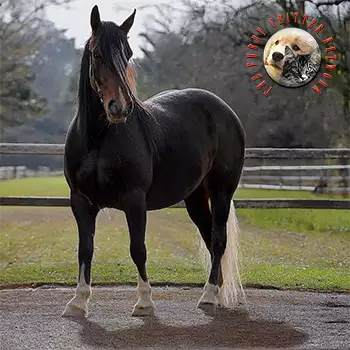

The Oldenburg breed traces its roots to the county of Oldenburg in northwestern Germany, where Count Johann XVI von Oldenburg began establishing organized horse breeding programs in the early seventeenth century. The region's flat, fertile marshlands provided ideal grazing conditions and fostered a tradition of producing strong, versatile horses suited to both agricultural labor and aristocratic transport. Count Anton Günther, who ruled from 1603 to 1667, is widely credited as the breed's founding architect. He imported high-quality stallions from Spain, Italy, and the Near East, crossing them with the sturdy local Friesian-type mares that had thrived in the region for generations.
Anton Günther's breeding philosophy centered on producing a tall, powerful carriage horse with an elegant bearing and a calm, reliable temperament. His program was remarkably sophisticated for its era, emphasizing both form and function while maintaining meticulous records. The horses he developed became prized across European courts, and he famously gifted them to foreign dignitaries as symbols of prestige and diplomacy. His personal riding skill and the quality of his horses earned him an enduring reputation that would define the Oldenburg's identity for centuries.
As the centuries progressed, the breed absorbed influences from a wide array of European bloodlines. Thoroughbred, Cleveland Bay, Hanoverian, and Norman stallions were introduced at various points to refine the Oldenburg's movement, athleticism, and conformation. Each infusion was carefully managed by regional breeding authorities who understood the importance of preserving the breed's core characteristics while adapting it to changing demands. By the late nineteenth century, the Oldenburg had evolved from a heavy carriage type into a more refined but still substantial all-purpose horse.
The establishment of the Oldenburg studbook in 1861 marked a pivotal moment in the breed's formal history. This registry brought systematic record-keeping and standardized inspections that ensured quality control across the breeding population. The studbook's creation coincided with a broader movement in German horse breeding toward scientific management and selective improvement, and the Oldenburg breeders were among the most progressive participants in this transformation.