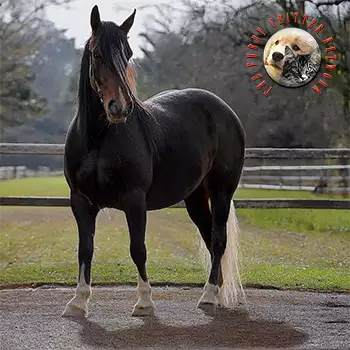

The Oldenburg's striking appearance and natural athleticism have made it a recurring presence in film and television productions that require impressive, well-trained horses. The breed's tall, elegant frame and fluid movement translate beautifully on camera, and its calm, trainable temperament makes it ideal for the demanding, often chaotic conditions of a film set. Directors and animal coordinators frequently select Oldenburgs for scenes that call for horses with a commanding physical presence combined with the reliability needed to perform consistently across multiple takes.
In period dramas and historical epics, Oldenburgs have appeared as the mounts of nobility and military officers, roles that align naturally with the breed's actual historical background as a prestigious carriage and riding horse. Their size and carriage give them an aristocratic look that enhances the visual authenticity of costume productions, while their cooperative nature allows them to work safely alongside actors who may have limited riding experience. Though individual horses in these productions are rarely identified by breed in promotional materials, knowledgeable viewers and equestrian commentators frequently recognize the Oldenburg type.
Equestrian sport documentaries and television specials have provided some of the breed's most prominent screen time. Coverage of Olympic dressage and show jumping events has brought celebrated Oldenburgs like Bonfire and Satchmo into the living rooms of millions of viewers worldwide. These broadcasts showcase the breed's extraordinary movement quality and competitive prowess in a context that highlights individual horses by name, giving the Oldenburg genuine name recognition among a broad audience that extends well beyond the core equestrian community.
Streaming platforms have further expanded the Oldenburg's media footprint through equestrian lifestyle series and behind-the-scenes training programs. These long-form productions allow viewers to develop a deeper understanding of what makes the breed distinctive, following individual horses through their training progression, competition preparation, and daily care routines. The intimacy of this format has proven particularly effective at building emotional connections between audiences and the horses they follow.