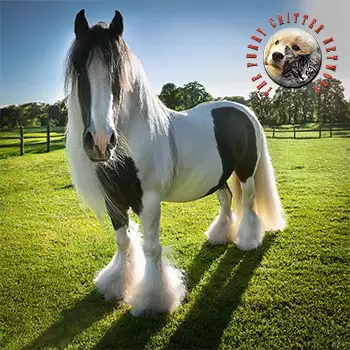

Transporting a Gypsy Vanner by road requires careful attention to trailer selection, loading technique, and driving habits. Because Gypsy Vanners are stocky, heavily built horses that can weigh between 1,100 and 1,700 pounds depending on their height and build, the trailer must be rated for the combined weight of the horse, tack, feed, and any other cargo. A standard two-horse straight-load or slant-load trailer is generally sufficient for a single Vanner, but owners should verify the trailer's gross vehicle weight rating and ensure that their tow vehicle has adequate towing capacity, braking power, and suspension to handle the load safely.
The Gypsy Vanner's abundant feathering requires some additional consideration when trailering. Leg wraps or shipping boots should be used to protect the lower legs and feathers from injury during loading, unloading, and transit. However, wraps should be applied correctly and checked periodically during long hauls, as improperly applied bandages can cause pressure injuries or restrict circulation. Some owners prefer padded shipping boots over traditional wraps for ease of application and more consistent protection.
Loading and unloading are moments of elevated risk during any trailering operation. Gypsy Vanners are generally calm and cooperative horses, which works in the owner's favor, but every horse should be trained to load and unload quietly well before a trip is necessary. Practice sessions in a low-pressure environment help the horse become comfortable with the trailer and reduce the likelihood of resistance or panic on travel day. Patience and positive reinforcement are far more effective than force, and a horse that loads willingly is safer for everyone involved.
During transit, frequent stops on long hauls — ideally every three to four hours — allow the horse to rest, drink water, and shift position. Adequate ventilation is critical, particularly in warm weather, as the enclosed trailer environment can become dangerously hot. Hay nets or slow feeders can be provided to keep the horse occupied and encourage natural head-down posture, which supports respiratory health during travel. Owners should avoid traveling during the hottest part of the day in summer and ensure that water is available at every stop.