
Film & Television

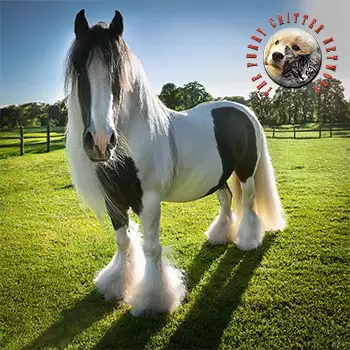
The Gypsy Vanner's dramatic appearance — flowing feathers, bold pinto markings, and thick cascading manes — makes it a natural choice for visual storytelling, and the breed has appeared in a number of film and television productions over the years. Their fairy-tale aesthetic lends itself particularly well to fantasy and period settings, where their look evokes a sense of magic and old-world charm that few other breeds can match.

Documentary filmmakers have also been drawn to the breed's compelling origin story. Several documentaries and television segments have explored the connection between Gypsy Vanners and the Romani and Traveller communities that created them. These productions have helped introduce mainstream audiences to both the breed and the cultural traditions behind it, though the quality and sensitivity of the portrayals have varied. Some have been praised for respectful treatment of Traveller heritage, while others have been criticized for leaning into romanticized or stereotypical depictions.

Television programs focused on horses and equestrianism have frequently featured the Gypsy Vanner as a standout breed segment. Their photogenic quality and gentle handling characteristics make them cooperative on-set partners, and their unusual appearance ensures they stand out in any lineup of breeds. As the breed's popularity has grown, appearances on lifestyle and animal-focused programming have become increasingly common.

While the Gypsy Vanner has not yet been the central breed in a major Hollywood production, its visibility in smaller films, independent productions, and televised horse events continues to grow. The breed's visual appeal virtually guarantees that its screen presence will expand as more filmmakers and producers discover its combination of beauty and trainability.

Literature & Art

The Gypsy Vanner has inspired a growing body of literature, ranging from breed-specific reference books to children's stories and equestrian fiction. Several comprehensive breed guides have been published that document the horse's history, conformation standards, and care requirements, serving as foundational texts for new and prospective owners. These books often include extensive photography that showcases the breed's most striking visual qualities.

In children's literature, the Gypsy Vanner has become a popular character type, often cast as the magical or special horse in stories about young riders discovering the equestrian world. The breed's fairy-tale appearance lends itself naturally to illustrated books, where artists can capture the drama of flowing feathers and colorful coat patterns. Several picture books and early chapter books have featured Gypsy Vanners as central characters, introducing the breed to young readers who may have never seen one in person.

Visual artists have embraced the Gypsy Vanner as a subject with particular enthusiasm. The breed's heavy feathering, bold markings, and luxurious mane and tail provide rich material for painters, illustrators, and photographers alike. Equine art shows and galleries frequently include Gypsy Vanner subjects, and commissioned portraits of individual horses are a thriving niche within the equine art community. The contrast between the horse's muscular build and its almost ethereal hair makes for compelling compositions across a range of artistic styles.

The breed has also appeared in poetry and personal essay collections written by owners and enthusiasts who find in the Gypsy Vanner a powerful symbol of freedom, resilience, and beauty. These literary works often weave together the personal experience of owning a Vanner with reflections on the breed's Romani heritage and the broader cultural significance of the horse-human bond.

Internet & Social Media

If any single factor has driven the Gypsy Vanner's explosive growth in popularity over the past two decades, it is social media. The breed's extraordinary visual appeal translates perfectly to platforms built around images and short videos. A Gypsy Vanner galloping through a green field, feathers flying, mane streaming behind — this is content that stops a scrolling thumb. Videos of Vanners running in slow motion, being groomed, or interacting gently with children routinely accumulate millions of views across platforms.

Individual Gypsy Vanners have become genuine internet celebrities, with dedicated social media accounts managed by their owners that attract hundreds of thousands of followers. These accounts typically showcase daily life with the horse, grooming routines, training progress, and the sheer visual spectacle of the breed. The community that has formed around these accounts is active and engaged, with followers sharing photos of their own Vanners, asking care questions, and connecting with other enthusiasts worldwide.

Online forums and Facebook groups dedicated to the Gypsy Vanner breed serve as important hubs for information exchange, buying and selling, and community building. These spaces range from casual appreciation groups to serious breeding and conformation discussion boards. The accessibility of these online communities has made it far easier for prospective owners to research the breed, find reputable breeders, and connect with experienced mentors than was possible even a decade ago.

The social media phenomenon has not been without downsides. The breed's internet fame has sometimes driven impulse purchases by buyers attracted to the look but unprepared for the realities of horse ownership. Viral posts can also create unrealistic expectations about the breed's appearance, as the most heavily feathered and dramatically colored individuals tend to receive the most attention, potentially skewing public perception of what a typical Gypsy Vanner looks like.

Advertising & Branding

The Gypsy Vanner's striking visual presence has made it an attractive choice for advertising and branding campaigns that seek to evoke themes of elegance, freedom, and natural beauty. The breed has appeared in print advertisements, commercial photography, and promotional videos for products ranging from luxury goods to outdoor lifestyle brands. Their combination of muscular power and flowing hair gives them a dramatic quality that photographs exceptionally well and translates across a wide range of brand aesthetics.

Equine industry brands have been particularly eager to feature Gypsy Vanners in their marketing. Feed companies, tack manufacturers, and equestrian apparel lines have used images of the breed to convey quality, tradition, and a connection to heritage horsemanship. The breed's association with artisanal craftsmanship and old-world skill aligns naturally with brands that want to position themselves as premium or heritage-focused.

Beyond commercial advertising, the Gypsy Vanner has become something of an informal brand in its own right. The breed's name and image are used on a wide range of merchandise, from clothing and jewelry to home decor and stationery. Online marketplaces feature hundreds of Gypsy Vanner-themed products, reflecting the passionate consumer base that the breed has cultivated through its social media presence and show circuit visibility.

The breed's use in branding does raise occasional concerns about commercialization and cultural sensitivity. Some advocates note that marketing campaigns sometimes strip the breed of its Romani and Traveller context, presenting it as a purely aesthetic product rather than a horse with deep cultural roots. Balancing commercial appeal with respectful acknowledgment of the breed's heritage remains an ongoing conversation within the Gypsy Vanner community.

The Popularity Effect

The Gypsy Vanner's rapid rise to mainstream popularity has had wide-ranging effects on the breed, its community, and the broader horse world. On the positive side, increased demand has supported the growth of breeding programs, fueled the establishment of dedicated shows and events, and brought the breed to the attention of riders and owners who might otherwise never have encountered it. The influx of new enthusiasts has also generated significant investment in breed research, health screening, and educational resources.

However, the popularity boom has also introduced challenges that the breed community continues to grapple with. As prices for quality Gypsy Vanners climbed, some breeders prioritized volume over quality, producing horses with structural issues, inadequate socialization, or health problems that could have been avoided through more selective breeding practices. The emphasis on flashy appearance — particularly extreme feathering and unusual color patterns — has sometimes come at the expense of soundness and temperament, the very qualities that defined the breed in its working heritage.

The popularity effect has also impacted rescue and rehoming organizations. As with any breed that experiences a rapid surge in demand, a corresponding increase in horses needing new homes has followed. Some buyers, drawn in by the breed's internet fame, discover that the reality of caring for a heavily feathered draft-type horse — including the grooming demands, space requirements, and veterinary costs — exceeds their expectations or resources. Breed-specific rescue groups have formed to address this need, rehoming Vanners whose owners can no longer provide adequate care.

Despite these challenges, the overall trajectory of the Gypsy Vanner's popularity has been a net positive for the breed. The community has become increasingly organized and vocal about promoting responsible breeding and ownership practices. Education initiatives, mentorship programs, and transparent breeder networks are helping to ensure that the breed's growth is sustainable and that the horses themselves remain healthy, well-cared-for, and true to the type that made them beloved in the first place.

Always consult a qualified professional before making any health-related decisions. This content is provided for informational reference only and should not replace professional guidance specific to your animal.