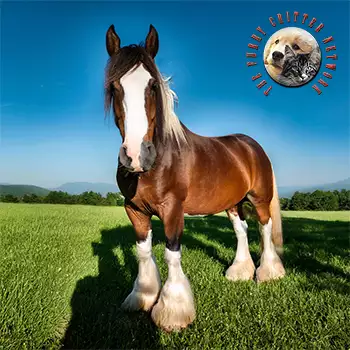

Clydesdales have appeared in numerous film and television productions, often cast in roles that call for a horse of imposing size and striking appearance. Period dramas set in the Victorian and Edwardian eras frequently feature Clydesdales pulling carriages, wagons, and farm equipment, lending visual authenticity to scenes of everyday life before the age of the automobile. Their calm temperament makes them well suited to the demands of a film set, where bright lights, loud noises, and multiple takes can unsettle less steady horses.
Documentary programming has also given the Clydesdale a prominent platform. Nature and heritage series produced for broadcast in the United Kingdom, Australia, and North America have profiled the breed's history, its conservation challenges, and the communities of breeders working to sustain it. These programs have introduced the Clydesdale to audiences who might never encounter one in person and have helped raise awareness of the breed's vulnerable status.
Television commercials represent perhaps the breed's most high-profile screen appearances. A major American brewing company began using a team of Clydesdales in promotional campaigns in the 1930s, and the partnership has continued for decades, producing some of the most memorable and emotionally resonant advertisements in the history of the medium. The annual debut of new installments during major sporting broadcasts became a cultural event in its own right, with viewers eagerly anticipating each year's storyline.
Beyond any single advertiser, the Clydesdale's screen presence has cemented its image as the archetypal gentle giant of the horse world. Casting directors seeking a horse that reads as both powerful and approachable on camera consistently turn to the breed, ensuring that the Clydesdale remains a fixture in visual storytelling across genres.