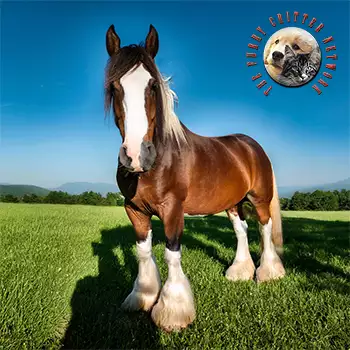

The Clydesdale takes its name from the River Clyde and the historic county of Clydesdale in Lanarkshire, Scotland, where the breed began to take shape during the early eighteenth century. Local Lanarkshire mares were crossed with imported Flemish stallions brought to the region by the sixth Duke of Hamilton and local tenant farmers seeking larger, more powerful draught animals. These crosses produced horses with noticeably greater size and bone than the native stock, and by the mid-1700s the emerging type was already earning recognition at regional agricultural shows.
The breed's refinement continued through the late eighteenth and nineteenth centuries as breeders selected for clean, flat bone; well-sprung feathering on the lower legs; and an animated, high-stepping gait that distinguished the Clydesdale from other heavy breeds. Stallion licensing laws introduced in Scotland during the late 1800s further encouraged quality control, ensuring that only animals meeting a minimum standard could be used for breeding. Key foundation sires such as Glancer, Thompson's Black Horse, and the influential Darnley line helped consolidate the characteristics that define the modern breed.
By the 1830s and 1840s the Clydesdale had become firmly established as a distinct breed rather than a regional type. Agricultural improvers across Scotland championed the horse for its combination of power, soundness, and tractable disposition. The formation of the Clydesdale Horse Society in 1877 and the publication of its first studbook in 1878 formalized breed records, giving breeders a structured framework for registration and pedigree tracking that endures to this day.
The breed's popularity grew rapidly during the late Victorian era as industrialization and urbanization increased the demand for heavy horses capable of hauling coal, timber, and goods through city streets. Clydesdale numbers expanded not only in Scotland but across England, Ireland, and eventually overseas, setting the stage for the breed's global influence in the centuries to come.