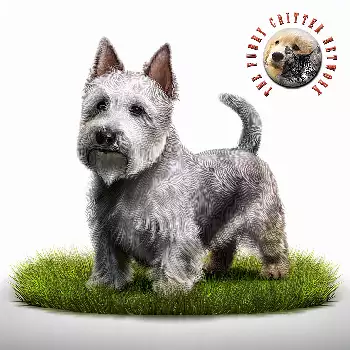

The Skye Terrier is one of the oldest terrier breeds, with origins tracing back over four centuries to the Isle of Skye in the Scottish Highlands. The breed was developed to hunt foxes, badgers, and otters that inhabited the rocky cairns and dense undergrowth of the rugged island landscape. Their long, low-slung bodies and powerful jaws made them ideally suited for pursuing quarry into narrow burrows and crevices where larger dogs could not follow.
Early written references to the Skye Terrier appear as far back as the sixteenth century. John Caius, physician to Queen Elizabeth I, described a distinct class of terriers brought from the far north of Scotland in his 1570 treatise on English dogs. While debate exists over whether Caius was describing the exact breed known today, the description of a long-coated, low-bodied terrier from the Scottish islands aligns closely with the Skye Terrier's known characteristics.
Over the centuries, breeders on the Isle of Skye refined the breed for both working ability and a distinctive appearance. The luxurious double coat, featuring a long, flat outer layer and a soft, woolly undercoat, served as protection against the harsh Highland weather and the bites of cornered prey. The breed's characteristic prick or drop ears, feathered and veiled by flowing hair, became hallmarks that distinguished it from other Scottish terriers.
By the early nineteenth century, the Skye Terrier had become one of the most recognizable terrier breeds in Britain. Travelers to the Highlands brought specimens back to the cities, where the breed's elegant appearance and steadfast temperament quickly attracted a following among both the working class and the aristocracy.