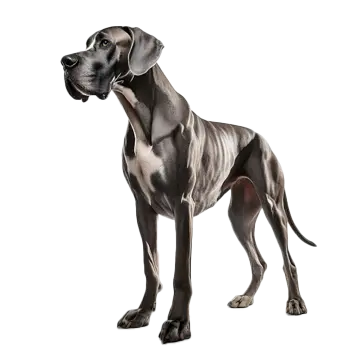

The Great Dane's ancestry stretches back thousands of years, with large, powerful dogs appearing in artwork and records from ancient civilizations across Egypt, Greece, and China. While the breed's exact lineage is debated, most historians agree that its more immediate predecessors were crosses between English Mastiffs and Irish Wolfhounds, selectively bred for size, strength, and agility. These massive dogs were originally developed in the Germanic regions of Europe during the Middle Ages, where they served as formidable hunters of wild boar, one of the most dangerous game animals on the continent.
Despite the name "Great Dane," the breed has no particular ties to Denmark. The French naturalist Buffon encountered the breed during travels and referred to it as "Grand Danois," which translated to "Great Dane" in English and stuck as the common name. In Germany, the breed has long been known as the Deutsche Dogge, meaning "German Mastiff," reflecting the country's central role in refining and standardizing the breed. German breeders were instrumental in transitioning the Great Dane from a fierce boar-hunting dog into the elegant and gentle companion recognized today.
By the late 1800s, German breeders had established consistent breeding programs that emphasized not only the breed's imposing physical stature but also a calm and friendly temperament. The shift away from aggressive hunting instincts was deliberate, as the breed increasingly moved into the homes of nobility and the upper class. Selective breeding during this period produced the refined, graceful silhouette and balanced proportions that define the modern Great Dane.
The breed's development also saw the standardization of several recognized color patterns, including fawn, brindle, blue, black, harlequin, and mantle. Each color variety carries its own breeding considerations, and dedicated breeders have worked to maintain the health and vibrancy of these distinct coat patterns across generations. The harlequin pattern, with its distinctive white base and irregular black patches, became one of the most iconic and recognizable markings in the entire canine world.