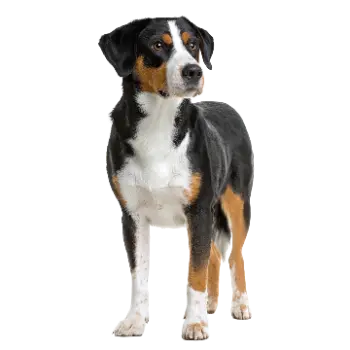

The Entlebucher Mountain Dog, also known as the Entlebucher Sennenhund, traces its roots to the Entlebuch valley in the cantons of Lucerne and Berne in central Switzerland. As the smallest of the four Swiss Mountain Dog breeds — which also include the Greater Swiss Mountain Dog, the Bernese Mountain Dog, and the Appenzeller Sennenhund — the Entlebucher was developed to be a compact, agile herding and driving dog suited to the steep alpine terrain of its homeland.
The breed's history extends back several centuries, though written documentation remained scarce until the late 1800s. Swiss farmers in the pre-alpine regions relied on sturdy, versatile dogs capable of managing cattle across rugged hillsides and narrow mountain paths. The Entlebucher filled this role with remarkable efficiency, using its low center of gravity, powerful build, and fearless temperament to move livestock through challenging landscapes that larger dogs found difficult to navigate.
For much of its early existence, the Entlebucher was not clearly distinguished from the Appenzeller Sennenhund. Both breeds share tricolor markings and a similar working background, and regional farmers often grouped them together. It was not until 1913 that four Entlebucher-type dogs were shown at a dog show in Langenthal, Switzerland, prompting Professor Albert Heim — a renowned geologist and canine researcher — to advocate for the breed's formal recognition as a distinct variety. Heim's efforts proved instrumental in separating the Entlebucher from its close relatives and establishing the foundation for a dedicated breeding program.
Despite this early recognition, the breed's population remained dangerously small throughout the early twentieth century. World War I and the shifting economics of Swiss agriculture reduced demand for specialized herding dogs, and the Entlebucher nearly disappeared. A concerted effort by Swiss breed enthusiasts in the 1920s helped stabilize the population, though the gene pool remained limited for decades. This narrow genetic foundation has continued to shape breeding practices and health considerations for the Entlebucher into the modern era.