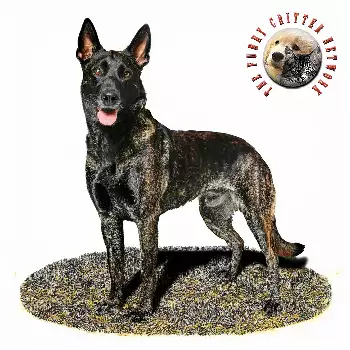

The Dutch Shepherd originated in the rural provinces of the Netherlands during the early nineteenth century, where it served as an indispensable all-purpose farm dog. Farmers in the regions of Brabant, Drenthe, and Veluwe needed a single breed capable of herding sheep and cattle, guarding the homestead, pulling carts, and keeping vermin at bay. The Dutch Shepherd emerged as the answer to those demands, shaped not by aesthetic preferences but by the practical requirements of daily agricultural life.
Unlike many herding breeds that were refined for a narrow set of tasks, the Dutch Shepherd was prized for its adaptability. It could move sheep between pastures, keep chickens from straying into kitchen gardens, and alert the household to the approach of strangers. This broad utility made the breed a fixture on small to mid-sized Dutch farms throughout the 1800s, where a single versatile dog was far more economical than maintaining several specialized breeds.
The first breed standard was formally drafted in 1898 by the Nederlandse Herdershonden Club, making the Dutch Shepherd one of the earlier European herding breeds to receive official recognition. Initially the standard accepted any coat color, but it was later revised to require a brindle pattern in order to clearly distinguish the Dutch Shepherd from the closely related German Shepherd and Belgian Shepherd. This decision would become one of the breed's most defining visual characteristics.
Early breeding efforts focused on preserving the working temperament and physical resilience that had made the breed so valuable on Dutch farms. Breeders prioritized sound structure, keen intelligence, and a willing disposition over show-ring appearance. Three coat varieties were recognized — short-hair, long-hair, and rough-hair — each suited to different working conditions and regional preferences across the Netherlands.