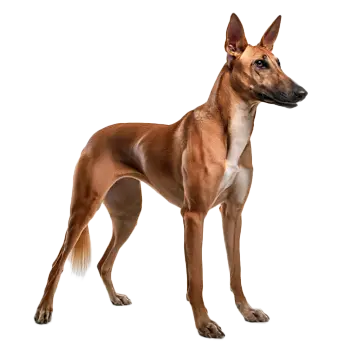

Origins & Development

The Azawakh is one of the oldest sighthound breeds in existence, with roots that stretch back thousands of years to the arid landscapes of the Sahel region of West Africa. Named after the Azawagh Valley, which spans portions of modern-day Mali, Niger, and Burkina Faso, this breed was developed by the Tuareg, Fula, and other nomadic peoples who relied on swift, enduring dogs capable of hunting game across vast expanses of open terrain. Archaeological and genetic evidence suggests that the Azawakh's lineage predates many of the European sighthound breeds and may share deep ancestral ties with the ancient pariah dogs of Africa.

The breed evolved under extreme environmental pressures. The Sahel's punishing heat, scarce water, and sparse vegetation demanded a dog with exceptional thermoregulation, lean musculature, and efficient movement. Over centuries, the Azawakh was shaped by both natural selection and careful human stewardship into a tall, elegant hound with a distinctive dry, fine-boned physique. Its long limbs, deep chest, and minimal body fat are all adaptations that allowed it to sprint after gazelle, hare, and other prey in temperatures that would incapacitate many other breeds.

For most of its history, the Azawakh was not a breed in the Western sense of the word. It was a regional landrace, with variation across different nomadic groups and territories. Selective breeding was practiced informally, with dogs chosen for hunting ability, loyalty, and soundness rather than for conformity to a written standard. It was not until the mid-twentieth century that Western dog enthusiasts began to take notice of the Azawakh and efforts were made to classify and preserve it within formal breed registries.

The first Azawakhs were brought to Europe in the early 1970s, primarily by French diplomats and military personnel stationed in West Africa. These early imports formed the foundation of the European breeding population and introduced the breed to a global audience. The Federation Cynologique Internationale granted provisional recognition in 1981 and full recognition followed in 1986, establishing the Azawakh as an internationally acknowledged breed with a formal standard.

Historical Roles

The Azawakh's primary historical role was that of a coursing hound. In the Sahel, the Tuareg and Fula peoples used these dogs to pursue and bring down fleet-footed game, including gazelle, wild boar, and hare. Hunts were typically conducted in small packs, sometimes in coordination with mounted riders on horseback or camelback. The dogs' extraordinary speed — capable of reaching bursts of over 35 miles per hour — combined with their stamina in extreme heat made them invaluable partners in a landscape where food could be scarce and every successful hunt was essential to survival.

Beyond hunting, the Azawakh served as a guardian of camps and livestock. Nomadic communities in the Sahel faced threats from predators, thieves, and rival groups, and the Azawakh's alertness, territorial instinct, and fierce loyalty made it an effective watchdog. At night, these dogs would sleep near their owners' tents and raise the alarm at any disturbance. Their protectiveness extended to the livestock herds that were central to the pastoral economy, and they were known to confront jackals and hyenas that ventured too close.

The Azawakh also held a deeply personal role within nomadic families. Unlike many working breeds that were kept primarily as tools, the Azawakh was often regarded as a companion and a member of the household. It was common for Azawakhs to sleep inside the tent with their family, share food, and receive a level of care and affection that set them apart from other working animals. This close bond between dog and owner contributed to the breed's characteristic loyalty and reserve around strangers.

In some communities, the Azawakh carried spiritual significance. The Tuareg people, who have a rich tradition of symbolic art and storytelling, sometimes associated these dogs with status and honor. Owning a fine hunting Azawakh was a mark of prestige, and the dogs were occasionally given as gifts to cement alliances or honor respected individuals. The breed's elegance and grace inspired admiration and a degree of reverence that went beyond mere utility.

Cultural Symbolism

In the cultures of the Sahel, the Azawakh occupies a symbolic space that few other domestic animals share. Among the Tuareg — a people renowned for their artistry, poetry, and deep connection to the desert — the Azawakh represents beauty, speed, and the fierce independence that nomadic life demands. The breed's slender, sculptural form has been compared to the elegant lines of Tuareg metalwork and leather craftsmanship, and its bearing evokes the dignity and self-possession that the Tuareg admire.

The Azawakh is also a symbol of the bond between humans and the natural world in a landscape defined by extremity. To the nomadic peoples who developed this breed, the dog was not merely an animal but an extension of the family and a reflection of the values that sustained life in the Sahel: endurance, loyalty, resourcefulness, and courage. Stories and oral traditions about exceptional Azawakhs — dogs that saved their families from predators, led hunters to game, or traveled extraordinary distances to reunite with their owners — are woven into the cultural fabric of the region.

In the broader context of African canine heritage, the Azawakh stands as a powerful reminder that the domestication and refinement of dog breeds is not solely a European or Asian phenomenon. The breed's existence challenges Eurocentric narratives about the history of dog breeding and highlights the sophistication of indigenous African animal husbandry. As awareness of the Azawakh has grown internationally, it has become an ambassador for the rich diversity of African dog breeds and a symbol of cultural pride for the communities that created it.

In Western sighthound culture, the Azawakh has come to represent the exotic and the ancient. Its arrival in Europe and North America sparked fascination among enthusiasts who saw in this breed a living link to the earliest chapters of the human-canine partnership. The Azawakh's striking appearance and uncommon temperament have made it a subject of art, photography, and literature within the global sighthound community.

Breed Clubs & Standards

The formal organization of Azawakh breeding and exhibition outside of Africa began in France in the 1970s and 1980s. French enthusiasts, drawing on the dogs imported from the Sahel, established the first breed clubs and worked with the Federation Cynologique Internationale to draft a breed standard that captured the essential characteristics of the Azawakh while accommodating its natural variation. The FCI standard emphasizes the breed's lean, racy build, its short and fine coat, and its characteristic flap-eared head with an elongated muzzle. Acceptable colors include a range of fawn, red, brindle, and sand tones, often with white markings on the chest, feet, and tail tip.

In the United States, the Azawakh gained recognition more slowly. The American Kennel Club admitted the breed to its Foundation Stock Service in 1997, allowing Azawakhs to be registered and exhibited in limited events. Full AKC recognition in the Hound Group came in January 2019, opening the door for the breed to compete at the highest levels of American conformation showing. The Azawakh Club of America serves as the parent breed club and works to promote responsible breeding, education, and the preservation of the breed's working heritage.

Breed clubs in Europe, particularly in France, Germany, and the Nordic countries, have been instrumental in maintaining genetic diversity within the Azawakh population. Because the breed's foundation stock outside of Africa is relatively small, careful management of breeding programs is essential to avoid the health problems associated with genetic bottlenecks. Some clubs have organized importation programs to bring new bloodlines from the Sahel, ensuring that the global Azawakh population retains its genetic vitality and connection to its ancestral roots.

The breed standard itself has been a subject of ongoing discussion within the Azawakh community. Some fanciers argue for a standard that closely reflects the dogs of the Sahel, including a wider range of accepted colors and coat patterns. Others prefer a more refined standard that emphasizes uniformity and predictability in the show ring. This tension between preserving the breed's landrace heritage and conforming to the expectations of modern dog showing is a recurring theme in Azawakh breed politics.

The Breed Today

Today the Azawakh remains a rare breed by global standards, but its profile has risen steadily in recent decades. In the United States and Europe, the breed attracts a dedicated following of owners who appreciate its unique combination of athleticism, elegance, and deep personal loyalty. The Azawakh is increasingly seen at dog shows, lure coursing events, and sighthound gatherings, where its distinctive silhouette and fluid movement draw attention and admiration.

The breed's rarity has been both a blessing and a challenge. On the positive side, the small community of Azawakh breeders tends to be knowledgeable, passionate, and committed to the breed's welfare. Breeding decisions are often made with an eye toward health, temperament, and genetic diversity rather than purely cosmetic considerations. On the other hand, the limited population means that finding a well-bred Azawakh can require patience, research, and sometimes a willingness to travel or wait for planned litters.

In the Sahel, the Azawakh continues to serve its traditional roles alongside nomadic and semi-nomadic peoples, though the breed's circumstances in Africa are changing. Urbanization, shifting land-use patterns, and the declining viability of nomadic pastoralism have all affected the populations of working Azawakhs in their homeland. Conservation-minded breed enthusiasts have drawn attention to the importance of supporting the breed in its region of origin, not only as a matter of genetic preservation but as an act of cultural solidarity with the communities that created it.

The Azawakh's appeal to modern owners often lies in its temperament as much as its appearance. These are deeply bonded, sensitive dogs that form intense attachments to their families while maintaining an independent, sometimes aloof, demeanor with strangers. For experienced dog owners who understand sighthound behavior and appreciate a dog that is both affectionate and self-possessed, the Azawakh offers a rewarding and distinctive companionship that few other breeds can match.

Notable Individuals

While the Azawakh has not produced the kind of household-name celebrity dogs associated with more popular breeds, a number of individual Azawakhs have made significant contributions to the breed's development and recognition. Among the earliest imports to Europe, dogs from the original French breeding programs in the 1970s and 1980s are still referenced in pedigrees today. These foundation dogs established the type and temperament that Western breeders would build upon, and their influence on the breed's modern form cannot be overstated.

In the American show ring, several Azawakhs have achieved distinction since the breed's full AKC recognition in 2019. Early champions helped to introduce the breed to the wider dog show community and demonstrated the Azawakh's elegance and soundness in a competitive setting. These dogs, and their handlers, played an important role in educating judges and spectators about the breed's unique characteristics and standard.

On the performance side, Azawakhs have excelled in lure coursing, a sport that closely mimics the type of pursuit hunting for which the breed was originally developed. Top-performing Azawakhs in lure coursing have earned titles and accolades that highlight the breed's natural speed, agility, and prey drive. For many Azawakh enthusiasts, success in performance events is at least as meaningful as success in the conformation ring, as it validates the breed's continuing ability to do the work it was bred for.

Beyond the competitive arena, individual Azawakhs have served as ambassadors for the breed through public education, media appearances, and community outreach. Breed clubs have organized meet-the-breed events, educational seminars, and social media campaigns featuring individual dogs that embody the Azawakh's best qualities. These efforts have helped to raise awareness of the breed, attract thoughtful new owners, and foster a sense of community among Azawakh enthusiasts worldwide.

Always consult a qualified professional before making any health-related decisions. This content is provided for informational reference only and should not replace professional guidance specific to your animal.