
Origins & Development

The Australian Terrier traces its roots to the early nineteenth century, when British settlers brought a variety of terrier breeds to Australia. Rough-coated terriers from England, Scotland, and Ireland were crossbred to produce a hardy, versatile dog suited to the demanding conditions of the Australian frontier. Among the breeds believed to have contributed to the Australian Terrier's development are the Cairn Terrier, Dandie Dinmont Terrier, Yorkshire Terrier, Skye Terrier, and the now-extinct Black and Tan Terrier. The goal was not aesthetic refinement but practical function: settlers needed a compact dog capable of dispatching vermin, guarding homesteads, and serving as a reliable companion in remote outposts.

By the mid-1800s, a recognizable type had emerged in Tasmania and on the Australian mainland. These dogs were initially known by a variety of informal names, including the Rough-Coated Terrier and the Broken-Coated Terrier. Breeders gradually standardized the type, selecting for the harsh double coat, erect ears, and bold temperament that define the breed today. The first breed club was established in Melbourne in 1887, and the breed was exhibited under the name Australian Terrier by the early 1890s.

The Australian Terrier holds the distinction of being the first native breed to be recognized and shown in Australia. Its development is a reflection of the colonial era's practical demands and the ingenuity of early Australian dog breeders, who fashioned an entirely new breed from the working terrier stock of the British Isles. The breed's emergence is closely tied to Australia's own national identity, representing resourcefulness and adaptability in the face of a challenging environment.

Formalization of the breed standard continued into the early twentieth century, with the breed gaining recognition from the Kennel Club of the United Kingdom in 1933. The American Kennel Club followed in 1960, making the Australian Terrier the first new terrier breed admitted to the AKC in over two decades at the time. This international recognition cemented the breed's place in the global terrier family.

Historical Roles

The Australian Terrier was bred above all else to be a working dog. In the harsh conditions of colonial and frontier Australia, these small terriers earned their keep by controlling populations of rats, mice, and other vermin that plagued homesteads, mines, and sheep stations. Their small size allowed them to pursue quarry into burrows and tight spaces, while their tenacious spirit meant they rarely backed down from a confrontation, even with prey close to their own size.

Beyond vermin control, Australian Terriers served as alert watchdogs. Their keen hearing and instinct to bark at unfamiliar sounds made them invaluable to settlers living in isolated areas where early warning of intruders, whether human or animal, could be a matter of survival. They were also employed to detect and kill snakes, a particularly dangerous task in the Australian bush where venomous species are abundant. Their quick reflexes and boldness made them effective, if sometimes reckless, snake hunters.

On sheep and cattle stations, Australian Terriers served as general-purpose farm dogs. Though not herding dogs in the traditional sense, they contributed to the daily rhythm of station life by keeping barns and outbuildings free of pests and by providing companionship to workers who might go weeks without seeing neighbors. Their loyalty and affectionate nature made them beloved members of the household as much as working animals.

During the world wars, Australian Terriers accompanied Australian servicemen and were kept as mascots and companion animals at military encampments. Their cheerful disposition and manageable size made them well-suited to life in close quarters, and their presence provided a measure of comfort and morale to soldiers far from home.

Cultural Symbolism

The Australian Terrier occupies a unique place in Australia's cultural imagination as a symbol of the national character itself. The breed's qualities of toughness, loyalty, independence, and unpretentious charm mirror the traits that Australians have long celebrated as defining their national identity. In a country that takes pride in resilience and egalitarianism, the Australian Terrier embodies the spirit of making the most of what you have and thriving under difficult circumstances.

The breed is often associated with the mythology of the Australian bush and the pioneer era. Stories of terriers defending homesteads, killing snakes, and providing unwavering companionship in the outback have become part of the broader narrative of Australian settlement. While the breed has never achieved the iconic status of the Australian Cattle Dog or the Kelpie in the national consciousness, it holds a quietly respected place as one of the nation's original canine contributions to the world.

In the broader terrier community, the Australian Terrier is regarded as a breed that retains much of the original terrier character. Enthusiasts appreciate that the breed has not been dramatically altered for the show ring, maintaining the functional build and spirited temperament that defined its working ancestors. This authenticity has become a point of cultural pride among breed devotees.

The Australian Terrier has also come to symbolize the deep bond between Australians and their dogs. In a country with one of the highest rates of pet ownership in the world, the breed's history as a companion animal reflects the central role that dogs play in Australian family life and cultural identity.

Breed Clubs & Standards

The formalization of the Australian Terrier began with the establishment of breed clubs in the late nineteenth century. The first club dedicated to the breed was formed in Melbourne in 1887, and breed enthusiasts worked to draft a standard that would preserve the working qualities and distinctive appearance of these terriers. The Royal Melbourne Show provided an early venue for exhibiting and evaluating the breed, and competition at these events helped to refine and stabilize the breed type.

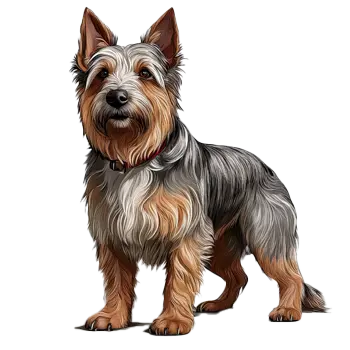
The breed standard calls for a small, sturdy, and well-proportioned dog with a harsh, straight outer coat and a soft undercoat. The breed is shown in blue and tan or solid red colorations. Key features include erect, pointed ears, dark expressive eyes, and a docked tail carried high, though tail docking has been banned or restricted in many countries in recent decades. The standard emphasizes that the dog should appear capable and workmanlike, reflecting its heritage as a functional terrier.

Internationally, the breed is recognized by all major kennel clubs, including the Australian National Kennel Council, the Kennel Club (UK), the American Kennel Club, the Canadian Kennel Club, and the Fédération Cynologique Internationale. Each organization maintains its own version of the breed standard, though the variations are minor. The Australian Terrier Club of America, founded in 1958, has been instrumental in promoting the breed in North America and maintaining breeding standards.

Breed clubs continue to play a vital role in health testing, breeder education, and rescue efforts. Many clubs maintain breeder referral programs to connect prospective owners with responsible breeders who conduct health screenings and prioritize temperament. The clubs also organize specialty shows, performance events, and educational seminars that celebrate the breed's heritage and promote its future.

The Breed Today

The Australian Terrier remains a relatively uncommon breed outside its home country and a small number of dedicated breeding communities worldwide. In Australia, the breed enjoys steady but modest popularity, valued primarily as a companion animal rather than a working dog. In the United States, the breed consistently ranks in the lower half of AKC registration statistics, though its devoted following ensures a stable breeding population.

Modern Australian Terriers are kept almost exclusively as companion animals. Their small size, moderate exercise needs, and affectionate temperament make them well-suited to a variety of living situations, from apartments to rural properties. Despite the shift away from working roles, the breed retains its characteristic terrier drive and alertness. Owners often remark on their dogs' tendency to patrol the yard, chase small animals, and bark at unfamiliar visitors, behaviors that reflect centuries of breeding for vigilance and pest control.

The breed has found a niche in canine sports and performance events, including agility, obedience, rally, and earthdog trials. These activities provide an outlet for the breed's energy and intelligence while strengthening the bond between dog and owner. Australian Terriers have also proven to be effective therapy dogs, with their manageable size and friendly disposition making them welcome visitors in hospitals, nursing homes, and schools.

Health and genetic diversity remain priorities for the breed community. Responsible breeders screen for conditions including patellar luxation, diabetes, and Legg-Calvé-Perthes disease. Breed clubs actively promote health testing and maintain databases to track genetic health across breeding lines. The relatively small gene pool of the breed makes these efforts particularly important for its long-term viability.

Notable Individuals

While the Australian Terrier has never produced a household-name celebrity dog on the scale of some more popular breeds, a number of individual dogs have achieved distinction in the show ring and beyond. In the breed's early history, dogs from prominent Australian kennels helped establish the breed type and earned recognition at major shows across the country. These foundation dogs are revered within the breed community for their contributions to the breed's development and standardization.

In the American show ring, several Australian Terriers have achieved significant wins at prestigious events. The breed's representatives at the Westminster Kennel Club Dog Show and the AKC National Championship have drawn attention to the breed's qualities and introduced it to a broader audience. Group placements and Best in Show wins at specialty events have highlighted the breed's competitive potential when presented by skilled handlers.

Australian Terriers have also gained recognition through their work as therapy and service animals. Individual dogs have been celebrated in their local communities for their contributions to therapeutic programs, visiting patients in medical facilities, and providing emotional support to individuals in need. These roles demonstrate the breed's versatility and the depth of the bond it forms with people.

Within the breeding community, certain dogs are recognized as influential sires and dams whose progeny have shaped the direction of the breed. Pedigree enthusiasts can trace the lineage of modern Australian Terriers back through generations of carefully planned breedings, and the contributions of standout individuals are documented in breed histories and club publications. These dogs represent the cumulative effort of breeders who have worked to preserve and improve the breed over more than a century.

Always consult a qualified professional before making any health-related decisions. This content is provided for informational reference only and should not replace professional guidance specific to your animal.