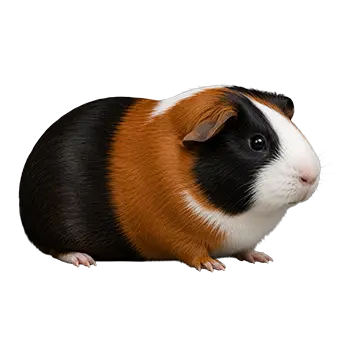

The American guinea pig traces its ancestry to the wild cavies of the South American Andes, where the species Cavia porcellus was first domesticated roughly 5,000 to 7,000 years ago. Archaeological evidence from sites in present-day Peru and Bolivia indicates that indigenous peoples of the region kept guinea pigs in their homes long before European contact, selectively breeding them over thousands of years. The animals thrived in the cool highland climate, and their small size made them easy to maintain alongside human households.
The breed now known as the American is the most direct descendant of those early domesticated cavies, retaining the smooth, short coat that requires minimal grooming. While other breeds were developed through selective breeding for specific coat textures and patterns, the American remained closest to the original domesticated form. Its straightforward coat and hardy constitution made it a natural foundation stock from which many other breeds eventually emerged.
Spanish conquistadors encountered guinea pigs during their campaigns in the Inca Empire in the sixteenth century and brought specimens back to Europe, where they quickly gained popularity among the aristocracy as novelty pets. By the late 1500s, guinea pigs had spread across Western Europe, and selective breeding for color and temperament began in earnest. The smooth-coated variety that would become the American was already the most common type, prized for its docile nature and ease of care.
In the centuries that followed, European breeders refined the American guinea pig into the compact, well-rounded animal recognized today. The breed's development was shaped less by dramatic physical changes and more by steady selection for consistent body shape, even temperament, and a broad range of coat colors. By the time organized cavy clubs formed in the nineteenth century, the American was firmly established as the benchmark breed against which newer varieties were measured.