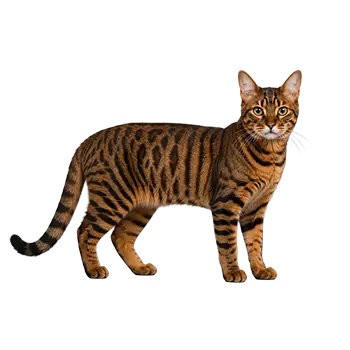

One of the most important legal distinctions for Toyger owners to understand is the breed's classification under hybrid and exotic-animal statutes. Although the Toyger was developed using Bengal cats in its foundation program, the breed is considered fully domestic by every major cat registry that recognizes it. The wild-cat ancestry present in the Bengal line is many generations removed from any living Toyger, placing the breed well beyond the generational thresholds that trigger exotic-animal regulations in most jurisdictions.
Despite this domestic classification, Toyger owners occasionally encounter confusion from landlords, insurance agents, or local animal-control officers who associate the breed's tiger-like appearance with hybrid or wild-cat status. In practice, a Toyger's pedigree documentation from TICA or another registry is usually sufficient to demonstrate that the cat is a fully domestic animal and not subject to hybrid restrictions. Owners are advised to keep registration papers readily accessible and to proactively educate relevant parties about the breed's domestic status.
Some jurisdictions apply hybrid regulations based on the number of generations separating an animal from its wild ancestor. In these areas, early-generation Bengal cats may be restricted, but the Toyger—which has no recent wild ancestry of its own—falls outside the scope of such laws. Nevertheless, the legal landscape varies considerably from one locality to another, and owners should verify local ordinances before assuming that their Toyger is exempt from all exotic-animal rules.
Prospective owners researching the breed should be aware that the regulatory environment for hybrid and exotic cats continues to evolve. New legislation is introduced regularly at the state, provincial, and municipal levels, and existing laws are periodically amended. Staying informed about local regulations and maintaining current registration documentation are prudent steps for any Toyger owner.