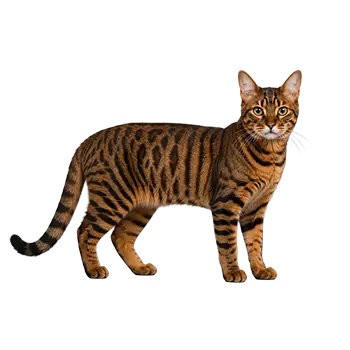

Film & Television

The Toyger's striking tiger-like appearance has made it a natural candidate for on-screen work, though its relative rarity has limited the number of prominent film and television roles the breed has secured. When producers and animal coordinators need a domestic cat that reads as exotic or wild on camera without the logistical and legal challenges of working with actual wild felines, the Toyger's bold striping and confident temperament make it an appealing choice. The breed's calm disposition around strangers and adaptability to new environments are assets on a production set, where noise, lighting changes, and repeated takes can stress less sociable animals.

Documentary and nature programming has given the Toyger some of its most meaningful screen time. Television segments exploring designer breeds, feline genetics, and the ethics of selective breeding have featured the Toyger as a case study, often interviewing breed founder Judy Sugden and showcasing her cats alongside footage of wild tigers to illustrate the visual parallels the breeding program seeks to achieve. These appearances have introduced the breed to audiences who might never encounter a Toyger in person.

Television news and morning-show segments have also spotlighted the breed, typically framing it as a novelty item or a feel-good human-interest story. Segments tend to emphasize the breed's unusual origin story, its premium price tag, and its tiger-like looks, often accompanied by live demonstrations in which a Toyger is brought into the studio for the hosts to interact with. While these appearances are brief, they generate spikes of public interest and frequently drive traffic to breeder websites and breed-information pages.

As streaming platforms continue to expand their documentary and unscripted content libraries, the Toyger is well positioned to appear in future programming focused on animal genetics, conservation awareness, and the cultural phenomenon of designer pets. The breed's compelling visual narrative and its explicit connection to wild-tiger conservation give it a built-in story arc that resonates with contemporary audiences.

Literature & Art

The Toyger has appeared in a growing body of breed-specific literature, from comprehensive cat-encyclopedia entries to dedicated breed guides aimed at prospective owners. These publications typically devote significant attention to the breed's creation story, treating it as a narrative of vision, genetics, and perseverance that sets the Toyger apart from breeds with ancient or undocumented origins. The breed's well-archived development history provides authors with rich material for detailed accounts of how selective breeding can produce dramatic aesthetic results within a few decades.

In the visual arts the Toyger has attracted the attention of animal portraitists and wildlife-inspired artists who find in the breed a domestic subject that bridges the gap between pet portraiture and wildlife illustration. The bold, high-contrast patterning of the Toyger's coat lends itself to a variety of media, from detailed oil paintings to stylized digital illustrations. Some artists have used the Toyger as a conceptual vehicle, exploring themes of wildness and domesticity, nature and artifice, in works that place the breed alongside imagery of its wild tiger counterpart.

Photography books and coffee-table collections featuring rare and unusual cat breeds have increasingly included the Toyger, drawn by the breed's photogenic quality and the dramatic interplay of light on its glittered coat. Professional cat photographers have noted that the Toyger's pattern clarity and cooperative temperament make it an exceptionally rewarding subject, producing images that stand out in galleries and publications crowded with more common breeds.

The breed has also found its way into children's literature and educational materials about cat breeds, where its tiger-like appearance serves as an engaging hook for young readers. These publications often use the Toyger as a springboard to discuss broader topics such as genetics, biodiversity, and the difference between wild and domestic animals, giving the breed an educational role that extends beyond the cat-fancy community.

Internet & Social Media

The Toyger is arguably at its most visible on social media, where visual platforms reward the breed's dramatic looks with high engagement. Instagram, TikTok, and YouTube are home to numerous Toyger accounts run by owners and breeders, featuring content that ranges from everyday domestic moments to carefully styled photo sessions that highlight the cats' tiger-like markings. The breed's unusual appearance generates curiosity-driven engagement, with posts frequently attracting comments from users who have never seen a Toyger and want to know more about it.

Viral moments have played a meaningful role in boosting the breed's public profile. Individual Toyger videos and images have periodically gained traction on platforms like Reddit and Twitter, often accompanied by captions that frame the cat as a miniature tiger or a living work of art. These viral events tend to produce waves of search traffic for the breed, temporarily elevating the Toyger's visibility well beyond the cat-fancy audience and sparking conversations about designer breeds, breeding ethics, and the cost of pedigree cats.

Breeder websites and online catteries have leveraged the internet as a primary marketing and education channel. Because the Toyger is too rare to be found in most pet shops or shelters, the internet serves as the main point of contact between breeders and prospective owners. Breeder websites typically include detailed information about the breed's history, health testing protocols, and kitten-availability waitlists, along with galleries of high-quality images that showcase the coat patterns and physical characteristics that distinguish the Toyger from other tabby cats.

Online forums and breed-specific groups provide spaces for Toyger owners to exchange information, troubleshoot health or behavior questions, and share the joys and challenges of living with a rare breed. These communities foster a sense of camaraderie and collective stewardship, reinforcing the breed's identity as something more than a consumer product and positioning it as a shared project among enthusiasts who care deeply about the breed's future.

Advertising & Branding

The Toyger's visual impact has not gone unnoticed by advertisers and brand strategists. The breed's tiger-like appearance offers a domestic, approachable alternative to using wild-animal imagery in campaigns, allowing brands to evoke the power and elegance of a tiger without the ethical concerns and logistical complications associated with working with wild or captive big cats. Pet-industry brands in particular have used Toyger imagery in product packaging, promotional photography, and trade-show displays to signal premium quality and exotic appeal.

Beyond the pet industry, the Toyger has appeared in lifestyle and luxury branding contexts where its rarity and striking looks align with messaging about exclusivity, craftsmanship, and attention to detail. The breed's backstory—a decades-long project guided by a single visionary breeder—parallels narratives commonly used in luxury marketing, making it a natural fit for brands that want to associate their products with purposeful design and meticulous execution.

The breed's name itself carries branding power. The portmanteau of toy and tiger is immediately evocative, easy to remember, and rich with connotation. It communicates both approachability and wildness, a duality that resonates with consumers drawn to products that combine safety with a sense of adventure. Marketing professionals have noted that the Toyger's name functions almost as a ready-made brand, requiring little explanation to convey the breed's essential appeal.

As the breed grows in recognition, its potential as a commercial symbol is likely to expand. However, the Toyger breeding community has generally been cautious about commercial exploitation, preferring partnerships that align with conservation messaging and responsible pet ownership. This selective approach to brand collaboration has helped maintain the breed's credibility and prevented it from being perceived as merely a marketing gimmick.

The Popularity Effect

Media exposure has a well-documented effect on breed popularity, and the Toyger is no exception. Each wave of press coverage or social-media virality tends to produce a corresponding uptick in inquiries to breeders, waitlist sign-ups, and general web searches for the breed. This pattern mirrors the experience of other breeds that have gained sudden visibility through film, television, or internet fame, though the Toyger's limited breeding population means that supply cannot scale quickly to meet surges in demand.

The popularity effect creates both opportunities and challenges for the Toyger community. On the positive side, increased visibility brings new enthusiasts into the breed, expands the pool of potential breeding-program participants, and generates resources that can be directed toward health research and conservation partnerships. Greater public awareness also makes it easier for breed clubs to advocate for the Toyger's interests within registries and at cat shows, where name recognition can influence judging panels and event organizers.

On the other hand, spikes in demand can attract inexperienced or unscrupulous breeders who prioritize profit over the health and welfare of their cats. The Toyger community has confronted this risk by maintaining strong breeder networks, publishing codes of ethics, and educating prospective buyers about the red flags that distinguish responsible breeders from opportunistic ones. Breed clubs have also worked to ensure that the breed standard remains rigorous, so that cats produced outside established programs are less likely to meet the criteria for registration and showing.

The long-term trajectory of the Toyger's popularity will likely depend on the breed community's ability to balance visibility with sustainability. If breeders can continue to produce healthy, well-socialized cats while gradually expanding the genetic base, the Toyger is well positioned to grow from a niche curiosity into a recognized and respected member of the pedigree-cat world. Media attention, managed thoughtfully, can be a powerful ally in that effort.

Always consult a qualified professional before making any health-related decisions. This content is provided for informational reference only and should not replace professional guidance specific to your animal.