
Origins & Development

The Toyger is one of the most deliberately engineered domestic cat breeds in modern feline history. The breed traces its origins to the late 1980s, when Judy Sugden, a breeder based in Los Angeles and the daughter of renowned Bengal cat creator Jean Mill, noticed distinctive tabby markings on one of her domestic shorthair cats. Sugden recognized the potential to selectively breed a domestic cat whose coat pattern would closely echo the dramatic vertical stripes of a wild tiger, and she set about developing a formal breeding program to achieve that vision.

Sugden's initial crosses paired a striped domestic shorthair with a large Bengal cat, seeking to combine bold patterning with a robust, muscular build. In 1993 she imported a street cat from Kashmir, India, whose unusual spotted pattern between his ears provided fresh genetic material that helped refine the circular facial markings the program was pursuing. This strategic outcross proved pivotal, introducing pattern traits that had not been available in the existing domestic gene pool and accelerating progress toward the breed's signature look.

The International Cat Association accepted the Toyger for registration in 1993 and granted it preliminary new breed status in 2000. After years of careful documentation and consistent litters meeting the emerging standard, TICA advanced the Toyger to championship status in 2007, allowing the breed to compete alongside established pedigrees on the show bench. The journey from concept to championship spanned roughly two decades and required extraordinary patience, record-keeping, and cooperation among a small network of dedicated breeders.

Throughout its development the Toyger program has maintained an explicit long-term blueprint. Sugden published a breed development plan outlining goals that extend years into the future, including refinements to facial structure, body proportions, and coat clarity. This transparent, goal-oriented approach has been cited by geneticists and breed historians as a model for responsible breed creation, setting the Toyger apart from breeds whose standards evolved in a more ad hoc fashion.

Historical Roles

Unlike many cat breeds whose origins are tied to practical roles such as vermin control, ship duty, or temple guardianship, the Toyger was conceived from the start as a companion animal and a living work of art. Judy Sugden has stated publicly that one of her motivations was to inspire appreciation for wild tiger conservation by giving people a domestic cat that evokes the majesty of the tiger without any wild blood in recent generations. In that sense the breed's historical role has been as much ambassadorial as it has been companionable.

Because the Toyger is entirely domestic in its ancestry—Bengal crosses notwithstanding, with those wild-hybrid generations far removed—it has never carried the regulatory complications that surround early-generation hybrid cats. This has allowed Toyger owners and breeders to participate in community outreach, school visits, and educational programs in jurisdictions where higher-content hybrid cats would be restricted. The breed has served as a conversation starter about big-cat conservation at events ranging from local pet expos to international cat shows.

The Toyger's role in the broader cat-fancy community has also been notable. Its development coincided with a period of growing interest in designer and specialty breeds during the 1990s and 2000s. The breed's carefully documented lineage and transparent breeding goals helped elevate public discourse about ethical breeding practices, genetic diversity, and the responsibilities that come with creating a new breed. Breeders within the Toyger program have been active contributors to discussions about health testing, inbreeding coefficients, and the importance of maintaining a wide genetic base.

In recent years Toygers have also found a niche in animal-assisted interaction settings. Their calm, people-oriented temperament and striking appearance make them effective therapy visitors in hospitals and senior-care facilities, where their tiger-like looks often spark conversation and emotional engagement with residents who might otherwise be withdrawn.

Cultural Symbolism

The tiger occupies a commanding place in human culture, appearing as a symbol of power, grace, and mystery in traditions spanning Asia, Europe, and the Americas. The Toyger taps into that deep well of symbolism by offering a domestic echo of the tiger's aesthetic. For many owners the appeal goes beyond simple appearance; the breed represents a way to live alongside an animal that channels the tiger's visual drama in a safe, ethical, and affectionate package.

In contemporary culture the Toyger has become emblematic of a broader trend toward breeds and pets that reflect personal identity and aesthetic values. Social media profiles featuring Toygers frequently frame the cats as miniature wildlife, photographing them against natural backdrops or in poses that highlight their striped coats. This visual storytelling reinforces the cultural narrative that the Toyger is not just a pet but a statement about the owner's appreciation for nature and design.

The breed also carries symbolic weight within conservation circles. Breeders and enthusiasts have partnered with wildlife organizations to raise awareness about the plight of wild tigers, whose global population has been the subject of intense conservation effort. By associating the Toyger with conservation messaging, the breed community has sought to channel the public's fascination with tiger aesthetics into tangible support for habitat preservation, anti-poaching initiatives, and captive-breeding programs for wild tiger populations.

Critiques have also emerged. Some commentators have questioned whether domesticating the tiger's image trivializes the conservation challenges facing wild populations or encourages a commodified view of exotic animals. These debates have added nuance to the Toyger's cultural position, ensuring that the breed exists not only as a beloved companion but also as a focal point for broader conversations about the relationship between humans, domestic animals, and wildlife.

Breed Clubs & Standards

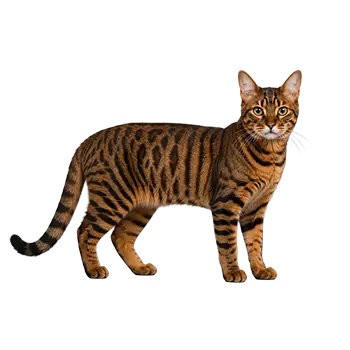
The International Cat Association has been the primary registry for the Toyger since the breed's earliest days. TICA's breed standard describes the ideal Toyger as a medium-sized, muscular cat with a long body, rounded ears, and a coat displaying bold, dark, vertically aligned stripes on a vivid orange-tan background. The standard places significant emphasis on pattern clarity, seeking stripes that are as distinct and non-branching as possible, reminiscent of a tiger's pelt rather than the more broken, swirled patterns typical of classic or mackerel tabby cats.

In addition to pattern, the standard calls for a glittered coat, a trait inherited from the Bengal influence in the breed's background. Glittering refers to a translucent quality in the individual hair shafts that gives the coat a sparkling, almost metallic sheen in direct light. This trait enhances the overall visual impact of the breed and has become one of its most recognizable characteristics on the show bench.

Breed clubs dedicated to the Toyger have formed in several countries, including the United States, the United Kingdom, Australia, and parts of continental Europe. These clubs coordinate breeding efforts, host educational seminars, and organize specialty shows or rings where Toygers can be evaluated by judges with specific expertise in the breed. The clubs also maintain breeder directories and codes of ethics that set expectations around health testing, kitten socialization, and responsible placement practices.

The breed standard continues to evolve as the Toyger program pursues its long-term development goals. Refinements under discussion include adjustments to head shape, ear set, and the degree of white allowed on the chest and chin. This ongoing evolution means that the Toyger remains a work in progress, with breeders actively collaborating to push the breed closer to the idealized domestic tiger silhouette that Judy Sugden originally envisioned.

The Breed Today

Today the Toyger remains a relatively rare breed, with a limited number of active breeding programs worldwide. Most Toyger catteries are concentrated in the United States, though breeders in Europe, Australia, and parts of Asia have established programs that are contributing to the breed's genetic diversity. The breed's rarity means that kittens typically command premium prices and prospective owners often face waiting lists that can stretch for several months.

Despite its exclusivity the Toyger has developed a devoted following. Online communities centered on the breed are active on social media platforms, forums, and breed-specific websites, where owners share photographs, health information, and anecdotes about life with their cats. The breed's photogenic quality and unusual backstory make it a frequent subject of feature articles in cat-fancy magazines and lifestyle publications, sustaining public interest even among people who may never own one.

Health and genetic diversity remain at the forefront of the breed's current priorities. Because the Toyger's founding population was small, breeders are attentive to inbreeding coefficients and actively seek to introduce approved outcrosses when doing so can widen the genetic base without compromising pattern quality. Health screening protocols within the community typically include cardiac ultrasounds, blood-panel testing, and monitoring for conditions seen in related breeds such as hypertrophic cardiomyopathy.

The Toyger's position in the broader cat world is one of cautious optimism. Breed enthusiasts see a future in which the Toyger gains recognition from additional registries, expands its breeder network, and continues to refine its appearance toward the ultimate goal of a domestic cat that truly mirrors the tiger's striking visual presence. At the same time, the community remains mindful that sustainable growth requires balancing ambition with the health and welfare of every individual cat in the program.

Notable Individuals

Judy Sugden stands as the single most influential figure in the Toyger's history. As the breed's creator and primary architect, Sugden dedicated decades of work to developing the breeding program, writing the breed standard, and advocating for the Toyger's acceptance within TICA. Her background as the daughter of Jean Mill, creator of the Bengal, gave her both the genetic knowledge and the cat-fancy connections necessary to navigate the long process from concept to championship recognition.

Anthony Hutcherson, a prominent figure in the cat-breeding world and a TICA judge, has been a vocal supporter of the Toyger and has contributed to public understanding of the breed through presentations, articles, and media appearances. Hutcherson's broader work on feline genetics and breed development has lent credibility to the Toyger program and helped situate it within the larger narrative of responsible breed creation.

Several individual Toygers have gained recognition on the show bench, earning regional and international awards within TICA's championship competition. While the breed's small numbers mean that it does not yet produce the volume of titled cats seen in more established breeds, the quality of its top competitors has drawn attention from judges and spectators alike. Show wins have served as important milestones, validating the progress of the breeding program and raising the breed's profile among cat fanciers who might not otherwise encounter a Toyger.

Beyond the show ring, individual Toygers have gained followings on social media platforms, where their striking appearance translates naturally to visual content. Some of these cats have amassed substantial audiences, and their owners have leveraged that visibility to promote responsible breeding practices, support tiger-conservation organizations, and educate the public about the breed's history and care requirements. These feline influencers, while a modern phenomenon, serve the same ambassadorial purpose that Sugden originally envisioned for the breed.

Always consult a qualified professional before making any health-related decisions. This content is provided for informational reference only and should not replace professional guidance specific to your animal.