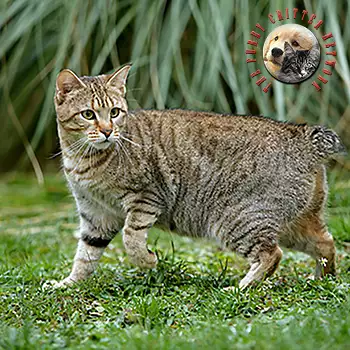

The Pixie-Bob breed traces its origin story to the Cascade Range foothills of Washington State in the mid-1980s. Carol Ann Brewer, widely credited as the breed's founder, acquired a large, polydactyl male barn cat with a naturally short tail in 1985. She named one of the kittens from a subsequent litter "Pixie," and the distinctive look of that cat became the blueprint for the entire breed program. From the start, the breed was built around the idea of capturing the appearance of a wild North American bobcat in a fully domestic, companion-quality package.
Local folklore in the Pacific Northwest had long described barn cats of unusual size and bobbed tails, and many residents believed these cats carried bobcat ancestry. While DNA analysis has never confirmed any wild hybridization in the Pixie-Bob lineage, the legend played a central role in shaping the breed's mystique and early marketing. Brewer and her early collaborators sought out similar-looking barn cats from the region to broaden the gene pool while keeping the distinctive spotted, muscular look that set their cats apart from other domestic breeds.
Throughout the late 1980s and early 1990s, a small circle of breeders worked to stabilize the look and temperament of the Pixie-Bob. They focused on a heavy-boned, broad-chested body with a naturally short tail, hooded brow, and spotted tabby pattern that echoed the appearance of the coastal bobcat. Polydactyly, an unusual trait in pedigreed cats, was preserved as an allowable characteristic within the breed standard rather than being bred out. This decision remains one of the most distinctive features of the Pixie-Bob program.
By the mid-1990s the breed had attracted enough interest and breeder support to begin its formal journey through the cat registries. The combination of wild appearance, gentle disposition, and a compelling origin narrative gave the Pixie-Bob a story that resonated with cat enthusiasts who wanted something different from traditional pedigreed breeds.