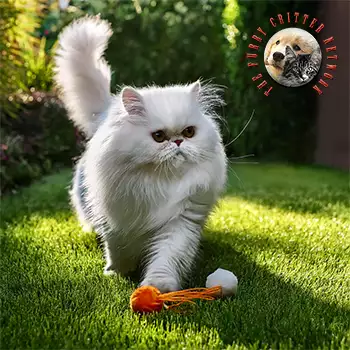

The Persian cat's history stretches back centuries to the high plateaus of ancient Persia, modern-day Iran, where longhaired cats were first documented by European travelers in the early 1600s. Italian nobleman Pietro della Valle is often credited with introducing these striking cats to Europe around 1626, having encountered them during his extensive journeys through the Middle East. Their luxurious coats and calm demeanor immediately distinguished them from the shorthaired cats Europeans were accustomed to, and they quickly became prized possessions among the aristocracy.
The breed's development accelerated in the 19th century when British breeders began selectively breeding Persians for specific traits, including their characteristically flat faces, round heads, and dense coats. The earliest cat shows in England during the 1870s prominently featured Persians, and the breed became a cornerstone of the emerging cat fancy. Breeders in both Britain and France refined the Persian's appearance over successive generations, gradually distinguishing it from the closely related Angora cats that had also arrived from the Ottoman Empire.
By the late 1800s, Persians had made their way to North America, where American breeders continued to shape the breed according to their own aesthetic preferences. Over the 20th century, American breeding programs pushed the Persian's facial structure toward an increasingly brachycephalic profile, creating what is sometimes called the "Peke-face" or "ultra-typed" Persian. This divergence in breeding philosophy eventually led to a distinction between the traditional or "doll-face" Persian and the show-typed flat-faced variety, a conversation that continues to shape breed standards today.
Genetic studies have revealed a more complex origin story than the romantic trade-route narrative suggests. Modern research indicates that the Persian's longhaired gene likely arose through a mutation that was then selectively maintained by breeders, and that the breed's genetic profile reflects contributions from cats across Western Europe as much as from the Middle East. Regardless of the precise genetic timeline, the Persian's journey from the bazaars of Isfahan to the show halls of London and New York represents one of the most storied lineages in the domestic cat world.