
Origins & Development

The Ocicat owes its existence to an experimental crossbreeding program in Michigan during the early 1960s. Virginia Daly, a breeder working to produce an Abyssinian-pointed Siamese, crossed a Siamese with an Abyssinian. The first generation yielded Abyssinian-pointed kittens as expected, but when one of those kittens was bred back to a Siamese, a surprise appeared in the second-generation litter: a striking ivory kitten covered in golden spots. Daly's daughter remarked that the kitten looked like an ocelot, and the name "Ocicat" was born.

That original spotted kitten, named Tonga, was neutered and sold as a pet, as Daly did not initially recognize the breeding potential of the pattern. However, when geneticist Dr. Clyde Keeler at the University of Georgia learned about the kitten, he encouraged Daly to repeat the cross. Keeler was interested in producing a domestic cat that mimicked the appearance of wild spotted cats, and the Ocicat seemed to be exactly the kind of breed that could accomplish this without any wild blood.

Daly repeated the breeding and produced more spotted kittens, establishing a foundation for the new breed. Other breeders soon became interested, and American Shorthairs were introduced into the program to add substance and silver coloring to the gene pool. This three-breed foundation—Siamese, Abyssinian, and American Shorthair—gave the Ocicat its distinctive combination of a wild spotted appearance and a thoroughly domestic, people-oriented temperament.

The breed's development progressed steadily through the 1970s and 1980s, with dedicated breeders working to refine type and expand the color palette. Despite the wild appearance, every Ocicat is entirely domestic in ancestry, a fact that distinguishes the breed from hybrid cats that carry actual wild cat genetics.

Historical Roles

Unlike many cat breeds that trace their origins to centuries-old working roles, the Ocicat is a thoroughly modern creation with no historical working function. Its role from the very beginning has been that of a companion animal, bred specifically for its appearance and temperament rather than for mousing, ratting, or any utilitarian purpose.

However, the Ocicat has served an important symbolic role in the broader conversation about wild cat conservation. Dr. Clyde Keeler's original interest in the breed was rooted in the idea that a domestic cat resembling a wild spotted species might reduce demand for wild cats as exotic pets. By offering the visual appeal of an ocelot or margay in a fully domestic package, the Ocicat represented a conservation-minded approach to the human fascination with wild felines.

Within the cat fancy, the Ocicat also played a role in demonstrating that entirely new coat patterns could be produced through careful selective breeding. The spotted tabby pattern, while not unknown in random-bred cats, had never been deliberately cultivated and refined as a breed standard before the Ocicat's development. The breed showed that domestic cat genetics held far more variety than breeders had previously explored.

Ocicats have also become valued therapy and emotional support animals. Their social, confident nature and willingness to engage with strangers make them well suited to visiting nursing homes, hospitals, and schools. Many Ocicat owners have reported that their cats adapt to these environments with remarkable ease, behaving more like trained dogs than stereotypically aloof felines.

Cultural Symbolism

The Ocicat occupies a unique place in feline culture as a living symbol of the human desire to bring the wild into the home without causing harm. Its spotted coat evokes the great wild cats of the Americas—ocelots, margays, and jaguarundis—yet its bloodline contains not a single drop of wild ancestry. This duality has made the Ocicat a conversation piece and a focal point for discussions about domestication, selective breeding, and the ethics of exotic pet ownership.

In the cat fancy community, the Ocicat is often held up as proof that responsible breeding can achieve dramatic aesthetic results without resorting to wild hybridization. This stands in contrast to breeds like the Bengal and the Savannah, which were developed using actual wild cat crosses. Ocicat enthusiasts take pride in their breed's entirely domestic heritage, viewing it as a more ethical path to a wild appearance.

The breed has also come to symbolize the unexpected possibilities of genetics. The fact that the Ocicat arose from an unplanned combination of well-known breeds captures the imagination of cat lovers and geneticists alike. The story of Tonga, the accidental spotted kitten, has taken on an almost mythic quality in breeding circles—a reminder that nature often has plans of its own.

For many owners, the Ocicat represents the ideal blend of beauty and companionship. The breed's dog-like loyalty, combined with its exotic appearance, has created a devoted following of people who view the Ocicat not merely as a pet but as a bridge between the domestic world and the untamed beauty of the wild.

Breed Clubs & Standards

The Ocicat's path to official recognition was a gradual process that spanned more than two decades. The Cat Fanciers' Association (CFA) first registered Ocicats in 1966, but full championship status was not granted until 1987. This long road reflected both the small number of breeding cats available in the early years and the need to establish a consistent, recognizable type.

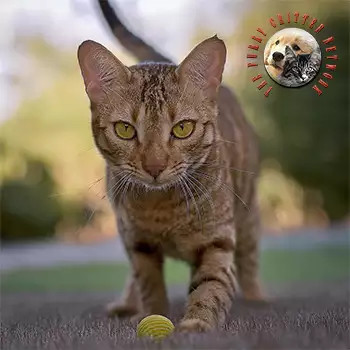
The International Cat Association (TICA) recognized the Ocicat in 1986, and the breed has since gained acceptance with virtually every major cat registry worldwide, including the Fédération Internationale Féline (FIFe) and the Governing Council of the Cat Fancy (GCCF) in the United Kingdom. Each organization maintains its own standard, but the core description of the Ocicat is consistent: a large, athletic, spotted cat with a muscular build, almond-shaped eyes, and a coat marked by clearly defined thumb-print-shaped spots arranged in a classic bullseye pattern.

The breed standard recognizes twelve color variations, organized into six base colors each available in silver and non-silver versions. The accepted colors include tawny, chocolate, cinnamon, blue, lavender, and fawn, along with their silver counterparts. This wide palette gives the Ocicat one of the most diverse color standards of any spotted breed.

The Ocicat Breed Club and various regional Ocicat societies serve as the primary community organizations for breeders and enthusiasts. These clubs organize specialty shows, maintain breeder directories, and provide educational resources for prospective owners. They also work to preserve genetic diversity within the breed and promote responsible breeding practices. In many registries, outcrosses to Abyssinians are still permitted to maintain a healthy gene pool, though Siamese and American Shorthair outcrosses have generally been closed.

The Breed Today

Today the Ocicat enjoys a stable, if modest, following among cat enthusiasts worldwide. The breed has never reached the mass popularity of Persians, Siamese, or Maine Coons, but it maintains a dedicated community of breeders and owners who value its unique combination of wild appearance and affectionate temperament. In CFA registration statistics, the Ocicat typically ranks in the middle of the pack—well established but far from ubiquitous.

The breed's relatively small population has both advantages and challenges. On the positive side, Ocicat breeders tend to be deeply knowledgeable and committed to health testing, genetic diversity, and responsible placement of kittens. The community is tight-knit, and many breeders maintain relationships with the families who adopt their kittens throughout the cats' lives. On the other hand, the limited number of breeders means that prospective owners may face waiting lists and may need to travel to find a reputable cattery.

In the show ring, Ocicats continue to turn heads. Their dramatic spotted coats and confident, outgoing show temperament make them natural competitors, and the breed has produced numerous regional and national winners across multiple registries. Judges often remark on the breed's striking presence and the quality of its muscular, athletic build.

The Ocicat's future appears secure, supported by a global network of dedicated breeders and a breed standard that emphasizes health and genetic diversity. As interest in unusual and visually striking cat breeds continues to grow, the Ocicat's appeal—a wild look with a completely domestic heart—positions it well for continued appreciation among cat lovers seeking something beyond the ordinary.

Notable Individuals

The most historically significant Ocicat is undoubtedly Tonga, the ivory-and-gold spotted kitten born in Virginia Daly's cattery in 1964. Though Tonga was neutered and never contributed to the breed's gene pool, his striking appearance inspired the entire breeding program. Tonga demonstrated that the domestic cat genome contained the potential for a spotted pattern rivaling that of wild species, and his legacy lives on in every Ocicat alive today.

Among the foundation cats that actually shaped the breed, Dalai Doton of Donacel and other early Daly cats established the core type that breeders would refine over the following decades. These pioneering animals were the product of careful crosses between Siamese, Abyssinians, and later American Shorthairs, and their offspring formed the genetic backbone of the breed.

In the show world, numerous Ocicats have achieved grand champion and national winner status across CFA, TICA, and other registries. While individual show cats are less widely known to the general public than famous dogs, within the cat fancy, top-winning Ocicats are celebrated for exemplifying the breed standard at its finest. These cats serve as living ambassadors for the breed at cat shows around the world.

Several Ocicats have also gained recognition as therapy animals, visiting hospitals and care facilities where their gentle, outgoing nature brings comfort to patients. These working Ocicats demonstrate the breed's versatility and its remarkable ability to connect with people across all ages and circumstances, reinforcing the Ocicat's reputation as one of the most people-oriented breeds in the cat world.

Always consult a qualified professional before making any health-related decisions. This content is provided for informational reference only and should not replace professional guidance specific to your animal.