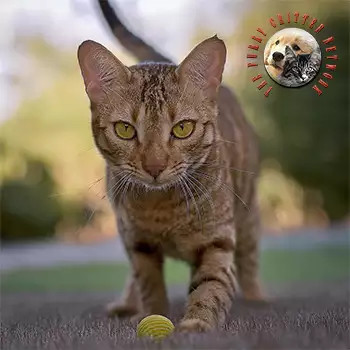
Ocicat

Ocicat
📸 Photo Gallery Coming Soon

Furry Critter Network Etsy Shop

Quick Facts

📏 Height
9-11 inches
⚖️ Weight
7-15 pounds
⏱️ Lifespan
12-18 years
📊 Size Category
Medium
🏆 Breed Group
Manufactured
✨ Coat Type
Short
🎨 Colors
Tawny, chocolate, cinnamon, blue, lavender, fawn, silver variations of all colors
😊 Temperament
Outgoing, social, playful, affectionate, intelligent, athletic
🏃 Exercise Needs
High
💇 Grooming Needs
Low
🔊 Vocalization
Moderate
🌍 Origin
United States

Ocicat - Names & Recognition

The Ocicat's name is a clever portmanteau of "ocelot" and "cat," reflecting the breed's resemblance to the wild ocelot despite being entirely domestic in origin. The name was coined by the breed's creator to emphasize the cat's exotic, wild appearance while acknowledging its domestic cat heritage. The breed is pronounced "OH-see-cat" or "AH-see-cat," with both pronunciations being acceptable. The name is used consistently across all major cat registries worldwide, including the Cat Fanciers' Association (CFA) and The International Cat Association (TICA).

There are no significant alternate names for the breed in formal contexts, though cat enthusiasts sometimes refer to them informally as "Ocis." The breed has no regional name variations since it was developed in the United States and spread from there with consistent naming. Unlike many breeds with historical or geographic names, the Ocicat's name is purely descriptive, invented specifically for this breed when it was created in the 1960s.

It's important to understand that despite the wild-sounding name and exotic appearance, Ocicats have no wild cat DNA. They're entirely domestic cats created through selective breeding of domestic breeds—Siamese, Abyssinian, and American Shorthair. The resemblance to wild cats like ocelots is purely coincidental and the result of selective breeding for spotted patterns, not actual wild ancestry. This distinguishes them from hybrid breeds like Bengals (which have Asian Leopard Cat ancestry) or Savannahs (which have Serval ancestry).

The spotted pattern that gives Ocicats their distinctive appearance is sometimes confused with other spotted breeds, but Ocicats are unique. They differ from Egyptian Maus (a natural spotted breed from Egypt), Bengals (a hybrid breed with wild ancestry), and spotted tabbies of other breeds. The Ocicat's spots are the result of the agouti gene combined with the classic tabby pattern, modified through selective breeding to create the distinctive spotted appearance with clear, well-defined spots scattered across the body.

The Cat Fanciers' Association accepted Ocicats for registration in 1966 and granted championship status in 1987. The breed has gained recognition from all major cat registries and has a devoted following among people who appreciate the combination of exotic appearance and affectionate, social temperament.

Ocicat Physical Description

The Ocicat is a medium to large cat with a distinctive athletic, muscular build that reflects power and grace. Females typically weigh 7-12 pounds, while males are substantially larger at 10-15 pounds. Despite their wild appearance, they're surprisingly substantial and muscular, feeling heavier than they appear due to their solid bone structure and developed musculature. The body is long, solid, and well-muscled with an athletic appearance suggesting agility and power.

The overall impression is of a well-spotted, agouti cat of moderate type with an athletic build. The body shows particular depth and fullness in the rib cage area, with substantial body mass and muscle development. The back is level to slightly higher in the rear, and the chest is deep. The body type is neither cobby nor extremely svelte, but rather solid and athletic—built for running, jumping, and active play.

The head is a modified wedge shape showing a slight curve from muzzle to cheek, with a visible but gentle rise from the bridge of the nose to the brow. The muzzle is broad and well-defined, fairly square in appearance but not snubbed. There's a slight suggestion of squareness to the face due to the placement of the whisker pads. The profile shows good length with a gentle rise from the bridge of the nose to the brow, creating an attractive, exotic appearance without extreme features.

The eyes are large, almond-shaped, and angled slightly upward toward the ears. Eye color can be any color except blue, with gold, copper, green, or hazel being most common. The eye color doesn't need to match the coat color. The eyes are expressive and alert, set wide apart, contributing to the breed's wild appearance. The ears are moderately large, set at a 45-degree angle continuing the planes of the modified wedge of the head. They may have tufts extending vertically from the tips.

The coat is the Ocicat's most distinctive feature—short, smooth, satiny, and lying close to the body. The texture is fine but not overly soft, with enough length to accommodate several bands of ticking. The most striking feature is the spotted pattern: clear, well-defined spots scattered across the coat. The spots should be distinct and not running together to form a broken mackerel pattern. Spots vary in size and shape but are generally thumb-shaped, oval, or round, clearly defined against the background color.

The spotted pattern includes specific markings: mascara markings extending from the corners of the eyes, paired necklaces on the neck and chest (though broken necklaces are common), tail with alternating dark and light rings and a dark tip, and darker stripes on the legs and tail. The forehead shows the classic tabby "M" marking. The overall effect is of a spotted wild cat with clear, distinct spots against a ticked or agouti background.

The Ocicat comes in twelve recognized colors, divided into six basic colors and their silver variations. The basic colors are: tawny (brown spotted on bronze/golden background), chocolate (chocolate-brown spots on ivory/pale background), cinnamon (light brown/cinnamon spots on ivory background), blue (blue-gray spots on pale background), lavender (lavender-gray spots on pale background), and fawn (pale cinnamon spots on pale background). Each of these colors also comes in silver variations, where the background is silver rather than golden or ivory, creating silver-tawny, silver-chocolate, silver-cinnamon, silver-blue, silver-lavender, and silver-fawn varieties.

The legs are medium in length, well-muscled, and powerful. The paws are oval and compact. The tail is fairly long, medium-slim, and tapered with a slight curve but not whip-like, with a dark tip. The overall impression of the Ocicat is of an athletic, powerful, exotic-looking cat with clear spotted markings, substantial bone and muscle, and an alert, intelligent expression. They look like they should be wild but carry themselves with the confidence and friendliness of entirely domestic cats.

Affection Level
Ocicats are exceptionally affectionate and devoted to their families. They crave human companionship and want to be involved in every aspect of household life. They'll follow their people everywhere, demand attention through gentle nudges, and seek physical contact through lap sitting and sleeping with their owners. Their affection is demonstrative and constant.
Friendliness
These cats are extraordinarily friendly with everyone—family, visitors, and even strangers. They greet guests enthusiastically and assume everyone wants to be their friend. Their outgoing, confident nature makes them excellent companions for social households. They rarely show shyness or aggression, approaching new people with curiosity and warmth.
Child-Friendly
Ocicats are outstanding with children, matching their energy and enthusiasm perfectly. They're patient with appropriate handling, enjoy the activity children bring, and will participate enthusiastically in play sessions. Their sturdy, athletic build means they handle gentle but energetic play well. They often form special bonds with children who engage them in interactive games.
Pet-Friendly
These cats typically get along excellently with other pets, including dogs and other cats. Their social, confident nature extends to animals, and they often seek companionship from household pets. They're not territorial or aggressive, making integration into multi-pet households smooth. Their playful energy can even energize more sedentary pets.
Exercise Needs
Ocicats have very high exercise needs and require daily vigorous play sessions. They're natural athletes who love climbing, jumping, running, and interactive games. Without adequate outlets for their considerable energy, they may become destructive or develop behavioral problems. Plan for multiple substantial play sessions daily to keep them physically and mentally satisfied.
Playfulness
This is one of the most playful cat breeds, maintaining kitten-like energy throughout their entire lives. They're enthusiastic about interactive games, toys, and physical challenges. Their playfulness is intense and constant—they'll initiate play frequently and engage eagerly with any opportunity. This high playfulness requires committed owners who enjoy active, energetic cats.
Energy Level
Ocicats have extremely high energy levels that remain consistent throughout their lives. They're constantly active—climbing, jumping, running, playing, and exploring. Even after vigorous play sessions, they quickly recharge and are ready for more activity. This boundless energy is part of their charm but requires households prepared for a dynamic, athletic cat.
Intelligence
These cats are exceptionally intelligent and quick learners. They solve puzzles rapidly, learn tricks easily, and figure out how to manipulate their environment. Their intelligence combined with curiosity means they need mental challenges to stay content. Many learn to walk on leashes, play fetch naturally, open doors, and respond to their names consistently.
Tendency to Vocalize
Ocicats are moderately vocal with pleasant voices. They'll communicate their needs and desires through conversation but aren't as persistently chatty as Siamese or Oriental breeds. They vocalize when hungry, seeking attention, or greeting family members. Their voices are generally pleasant and conversational rather than loud or demanding.
Amount of Shedding
Ocicats are light to moderate shedders thanks to their short, tight-lying coat. They shed consistently but not excessively throughout the year. Their fine hair is less noticeable than coarser fur, and weekly brushing manages shedding effectively. They leave less hair on furniture and clothing compared to many breeds, making them relatively low-maintenance for shedding concerns.

Ocicat History & Origins

The Ocicat's history is unique in cat breeding—it was created entirely by accident and then deliberately refined once its potential was recognized. The breed's story begins in 1964 in Berkeley, Michigan, with breeder Virginia Daly, who was attempting to create an Abyssinian-pointed Siamese. She bred a chocolate-point Siamese female to a ruddy Abyssinian male, producing first-generation kittens. She then bred one of these daughters back to a chocolate-point Siamese, expecting to produce Abyssinian-pointed Siamese kittens.

In this second-generation litter, born in 1964, an unexpected male kitten appeared—an ivory-colored cat with golden spots and copper eyes. This kitten, named Tonga, looked remarkably like a wild ocelot despite being entirely domestic in breeding. Virginia Daly's daughter commented that he looked like an "ocicat," and the name stuck. Tonga was neutered and sold as a pet (he went to a medical student who eventually moved, and Tonga's ultimate fate is unknown), but Virginia Daly recognized the potential of this accidental creation.

Intrigued by the spotted kitten, Daly repeated the breeding and produced more spotted kittens. She began developing a breeding program specifically to create more of these wild-looking spotted cats. She outcrossed to American Shorthairs to increase size and introduce the silver gene, adding bone mass and silver coloring options. Other breeders became interested in the project, and the Ocicat breeding program expanded beyond Daly's cattery.

The breed's development involved carefully controlled breeding using only Siamese, Abyssinian, and American Shorthair cats. No wild cat blood was ever introduced, despite the wild appearance. The spotted pattern resulted from the combination of the agouti gene from Abyssinians, the classic tabby pattern, and selective breeding that emphasized and refined the spots. Breeders worked to create clear, distinct spots rather than the more common mackerel stripes or blotched patterns of typical tabbies.

The Cat Fanciers' Association accepted Ocicats for registration in 1966, remarkably quickly after the breed's accidental creation. However, achieving championship status took longer as breeders worked to establish consistent type and develop sufficient population. In 1987, the CFA granted full championship status to Ocicats. The International Cat Association and other major registries followed, recognizing the breed's distinctive appearance and wonderful temperament.

Throughout the breed's development, breeders maintained the outcross program, occasionally bringing in new Abyssinian bloodlines to maintain genetic diversity and type. This careful outcrossing helped prevent the health problems associated with closed breeding programs while preserving the breed's distinctive characteristics. The American Shorthair contributions added size, substance, and the silver gene while maintaining the domestic temperament.

The breed standard was carefully refined over decades to emphasize the athletic build, clear spotted pattern, and moderate features. Breeders avoided extreme type, instead creating a well-balanced, athletic cat with practical proportions. The spotted pattern received particular attention—spots needed to be clear and distinct, well-distributed across the body, with specific markings on the face, legs, and tail.

Color development expanded the breed's variety. The original tawny (brown spotted) color was joined by chocolate, cinnamon, blue, lavender, and fawn, each also available in silver variations. This color diversity allows breeders and owners to choose from a wide range of appearances while maintaining consistent type and temperament.

The Ocicat gained popularity steadily rather than explosively, attracting people who appreciated both the exotic appearance and the affectionate, outgoing temperament. Unlike many breeds selected for specific personality traits, the Ocicat's temperament emerged naturally from its Siamese and Abyssinian heritage—both breeds known for being social, interactive, and people-oriented. The American Shorthair contribution added a touch of moderation and adaptability.

Today, the Ocicat is established worldwide with dedicated breeders maintaining quality and genetic diversity. The breed represents a success story of deliberate development following an accidental discovery. Virginia Daly's recognition of Tonga's potential and her decision to develop the breed has given cat fancy a unique variety that combines wild appearance with thoroughly domestic temperament. The Ocicat proves that entirely domestic cats can achieve exotic beauty without wild ancestry, creating cats that look like small wild cats but act like affectionate, social household pets. Every Ocicat traces its ancestry back to that accidental spotted kitten born in Michigan in 1964, making this entirely manufactured breed a testament to the potential hidden in domestic cat genetics.

Ocicat Temperament & Personality

The Ocicat temperament is remarkable for combining the social, people-oriented personalities of its Siamese and Abyssinian ancestors with a touch of the American Shorthair's adaptability. Despite their wild appearance, Ocicats are thoroughly domestic in personality—outgoing, affectionate, playful, and devoted to their families. They're often described as having dog-like personalities due to their loyalty, trainability, and desire to be constantly involved in family activities.

Social nature is the cornerstone of the Ocicat personality. These cats are extraordinarily people-oriented, forming deep bonds with all family members rather than being one-person cats. They want to be wherever their people are, following them from room to room, supervising all activities, and insisting on being part of everything. They're not cats who contentedly entertain themselves while their people are busy—they want active involvement in household life. This intense social need means they should not be left alone for long periods regularly.

Affection is demonstrative and constant. Ocicats are lap cats who seek physical contact with their people frequently. They'll sit on laps, sleep in beds, drape themselves over shoulders, and demand petting through gentle nudges and headbutts. They're not subtle about their need for attention—they'll actively seek it and make their desires known clearly. This affectionate nature extends to all family members; they're democratic in distributing their love rather than fixating on one person.

With strangers and visitors, Ocicats are typically outgoing and friendly. They don't hide when the doorbell rings—they're more likely to be first to greet guests, investigating new people with confidence and curiosity. This friendliness makes them excellent cats for social households where visitors are frequent. They assume everyone is a potential friend until proven otherwise, lacking the suspicion or reserve many cats show with strangers.

Playfulness is intense and lifelong. Ocicats are among the most playful cat breeds, maintaining kitten-like enthusiasm throughout their lives. They love interactive games, particularly those that engage their athletic abilities—chasing, climbing, jumping, and pouncing. Many love fetch and will retrieve toys repeatedly with dog-like enthusiasm. They enjoy puzzle toys that challenge their intelligence. Their play style is energetic and enthusiastic rather than delicate or gentle. This constant playfulness requires committed owners willing to provide multiple play sessions daily.

Energy levels are very high. Ocicats are athletic, active cats who need substantial daily exercise. They're constantly in motion when not sleeping—climbing cat trees, jumping to high perches, racing around the house, or investigating their environment. They need vertical space for climbing and adequate room for running. Without sufficient outlets for their energy, they may become destructive, climbing curtains, knocking items off shelves, or developing behavioral problems from boredom and frustration.

Intelligence is exceptional. Ocicats learn quickly, remember well, and apply their knowledge creatively. They figure out how to open doors and cabinets, understand cause and effect, and remember where interesting items are kept. They're highly trainable—many learn to walk on leashes, come when called, perform tricks, and even play agility courses. Their intelligence combined with their desire to please makes training relatively easy compared to more independent breeds. However, their intelligence also means they need mental stimulation to stay content.

Vocally, Ocicats are moderately talkative. They have pleasant voices and will communicate their needs and desires through conversation. They're more vocal than quiet breeds but less insistent than Siamese. They'll greet family members, announce hunger, request attention, and sometimes just socialize through gentle meowing. Their communication is purposeful and usually pleasant rather than demanding or excessive.

With other pets, Ocicats are typically excellent companions. Their social nature extends to animals—they often seek companionship from other cats or cat-friendly dogs. They play well with other pets and rarely show territorial aggression. In fact, Ocicats often benefit from having another active, social cat or dog as a companion, particularly if their people work long hours. They can become lonely without adequate companionship.

Adaptability is good in appropriate environments. Ocicats adjust to new situations relatively easily as long as their social needs are met. They handle moves, new family members, and changes better than more sensitive breeds. However, they don't adapt well to being ignored or isolated—their adaptability applies to physical circumstances, not to lack of attention.

The Ocicat personality includes a confident, almost fearless quality. They approach new experiences with curiosity rather than caution. This confidence contributes to their friendly nature but means owners must be vigilant about safety—Ocicats may not recognize dangers that more cautious cats would avoid.

Emotionally, Ocicats are sensitive to their people's moods and responsive to household atmosphere. They provide comfort when owners are sad and join in celebrations when the household is happy. They're not neurotic or overly sensitive to changes, but they're attuned to their people's emotions and react appropriately.

The Ocicat temperament can be summarized as outgoing, affectionate, playful, intelligent, and intensely social. They're ideal for people or families who want an interactive, engaging cat and have time for regular play and interaction. They're not suited for people seeking independent, low-maintenance pets or those who are frequently away from home. They thrive in active households where they can be full participants in family life, receiving the attention, play, and companionship they crave. For owners willing to meet their considerable social and exercise needs, Ocicats are rewarding companions who bring energy, entertainment, affection, and loyalty to their homes.

Care Requirements

Caring for an Ocicat requires commitment to meeting their substantial needs for exercise, mental stimulation, and social interaction. These high-energy, intelligent cats need more active care than many breeds, but they reward devoted owners with extraordinary companionship and entertainment.

Exercise and play are paramount. Ocicats need multiple vigorous play sessions daily—plan for at least two or three periods of 15-20 minutes of intensive interactive play. Use toys that engage their hunting instincts and athletic abilities: feather wands, laser pointers (always ending on a physical toy they can catch), fetch toys, and interactive cat toys. Many Ocicats naturally retrieve and will play fetch enthusiastically for extended periods. Their high energy means they need more exercise than average cats to stay physically fit and emotionally content.

Vertical space is essential. Provide tall cat trees, wall-mounted shelves, and climbing opportunities. Ocicats are exceptional jumpers and climbers who need to exercise these abilities. Consider floor-to-ceiling cat trees or creating cat highways along walls with mounted shelves at varying heights. They'll use every inch of vertical space available, so providing adequate climbing opportunities prevents them from creating their own through curtain climbing or accessing forbidden areas.

Mental stimulation prevents boredom-related behaviors. Rotate toys regularly to maintain interest. Provide puzzle feeders that require problem-solving to access food or treats. Consider clicker training to teach tricks—Ocicats excel at training and enjoy the mental engagement and one-on-one attention. Some owners teach their Ocicats to walk on leashes for supervised outdoor exploration, providing excellent physical and mental stimulation. Create environmental enrichment through cardboard boxes, paper bags, cat tunnels, or hiding treats around the house for hunting games.

Social interaction is crucial. Ocicats should not be left alone for long periods regularly. If you work full days away from home, seriously consider adopting two Ocicats or pairing your Ocicat with another social, active cat or cat-friendly dog. A lonely, understimulated Ocicat will become depressed, anxious, or destructive. They thrive in households where people are home frequently and willing to provide regular interaction through play, training, or simply companionship.

Grooming requirements are minimal despite their exotic appearance. Weekly brushing with a rubber curry brush or soft slicker brush removes loose hair and maintains the coat's natural shine. Most Ocicats tolerate or enjoy grooming. Their short coat rarely tangles or mats. Bathing is rarely necessary; their coat stays clean naturally. Nail trimming every 2-3 weeks prevents overgrowth. Provide multiple scratching posts or pads—Ocicats have strong scratching instincts and need appropriate outlets.

Dental care through regular teeth brushing 2-3 times weekly with cat-safe toothpaste prevents periodontal disease. Start dental care early to acclimate your cat. Regular professional cleanings as recommended by your veterinarian maintain oral health.

Litter box maintenance is standard—one box per cat plus one extra, cleaned daily. Ocicats are typically fastidious about cleanliness. Place boxes in quiet, accessible locations away from food and water.

Environmental considerations include cat-proofing. Ocicats' intelligence and curiosity mean they'll investigate everything. Secure cabinets containing hazardous materials, ensure breakable items are safely placed, and remove or secure anything dangerous. They may figure out how to open doors or containers, so child-proof locks may be necessary for cabinets containing cleaning supplies or other hazards.

Safety is important for this confident, curious breed. Keep windows securely screened—Ocicats are excellent jumpers who may attempt to reach interesting sights outside. Monitor outdoor access carefully; their confidence and curiosity can lead them into dangerous situations. Many owners successfully leash-train Ocicats for supervised outdoor time, providing stimulation without unrestricted roaming risks.

Regular veterinary care includes annual wellness exams for adults and twice-yearly exams for seniors. Maintain current vaccinations according to your veterinarian's recommendations. Monitor weight, as their athletic build can make weight gain less obvious visually.

The key to successful Ocicat care is recognizing their high needs for exercise, mental stimulation, and social interaction. They're not low-maintenance cats—they require substantial daily engagement and activity. However, for owners who enjoy active, interactive relationships with their pets and have time to dedicate to play and companionship, Ocicats are rewarding companions whose enthusiasm and affection make the effort worthwhile.

Feeding & Nutrition

Feeding an Ocicat requires attention to their nutritional needs as active, muscular cats while managing portions to maintain their athletic build without excess weight. Their high energy levels and substantial muscle mass mean they need quality nutrition, but portion control remains important, particularly after spaying or neutering.

High-quality, protein-rich cat food is essential for this athletic breed. Choose foods listing real meat (chicken, turkey, fish, or beef) as the first ingredient with protein content of at least 35-40% for adults. Ocicats' muscular builds and active lifestyles require substantial protein to maintain muscle mass and support their energy levels. As obligate carnivores, they need animal-based proteins for essential amino acids like taurine. Avoid foods with excessive fillers, by-products, or artificial additives. Select foods meeting AAFCO standards for complete and balanced nutrition.

Caloric needs vary based on age, activity level, size, and whether the cat is spayed or neutered. Active adult Ocicats typically need 250-350 calories daily, with males requiring more than females due to larger size. Highly active individuals may need additional calories. Spayed or neutered cats generally need fewer calories than intact cats. Start with feeding guidelines on food packaging and adjust based on body condition—you should be able to feel ribs with light pressure without them being visibly prominent, with a visible waist when viewing from above.

Feeding schedules help manage weight and monitor intake. Many owners successfully feed measured portions 2-3 times daily. Multiple meals help maintain energy levels throughout the day for active cats and prevent the stomach upset that can occur if active cats eat too much at once. Free-feeding works for some Ocicats who self-regulate well, but it can lead to overeating in food-motivated individuals. If free-feeding, use measured daily portions in automatic feeders or portion-controlled bowls.

Wet food versus dry food considerations apply. Wet food provides valuable hydration supporting urinary tract health, typically contains more protein and fewer carbohydrates, and can help with weight management. Dry food offers convenience and helps clean teeth mechanically. Many experts recommend combining both—wet food for main meals supplemented with high-quality dry food, or mixing both together.

Treats should comprise no more than 10% of daily calories. Ocicats are often food-motivated and can be trained using treats as rewards. Choose healthy options like freeze-dried meat treats or small pieces of cooked chicken or fish. Use small portions of treats during training sessions since Ocicats respond well to positive reinforcement training.

Hydration is crucial. Always provide fresh, clean water, changing it daily. Many Ocicats enjoy running water, so consider a cat water fountain to encourage drinking. Adequate hydration supports kidney function, urinary tract health, and overall well-being, particularly important for active cats.

Life stage nutrition varies significantly. Kittens need kitten-formulated food until age one, providing extra calories, protein, and nutrients for rapid growth and their boundless energy. Feed kittens 3-4 times daily with access to sufficient food—growing Ocicats need substantial nutrition. Adult maintenance formulas suit cats ages 1-7 years. Senior formulas (7+ years) may have adjusted nutrient profiles, though many Ocicats remain highly active into senior years and may not need reduced-calorie food until quite old.

Weight monitoring is important. Weigh your cat monthly and track trends. Their athletic build and substantial muscle can mask weight gain visually. If your cat gains weight, reduce portions by 10-15% and increase play activity. If your cat loses weight unexpectedly, consult your veterinarian. The Ocicat should maintain a strong, muscular, athletic build without excess fat—they should look fit rather than soft.

Muscle maintenance requires adequate protein throughout life. Active, athletic cats like Ocicats benefit from higher protein content than less active breeds. Their metabolism and activity level typically allow them to process protein efficiently for muscle maintenance and energy.

Puzzle feeders serve dual purposes for Ocicats—they provide mental stimulation and slow eating. These intelligent cats enjoy the challenge of working for food, and puzzle feeders engage their problem-solving abilities while preventing gulping.

Food security in multi-pet households may be necessary. Some Ocicats may compete for food or eat more than their share. Feed pets separately if needed, ensuring each gets appropriate portions. Their intelligence means they may figure out how to access other pets' food or get into storage, requiring secure food storage.

Work with your veterinarian to establish feeding strategies appropriate for your individual Ocicat, adjusting as needed based on activity level, age, and body condition. Their athletic nature and active lifestyle mean feeding needs may differ from less active breeds.

Ocicat Health & Lifespan

The Ocicat is generally a healthy breed benefiting from hybrid vigor due to its three-breed foundation (Siamese, Abyssinian, American Shorthair) and continued outcrossing programs. This genetic diversity contributes to overall robust health. With proper care, Ocicats typically live 12-18 years, with many individuals reaching their late teens. However, like all breeds, they have some predispositions to certain health conditions, some inherited from their foundation breeds.

Common Health Issues

  • Progressive Retinal Atrophy (PRA): This inherited eye disease causes gradual vision loss leading to blindness. Ocicats can inherit PRA from their Abyssinian ancestry. While not all lines carry it, responsible breeders screen for PRA. DNA testing can identify affected cats and carriers. There's no treatment, making genetic screening crucial for prevention. The disease typically manifests in young adulthood.
  • Hypertrophic Cardiomyopathy (HCM): This heart condition where the heart muscle thickens abnormally is the most common cardiac disease in cats. Ocicats may inherit predisposition from Siamese or Abyssinian ancestry. Symptoms may include difficulty breathing, lethargy, or sudden collapse. Regular cardiac screening, particularly for breeding cats, helps identify affected individuals early. Management options exist but the condition is serious.
  • Renal Amyloidosis: This kidney disease can affect Ocicats through Abyssinian heritage. It causes abnormal protein deposits in kidneys, potentially leading to kidney failure. While not extremely common, it's more prevalent in Abyssinians and can appear in Ocicats. Early signs include increased thirst and urination. No cure exists, but supportive care can manage symptoms. Genetic testing is available for Abyssinians.
  • Pyruvate Kinase Deficiency: This genetic blood disorder causes hemolytic anemia due to red blood cell deficiency. Ocicats may carry this from Abyssinian ancestry. Symptoms include lethargy, weakness, and pale gums. Genetic testing can identify carriers. Affected cats often manage with supportive care, though the condition can be serious. Responsible breeders test for this condition.
  • Dental Disease: Like all cats, Ocicats can develop periodontal disease, gingivitis, and tooth decay without proper dental care. Regular home dental care and professional cleanings prevent painful problems. Signs include bad breath, drooling, or difficulty eating. Untreated dental disease causes pain and can lead to systemic health problems when bacteria enter the bloodstream.
  • Obesity: While not genetic, obesity is a concern in Ocicats, particularly after spaying or neutering if activity decreases. Their muscular build can mask weight gain visually. Obesity increases risks for diabetes, arthritis, and heart disease. Maintaining healthy weight through portion control and regular exercise is essential for long-term health.

Preventive Care & Health Monitoring

  • Genetic Health Testing: When acquiring an Ocicat kitten, work with responsible breeders who health-test breeding cats for progressive retinal atrophy, hypertrophic cardiomyopathy, pyruvate kinase deficiency, and renal amyloidosis. Request documentation of testing results. Genetic screening ensures kittens won't develop serious hereditary conditions, protecting both the cat and the breed's overall health.
  • Regular Veterinary Checkups: Annual wellness exams for adults and twice-yearly exams for seniors allow early detection of developing problems. These visits should include physical examinations, weight monitoring, dental evaluations, and age-appropriate screening. Regular bloodwork screening kidney function and general health is recommended, particularly given potential kidney issues from Abyssinian heritage. Cardiac screenings can detect heart problems early.
  • Exercise and Weight Management: Maintain optimal body condition through appropriate portions and daily vigorous play sessions. Monitor weight monthly and adjust feeding if weight trends up or down. Provide adequate exercise through multiple daily play sessions of 15-20 minutes each. Ocicats need more exercise than average cats to maintain their athletic build and prevent obesity.
  • Dental Care Routine: Establish daily or at minimum thrice-weekly teeth brushing with cat-safe toothpaste from kittenhood. Regular professional dental cleanings under anesthesia as recommended by your veterinarian prevent periodontal disease. Check teeth and gums regularly for signs of problems like redness, swelling, bad breath, or difficulty eating.

The Ocicat's health benefits from hybrid vigor due to its diverse genetic foundation. The three-breed ancestry (Siamese, Abyssinian, American Shorthair) and continued outcrossing programs provide genetic diversity that protects against many problems affecting more closed breeding programs. However, the breed can inherit conditions from foundation breeds, making genetic health testing important. Potential owners should work with reputable breeders committed to health testing and genetic diversity. With proper care, attention to preventive health measures, adequate exercise, and prompt treatment of any issues, Ocicats can live long, healthy lives as the energetic, affectionate companions they're meant to be.

Coat Color & Grooming

The Ocicat's coat is the breed's most distinctive feature, combining exotic spotted beauty with practical, low-maintenance care requirements. Understanding the coat's characteristics and color variations helps appreciate this breed's unique appearance.

The coat is short (about 1/2 to 3/4 inch long), smooth, satiny, and lies close to the body. The texture is fine but not overly soft, with enough hair length to accommodate several bands of ticking on each hair shaft. This ticking creates the agouti background against which the spots appear. The coat has a natural, healthy sheen when the cat is well-nourished and properly groomed. Unlike some breeds with extremely plush or silky coats, the Ocicat's coat is practical and sleek.

The spotted pattern is the defining feature. Spots should be well-distributed across the body, large, and clearly defined—not running together to form broken stripes or blotches. Individual spots vary in size and shape but are generally thumb-shaped, oval, or round. The pattern includes specific markings: the forehead shows the classic tabby "M" marking, mascara markings extend from the corners of eyes up and back, paired necklaces appear on the neck (though broken necklaces are acceptable), and the tail shows alternating dark and light rings with a dark tip.

The legs typically show spots breaking into bars, and the belly shows spotted markings. The overall effect should be of a clearly spotted cat with distinct markings against a ticked or agouti background. The contrast between spots and background varies by color but should always be clear enough to see the pattern distinctly.

Ocicats come in twelve recognized colors, divided into six basic colors and their silver variations. The basic colors are: tawny (brown spotted tabby—dark brown spots on bronze/golden agouti background), chocolate (chocolate-brown spots on ivory/pale bronze background), cinnamon (light cinnamon-brown spots on ivory/pale background), blue (blue-gray spots on pale agouti background), lavender (pinkish-gray/lavender spots on pale background), and fawn (pale warm fawn spots on pale background).

Each basic color also comes in silver variations where the background is silver-white instead of golden or ivory. Silver variations include: silver-tawny (black spots on silver background), silver-chocolate (chocolate spots on silver), silver-cinnamon (cinnamon spots on silver), silver-blue (blue-gray spots on silver), silver-lavender (lavender spots on silver), and silver-fawn (fawn spots on silver). The silver variations often show the most striking contrast between spots and background.

Eye color can be any color except blue. Gold, copper, green, and hazel eyes all occur. Eye color doesn't need to match coat color, providing additional variety in appearance. Nose leather and paw pad colors correspond with coat color—brown/black in tawnies, chocolate in chocolates, cinnamon in cinnamons, and so forth.

Grooming is straightforward despite the exotic appearance. Weekly brushing with a rubber curry brush, soft slicker brush, or grooming mitt removes loose hair and maintains the coat's shine. Most Ocicats tolerate or enjoy grooming. The short coat rarely tangles or mats. Many owners find that regular brushing enhances the spotted pattern's clarity by removing any dead hair that might obscure markings.

Bathing is rarely necessary. The Ocicat's coat naturally resists dirt and stays relatively clean. Most never need baths unless they get into something particularly messy. If bathing becomes necessary, use mild cat shampoo and dry thoroughly. The spotted pattern remains clearly visible when wet, a testament to the depth of the markings.

Shedding is light to moderate and consistent year-round without dramatic seasonal increases. The short coat with minimal undercoat means less shedding than double-coated breeds. Regular weekly brushing manages shedding effectively, keeping shed hair under control.

The coat's appearance reflects overall health. A dull coat may indicate nutritional deficiencies or health problems. The spots should remain clearly defined throughout life, though kittens may be born with less distinct markings that sharpen as they mature. Full coat development typically occurs by age one.

Additional grooming needs include nail trimming every 2-3 weeks, ear checking and cleaning as needed (though Ocicats typically don't require frequent ear cleaning), and eye cleaning if discharge accumulates. Overall grooming commitment is minimal, making Ocicats practical for people wanting an exotic-looking cat without extensive maintenance. The stunning spotted coat that gives them their wild appearance requires little effort to maintain, leaving more time for the interactive play and companionship these social cats crave.

Children & Other Pets

Ocicats are exceptional with children and other pets, making them outstanding choices for families and multi-pet households. Their outgoing, playful nature and confident temperament allow them to thrive in busy, active environments that might overwhelm more sensitive breeds.

With children, Ocicats are nearly ideal. Their high energy and playful nature match perfectly with active children's needs. They're patient with appropriate handling, enjoy the activity and noise children bring, and will participate enthusiastically in play sessions. Their sturdy, athletic build means they handle gentle but energetic play well without being easily injured. They're emotionally secure enough not to become stressed by typical family chaos and noise.

Ocicats genuinely enjoy children's company and the interactive play kids provide. They'll enthusiastically chase toys, play hide-and-seek, retrieve balls, and engage in gentle roughhousing. Their playfulness is constant and willing—they're always ready for another game. Many Ocicats form particularly strong bonds with children who spend time actively playing with them, becoming devoted playmates and companions. They often sleep in children's beds, provide comfort when children are sad, and join in celebrations when kids are happy.

While exceptionally tolerant, it's important to teach children appropriate interaction. Supervise young children until they learn gentle handling, proper ways to pet and hold cats, and recognizing when the cat needs space. Teach children to pet gently, avoid pulling tails or ears, respect when the cat walks away, and engage through play with toys rather than using hands. Show children how to recognize signs of overstimulation—ears back, tail lashing, dilated pupils—and to give the cat space when needed.

Provide escape routes and safe spaces even though Ocicats rarely need extended breaks from activity. High perches, cat trees, or designated quiet rooms give options when the cat wants solitude. Most Ocicats spend the majority of their time in the midst of family activity by choice, but having retreats available prevents stress. Unlike many breeds that spend significant time hiding from children, Ocicats typically stay engaged with family activities.

Regarding other pets, Ocicats are exceptionally social and typically integrate beautifully into multi-pet households. With other cats, they're friendly, playful, and non-aggressive. They seek feline companionship, playing together, grooming each other, and often cuddling for warmth. Their confident, outgoing nature makes them natural social facilitators who encourage even more reserved cats to interact. Proper introductions through gradual scent swapping and supervised meetings establish positive relationships.

Many Ocicats benefit from having another cat as a companion, particularly if their people work away from home. Two Ocicats or an Ocicat paired with another social, active breed provide companionship and play opportunities when humans are busy. Their playful energy makes them excellent companions for most cat personalities, though extremely territorial or antisocial cats may not appreciate the Ocicat's enthusiastic overtures.

With dogs, Ocicats often form close friendships, particularly with active, playful breeds. Their confident, dog-like personalities help them relate well to canine companions. Many will play chase games with dogs, groom them, and cuddle together. They're not intimidated by dogs when properly socialized, and their friendly nature means they often approach dogs with interest rather than fear. Proper introduction using gradual exposure with barriers initially allows both animals to acclimate safely. Supervision during early interactions ensures safety until you're confident both animals will behave appropriately.

Smaller pets require consideration. While Ocicats are generally gentle and less prey-driven than some breeds, they retain hunting instincts and may view birds, hamsters, guinea pigs, mice, fish, or other small animals as potential prey. Some individuals can learn to coexist peacefully with caged pets when raised with them, but never leave them unsupervised together. Secure all cages and tanks with proper locks and lids. Their jumping ability and intelligence mean they can potentially access areas other cats might not reach.

The ideal household for an Ocicat often includes other pets who can provide companionship and playtime when human family members are busy. Their social nature means they rarely want to be only pets unless their person is home most of the time. In multi-pet households, Ocicats often become social directors, initiating play with various household members and bringing energy to the entire pet family.

With visitors and guests, Ocicats are typically enthusiastic greeters. They approach new people with confidence and curiosity, often becoming the center of attention through their friendly approaches and entertaining antics. This outgoing nature makes them excellent cats for social households with frequent visitors, parties, or gatherings. They're not the cats who hide when strangers arrive—they're more likely to investigate, greet, and seek attention from guests.

Their adaptability extends to various household situations. They handle moves, new family members (human or animal), and changes better than more sensitive breeds, as long as their social needs continue to be met. They thrive on variety and new experiences rather than being stressed by them.

The Ocicat's temperament makes them versatile family members suitable for households with children, other pets, and regular visitors. The key to successful integration is proper introduction, adequate supervision initially, ensuring the cat's exercise and social needs are met, and providing companionship whether through human attention or other pets. These affectionate, social, energetic cats bring enthusiasm, entertainment, and devotion to all their relationships, forming bonds with all family members—human and animal—who welcome their interactive, playful companionship.