
Television & News Features

The Lykoi's media journey has been driven less by scripted entertainment than by genuine novelty. Because the breed is so visually arresting, it became a natural subject for human-interest news segments, morning-show features, and online news coverage almost as soon as it appeared. Outlets drawn to its werewolf-like looks have repeatedly profiled the breed as an example of a surprising new development in the cat world.

Much of this coverage has followed a similar arc: a presenter or writer introduces the cat, expresses initial surprise that it is healthy rather than sick, and then explains the genetic mutation behind its appearance. This educational angle has helped correct early misconceptions while spreading awareness of the breed far beyond the cat fancy.

Documentary-style and educational programming about unusual animals and modern cat breeds has also featured the Lykoi, often alongside other recently developed breeds. These appearances tend to emphasize the science of the mutation and the responsible breeding practices behind the Lykoi's establishment.

Rather than being tied to any single famous film or show, the Lykoi's screen presence is spread across countless short features and clips. This diffuse, reality-based exposure suits a breed whose appeal lies precisely in being real — a living cat that genuinely looks like a miniature werewolf.

Internet & Social Media

If any single force propelled the Lykoi to fame, it was the internet. The breed emerged at a moment when social platforms were hungry for striking animal imagery, and few animals are more share-worthy than a cat that resembles a tiny werewolf. Photographs of early Lykoi spread rapidly across image-sharing sites and social networks, often drawing enormous engagement.

Individual Lykoi cats have built sizable followings on social media, where their molting cycles, expressive faces, and playful antics give owners a steady stream of content. The breed's appearance changes noticeably as cats shed and regrow their sparse coats, and this transformation has itself become a recurring source of fascination for online audiences.

The Lykoi also thrives in the meme-friendly culture of the web, where its spooky look makes it a favorite around Halloween and within communities that celebrate the unusual and the gothic. This seasonal and subcultural appeal gives the breed recurring waves of attention that keep it visible year after year.

Importantly, this online visibility has practical effects for the breed. Viral interest has driven demand, connected prospective owners with reputable breeders, and built communities where Lykoi enthusiasts share care information. The internet did not just make the Lykoi famous — it helped shape its early community.

Photography & Visual Appeal

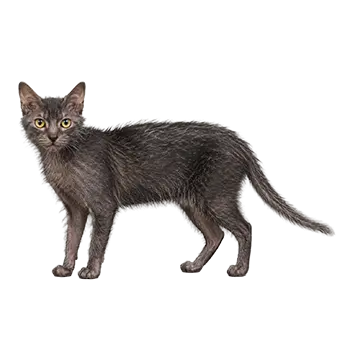
The Lykoi is, in many ways, a photographer's dream. The contrast between bare skin and grizzled roan fur, the haunting mask around the eyes, and the breed's lean, alert posture all translate powerfully into still images. Dramatic lighting can heighten the wolfish effect, and many of the breed's most widely circulated images lean into a moody, almost cinematic aesthetic.

This visual strength has made the Lykoi a recurring subject for pet photographers and animal-focused art. Portraits that emphasize the breed's expressive face and unusual texture have helped cement its reputation as one of the most distinctive-looking cats in the world.

The breed's appearance also lends itself to themed and seasonal imagery. Around autumn and Halloween in particular, the Lykoi's gothic look makes it a popular choice for atmospheric photo projects and decorative concepts that play on its supernatural nickname.

Beyond novelty, there is genuine artistic interest in how the Lykoi challenges conventional ideas of feline beauty. Where much cat imagery celebrates plush coats and rounded features, the Lykoi offers something rawer and more angular — a different kind of elegance that many find captivating precisely because it is unexpected.

The Werewolf-Cat Brand

Few breeds have a nickname as marketable as the werewolf cat, and that branding has been central to the Lykoi's identity in popular culture. The name does immediate work: it tells a story, sets expectations, and gives the breed a hook that ordinary breed names rarely achieve. This makes the Lykoi instantly memorable to people who know nothing else about cat breeds.

Breeders, enthusiasts, and media outlets alike have embraced the werewolf framing, and it appears across breed communities, social accounts, and informational content. The imagery of folklore and the supernatural gives the breed a ready-made cultural shorthand that resonates well beyond the cat fancy.

This branding has, in turn, influenced how the breed is presented and discussed. Descriptions often emphasize the mysterious, the spooky, and the wild, even though the cats themselves are gentle, sociable companions. The tension between the dramatic look and the affectionate personality is part of what makes the breed's story so appealing.

For the broader pet community, the Lykoi's branding offers a useful case study in how a distinctive appearance and a well-chosen name can accelerate a breed's visibility. It is a reminder that, in the modern media landscape, a compelling story can travel as far as the animal itself.

The Popularity Effect

The Lykoi's rapid rise to internet fame has brought both opportunity and responsibility. Heightened visibility has increased demand, which can be positive for a young breed seeking a sustainable future, but it also raises the risk of careless breeding by those hoping to capitalize on a trend. Responsible breeders consistently emphasize health and genetic diversity over simply meeting demand.

Prospective owners drawn in by viral images are encouraged to look past the novelty and understand the breed's real needs. The Lykoi requires attentive care for its unusual coat and skin, thrives on interaction and stimulation, and is a long-term commitment rather than a passing curiosity. Education has therefore become an important counterweight to hype.

The popularity effect also shapes public perception in subtler ways. Because so many people first encounter the Lykoi through a single dramatic photo, there can be a gap between the imagined werewolf cat and the affectionate, ordinary-acting pet that actually shares one's home. Good breeders and community resources work to set realistic expectations.

Ultimately, the Lykoi's fame illustrates a broader dynamic in the modern pet world, where social media can elevate a once-obscure breed almost overnight. Channeled responsibly, that attention can support a breed's healthy development; left unchecked, it can encourage exactly the kind of poor practices the breed's founders worked so hard to avoid.

Always consult a qualified professional before making any health-related decisions. This content is provided for informational reference only and should not replace professional guidance specific to your animal.