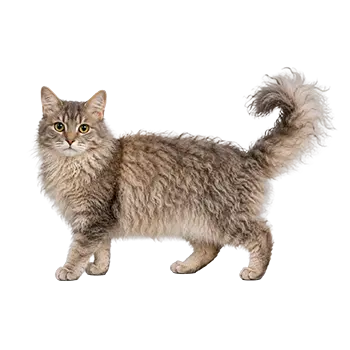

Origins & Development

The LaPerm breed traces its beginnings to a single kitten born in 1982 on a cherry farm near The Dalles, Oregon. Linda Koehl, the farm's owner, noticed that one kitten in a litter of otherwise ordinary barn cats was born completely bald. As the kitten grew, she developed a distinctive curly coat unlike anything Koehl had seen before. The kitten, later named Curly, became the foundation of what would eventually be recognized as an entirely new breed.

For several years, Koehl allowed her curly-coated cats to breed freely among the farm's population. Over time, more and more kittens with the signature ringlet curls appeared, confirming that the trait was governed by a dominant gene. Unlike many rex mutations in cats, the LaPerm gene proved remarkably consistent in its expression, producing cats with loose, bouncy curls that ranged from tight ringlets to long, flowing waves.

By the early 1990s, Koehl began to realize that her curly cats represented something genuinely unique in the feline world. She consulted geneticists and experienced cat breeders who confirmed the mutation was distinct from other known rex genes such as those found in the Cornish Rex or Devon Rex. With encouragement from the breeding community, she began a structured breeding program to stabilize the LaPerm's characteristics while maintaining the breed's robust health and friendly temperament.

The name "LaPerm" was chosen to reflect the breed's most striking feature — its permanently waved coat. The playful reference to a salon permanent wave captured the whimsical nature of both the cats and their origin story. From a single spontaneous mutation on a working farm, the LaPerm's journey into the world of pedigreed cats had begun in earnest.

Historical Roles

Before the LaPerm was recognized as a breed, its earliest representatives served the same role as any barn cat in rural Oregon. Curly and her descendants were valued mousers, keeping the cherry farm free of rodents and earning their keep alongside the other working cats on the property. Their curly coats did nothing to diminish their hunting instincts, and the original LaPerm cats were every bit as capable and hardy as their straight-coated littermates.

As the breed gained recognition, LaPerms transitioned from working farm cats to cherished companions and show cats. Their gentle, people-oriented personalities made them natural fits for households seeking an interactive and affectionate pet. Breeders noted that LaPerms often displayed an unusual degree of attachment to their owners, frequently riding on shoulders or curling up as close to their humans as possible.

The LaPerm's dual heritage as both a rugged farm cat and a refined show breed gives the breed a distinctive character. Enthusiasts often point to this combination of practicality and elegance as one of the LaPerm's greatest assets. The breed retains the hardiness and adaptability of its barn cat ancestors while offering the unique aesthetic appeal and sociable nature that make it a standout in the modern cat fancy.

In some agricultural communities, LaPerms have continued to serve in informal pest-control roles, demonstrating that the breed's ornamental appearance has not come at the expense of its practical instincts. This connection to working roots remains a point of pride among LaPerm breeders and owners.

Cultural Symbolism

The LaPerm occupies a special place in feline culture as a symbol of happy accidents and the unexpected gifts of nature. The breed's origin story — a single bald kitten born among ordinary barn cats, growing up to found an entire breed — resonates with themes of individuality and the beauty of difference. LaPerm enthusiasts often celebrate this narrative as a reminder that remarkable things can emerge from the most unassuming beginnings.

In the Pacific Northwest, where the breed originated, the LaPerm has become a point of regional pride. Oregon cat lovers take particular pleasure in the fact that one of the cat world's most distinctive breeds emerged not from a planned breeding program but from the free-roaming population of a small-town cherry farm. The breed's story is woven into the broader cultural identity of the region, reflecting values of resourcefulness and appreciation for the natural world.

The LaPerm's curly coat has also made the breed a conversation starter and a symbol of feline diversity. In a cat fancy dominated by sleek, straight-coated breeds, the LaPerm's waves and ringlets challenge conventional standards of feline beauty. Advocates of the breed frequently frame LaPerms as ambassadors for the idea that beauty comes in many forms, using the breed to promote acceptance and curiosity within the broader pet-owning community.

Beyond aesthetics, the LaPerm's reputation as an exceptionally affectionate and gentle companion has contributed to its cultural image as the quintessential lap cat. Despite its relatively small population compared to mainstream breeds, the LaPerm has earned a devoted following among cat lovers who value personality and connection over popularity.

Breed Clubs & Standards

The formal development of the LaPerm as a recognized breed began in the mid-1990s when Linda Koehl and a small group of dedicated breeders established the LaPerm Society of America. This organization set out to draft a breed standard, coordinate breeding efforts, and seek recognition from major cat registries. Their work was guided by the goal of preserving the breed's natural characteristics while ensuring genetic health and diversity.

The International Cat Association (TICA) was among the first major registries to grant the LaPerm recognition, initially accepting the breed for registration in 1995 and advancing it to championship status in 2003. TICA's standard emphasizes the breed's distinctive curly coat, which can appear in both longhair and shorthair varieties, as well as its moderate, well-balanced body type. The standard allows for all colors and patterns, reflecting the breed's diverse barn cat heritage.

The Cat Fanciers' Association (CFA) followed with its own recognition process, granting the LaPerm championship status in 2008. CFA's standard closely mirrors TICA's in its emphasis on coat texture and curl pattern, while also noting the breed's alert, friendly expression and medium-sized, muscular build. Recognition by CFA opened doors for LaPerm breeders and exhibitors across North America, significantly raising the breed's profile in the competitive show world.

Internationally, the LaPerm has gained recognition from registries in Europe, Australia, and New Zealand, with the Governing Council of the Cat Fancy (GCCF) in the United Kingdom granting championship status as well. Breed clubs in several countries now coordinate breeding programs, host specialty shows, and work to educate the public about the LaPerm's unique qualities. These organizations continue to play a vital role in maintaining breed standards, supporting responsible breeding practices, and growing the LaPerm's global community of admirers.

The Breed Today

Today, the LaPerm remains a relatively rare breed, but its popularity has grown steadily as more cat lovers discover its unique combination of distinctive appearance and endearing personality. Breeders can be found across North America, Europe, Australia, and parts of Asia, though the breed's numbers are still modest compared to established breeds like the Persian or Maine Coon. This rarity is part of the LaPerm's appeal for many owners, who enjoy the breed's exclusivity and the sense of community that comes with belonging to a smaller breed circle.

Modern LaPerm breeding programs prioritize genetic health and diversity, often incorporating outcrosses to domestic shorthairs and longhairs to maintain a broad gene pool. This practice, rooted in the breed's barn cat origins, helps ensure that LaPerms remain robust, healthy cats free from the hereditary conditions that can plague more intensively bred pedigree lines. Breeders take pride in producing kittens that are not only beautiful but also vigorous and well-socialized.

In the show ring, LaPerms have earned a reputation as crowd favorites. Their playful personalities and striking curly coats make them natural showstoppers, and judges appreciate the breed's unique texture and body type. LaPerm specialty shows and breed showcases at major cat events draw dedicated exhibitors and curious spectators alike, helping to raise awareness of the breed among the general public.

The LaPerm community is active online, with breed-specific forums, social media groups, and breeder websites serving as hubs for information sharing, kitten placement, and mutual support. These digital communities have been instrumental in connecting LaPerm enthusiasts across geographic boundaries and fostering a sense of global fellowship among those who share a passion for the curly-coated cats.

Notable Individuals

The most historically significant LaPerm is undoubtedly Curly, the original bald kitten born on Linda Koehl's Oregon farm in 1982. Curly's spontaneous genetic mutation gave rise to the entire breed, and her story is recounted in virtually every account of LaPerm history. Though she lived the life of an ordinary farm cat, Curly's legacy extends far beyond the cherry orchards of The Dalles, reaching into show halls and living rooms around the world.

Linda Koehl herself deserves recognition as the driving force behind the LaPerm's development. Without her curiosity, patience, and willingness to learn from geneticists and experienced breeders, the curly-coated cats on her farm might have remained a local oddity rather than becoming an internationally recognized breed. Koehl's dedication to the breed's welfare and her collaborative approach to breed development set a positive example for the cat fancy community.

Several LaPerm cats have distinguished themselves in the show ring over the years, earning grand champion and regional winner titles in TICA, CFA, and other registries. While individual show cats may not achieve the widespread name recognition of famous dogs or horses, their achievements represent significant milestones for a young and relatively rare breed. Each title earned by a LaPerm in competition helps to validate the breed's standards and attract new breeders and enthusiasts.

Beyond the show world, individual LaPerms have served as therapy cats, educational ambassadors, and social media personalities, helping to spread awareness of the breed's gentle temperament and unique appearance. These cats, often featured in breed profiles and media appearances, play an important role in introducing the LaPerm to audiences who might otherwise never encounter the breed.

Always consult a qualified professional before making any health-related decisions. This content is provided for informational reference only and should not replace professional guidance specific to your animal.